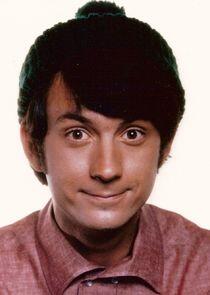
Michael Nesmith
CountryUnited States 
GenderMale
BirthdayDec 30, 1942
Death2021-12-10
BiographyRobert Michael Nesmith (December 30, 1942 – December 10, 2021) was an American musician, songwriter, author, screenwriter, and actor, known as a member of The Monkees and for his solo work. His songwriting credits with The Monkees include "Mary, Mary", "The Girl I Knew Somewhere", "Tapioca Tundra", "Circle Sky" and "Listen to the Band". Additionally, his song "Different Drum" became a hit for the Stone Poneys featuring Linda Ronstadt.
After leaving the Monkees in 1970, Nesmith continued his successful songwriting and performing career, first with the seminal country rock group the First National Band, with which he had a top-40 hit, "Joanne" (1970). As a solo artist, he scored an international hit with the song "Rio" (1977). He often played a custom-built Gretsch 12-string electric guitar both with the Monkees and afterward.
In 1974, Nesmith founded Pacific Arts, a multimedia production and distribution company, through which he helped pioneer the music video format, winning the first Grammy Award for Video of the Year for his hour-long comedy/variety program, Elephant Parts (1981). He created one of the first American television programs dedicated to music videos, PopClips, which aired on Nickelodeon in 1980, and was soon afterward approached to help develop the MTV network, though he declined. Nesmith was also an executive producer of the film Repo Man (1984).
Biography from the Wikipedia article Michael Nesmith. Licensed under CC-BY-SA. Full list of contributors on Wikipedia.
After leaving the Monkees in 1970, Nesmith continued his successful songwriting and performing career, first with the seminal country rock group the First National Band, with which he had a top-40 hit, "Joanne" (1970). As a solo artist, he scored an international hit with the song "Rio" (1977). He often played a custom-built Gretsch 12-string electric guitar both with the Monkees and afterward.
In 1974, Nesmith founded Pacific Arts, a multimedia production and distribution company, through which he helped pioneer the music video format, winning the first Grammy Award for Video of the Year for his hour-long comedy/variety program, Elephant Parts (1981). He created one of the first American television programs dedicated to music videos, PopClips, which aired on Nickelodeon in 1980, and was soon afterward approached to help develop the MTV network, though he declined. Nesmith was also an executive producer of the film Repo Man (1984).
Biography from the Wikipedia article Michael Nesmith. Licensed under CC-BY-SA. Full list of contributors on Wikipedia.
Known For
Part of Crew
Recently Updated Shows
Recently updated shows that might be of your interest.