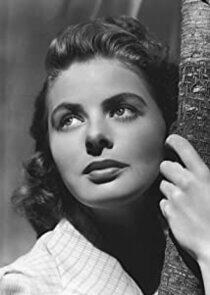
Ingrid Bergman
CountrySweden 
GenderFemale
BirthdayAug 29, 1915
Death1982-08-29
BiographyIngrid Bergman (29 August 1915 – 29 August 1982) was a Swedish actress. With a career spanning five decades, Bergman is often regarded as one of the most influential actresses in the history of cinema. She won numerous accolades, including three Academy Awards, two Primetime Emmy Awards, and a Tony Award; these accolades made her the youngest performer to achieve the Triple Crown of Acting and one of only four actresses to have received at least three acting Academy Awards (only Katharine Hepburn has four).
Born in Stockholm to a Swedish father and German mother, Bergman began her acting career in Swedish and German films. Her introduction to the U.S. audience came in the English-language remake of Intermezzo (1939). Known for her naturally luminous beauty, she starred in Casablanca (1942) as Ilsa Lund. Bergman's notable performances in the 1940s include the dramas For Whom the Bell Tolls (1943), Gaslight (1944), The Bells of St. Mary's (1945), and Joan of Arc (1948), all of which earned her nominations for the Academy Award for Best Actress; she won for Gaslight. She made three films with Alfred Hitchcock: Spellbound (1945), Notorious (1946), and Under Capricorn (1949).
In 1950, she starred in Roberto Rossellini's Stromboli, released after the revelation that she was having an affair with Rossellini; that and her pregnancy before their marriage created a scandal in the U.S. that prompted her to remain in Europe for several years. During this time, she starred in Rossellini's Europa '51 and Journey to Italy (1954), the former of which won her the Volpi Cup for Best Actress. The Volpi Cup was not awarded to her in 1952 because she was dubbed (by Lydia Simoneschi) in the version presented at the Festival; she was awarded posthumously in 1992, and the prize was accepted by her son Roberto Rossellini. She returned to Hollywood, earning two more Academy Awards for her roles in Anastasia (1956) and Murder on the Orient Express (1974). During this period she also starred in Indiscreet (1958), Cactus Flower (1969), and Autumn Sonata (1978) receiving her sixth Best Actress nomination.
Bergman won the Tony Award for Best Actress in a Play for the Maxwell Anderson play Joan of Lorraine (1947). She also won two Primetime Emmy Awards for Outstanding Lead Actress in a Limited Series or Movie for The Turn of the Screw (1960), and A Woman Called Golda (1982). In 1974, Bergman discovered she was suffering from breast cancer but continued to work until shortly before her death on her sixty-seventh birthday in 1982. Bergman spoke five languages—Swedish, English, German, Italian, and French—and acted in each. In 1999, the American Film Institute recognized her as the fourth-greatest female screen legend of Classic Hollywood Cinema.
Biography from the Wikipedia article Ingrid Bergman. Licensed under CC-BY-SA. Full list of contributors on Wikipedia.
Born in Stockholm to a Swedish father and German mother, Bergman began her acting career in Swedish and German films. Her introduction to the U.S. audience came in the English-language remake of Intermezzo (1939). Known for her naturally luminous beauty, she starred in Casablanca (1942) as Ilsa Lund. Bergman's notable performances in the 1940s include the dramas For Whom the Bell Tolls (1943), Gaslight (1944), The Bells of St. Mary's (1945), and Joan of Arc (1948), all of which earned her nominations for the Academy Award for Best Actress; she won for Gaslight. She made three films with Alfred Hitchcock: Spellbound (1945), Notorious (1946), and Under Capricorn (1949).
In 1950, she starred in Roberto Rossellini's Stromboli, released after the revelation that she was having an affair with Rossellini; that and her pregnancy before their marriage created a scandal in the U.S. that prompted her to remain in Europe for several years. During this time, she starred in Rossellini's Europa '51 and Journey to Italy (1954), the former of which won her the Volpi Cup for Best Actress. The Volpi Cup was not awarded to her in 1952 because she was dubbed (by Lydia Simoneschi) in the version presented at the Festival; she was awarded posthumously in 1992, and the prize was accepted by her son Roberto Rossellini. She returned to Hollywood, earning two more Academy Awards for her roles in Anastasia (1956) and Murder on the Orient Express (1974). During this period she also starred in Indiscreet (1958), Cactus Flower (1969), and Autumn Sonata (1978) receiving her sixth Best Actress nomination.
Bergman won the Tony Award for Best Actress in a Play for the Maxwell Anderson play Joan of Lorraine (1947). She also won two Primetime Emmy Awards for Outstanding Lead Actress in a Limited Series or Movie for The Turn of the Screw (1960), and A Woman Called Golda (1982). In 1974, Bergman discovered she was suffering from breast cancer but continued to work until shortly before her death on her sixty-seventh birthday in 1982. Bergman spoke five languages—Swedish, English, German, Italian, and French—and acted in each. In 1999, the American Film Institute recognized her as the fourth-greatest female screen legend of Classic Hollywood Cinema.
Biography from the Wikipedia article Ingrid Bergman. Licensed under CC-BY-SA. Full list of contributors on Wikipedia.
Known For

Recently Updated Shows
Recently updated shows that might be of your interest.