
Deborah Kerr
Following a brief career as a ballerina, Kerr moved to the stage and acted in various Shakespeare productions and small plays before making her film debut in Major Barbara (1941). This led to additional leading roles which raised her profile, such as Love on the Dole (1941), Hatter's Castle (1942), and The Day Will Dawn (1942). In 1943, Kerr played three women in Michael Powell and Emeric Pressburger's romantic-war drama The Life and Death of Colonel Blimp, which consistently ranks among the greatest British films of all time. Following major successes in the spy comedy I See a Dark Stranger (1946) and psychological drama Black Narcissus (1947), Kerr transitioned to Hollywood under the helm of Metro-Goldwyn-Mayer Studios (MGM).
Following the lukewarm success of her debut Hollywood features, The Hucksters and If Winter Comes, both in 1947, Kerr found critical praise in Edward, My Son (1949), for which she received her first Academy Award nomination for Best Actress, becoming the first Scottish person to be nominated for an acting Oscar. Though she found major commercial success in King Solomon's Mines (1950) and Quo Vadis (1951), the latter the highest grossing film of 1951, reviews were often lackluster for her performances, highlighting her typecasting. In 1953, Kerr had a critical resurgence in the major hit From Here to Eternity, which reestablished her as a serious actress and earned her a second Academy Award nomination for Best Actress.
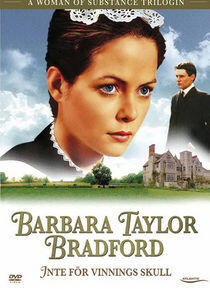
Throughout the 1950s, Kerr starred in a string of major commercial and critical successes. She earned three consecutive Academy Award nominations for The King and I (1956), Heaven Knows, Mr. Allison (1957), and Separate Tables (1958). She also appeared in the progressive drama Tea and Sympathy (1956), in which she had starred on Broadway in 1953. Later, the romantic classic An Affair to Remember (1957). By the 1960s, her career had slowed, though she remained somewhat prominent in film due to successful roles in The Sundowners (1960 - her 6th Oscar nomination), The Grass Is Greener (1960), The Innocents (1961), The Chalk Garden (1964) and The Night of the Iguana (1964). She made sporadic appearances in films and television (earning an Emmy nomination for A Woman of Substance in 1984) until The Assam Garden in 1985, which was her final film role.
Kerr received numerous accolades throughout her career, including two Golden Globe Awards and nominations for six Academy Awards, four British Academy Film Awards, and an Emmy Award. In 1994, having already received honorary awards from the Cannes Film Festival and BAFTA, Kerr received an Academy Honorary Award with a citation recognizing her as "an artist of impeccable grace and beauty, a dedicated actress whose motion picture career has always stood for perfection, discipline and elegance."
Biography from the Wikipedia article Deborah Kerr. Licensed under CC-BY-SA. Full list of contributors on Wikipedia.
Known For
Recently Updated Shows

Last Week Tonight with John Oliver
On Last Week Tonight with John Oliver, John Oliver presents a satirical look at the week in news, politics and current events.

Hudson & Rex
Detective Charlie Hudson, a cunning Major Crimes detective for the St. John's Police Department, teams up with an unusual partner – Rex, a former-K9 German Shepherd, whose heightened senses keep Charlie hot on the trail of his suspects. Together, they investigate puzzling crimes, from a kidnapping which reveals a much larger conspiracy at play to an art theft murder which runs deep into the world of high society. With Charlie's deft detective work and Rex's keen canine senses, this crime-fighting pair is unstoppable.

Lioness
Lioness, inspired by an actual U.S. Military program, follows the life of Joe while she attempts to balance her personal and professional life as the tip of the CIA's spear in the war on terror. The Lioness Program, overseen by Kaitlyn Meade and Donald Westfield, enlists an aggressive Marine Raider named Cruz to operate undercover alongside Joe among the power brokers of State terrorism in the CIA's efforts to thwart the next 9/11.

Doc
Doc centers on the hard-charging, brilliant Dr. Amy Larsen, Chief of Internal and Family Medicine at Westside Hospital in Minneapolis. After a brain injury erases the last eight years of her life, Amy must navigate an unfamiliar world where she has no recollection of patients she's treated, colleagues she's crossed, the soulmate she divorced, the man she now loves and the tragedy that caused her to push everyone away. She can rely only on her estranged 17-year-old daughter, whom she remembers as a 9-year-old, and a handful of devoted friends, as she struggles to continue practicing medicine, despite having lost nearly a decade of knowledge and experience.