Graham Hancock
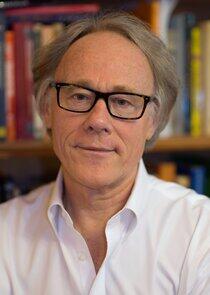
Born in Edinburgh, Hancock studied sociology at Durham University before working as a journalist for several British newspapers and magazines. His first three books examined international development, including Lords of Poverty (1989), a well-received critique of corruption in the aid system. Beginning with The Sign and the Seal in 1992, he shifted to speculative accounts of human prehistory and ancient civilisations, publishing a dozen books that include Fingerprints of the Gods and Magicians of the Gods.
Scholars describe Hancock's investigations of archaeological evidence, myths, and historical documents as mimicking investigative journalism while lacking accuracy, consistency and impartiality. They label his work pseudoarchaeology and pseudohistory because they see it as biased toward preconceived conclusions that ignore context, misrepresent sources, cherry pick and omit evidence that contradicts his claims. Hancock's idea of an advanced ice age civilisation is seen as a variant of the hyperdiffusionism hypothesis that has been advocated by various authors since the 19th century.
The anthropologist Jeb Card characterises Hancock's writings as paranormal and views his proposed Ice Age civilisation as a modern mythic narrative focused on secret and spiritual knowledge, with Hancock contending that members of the ice age civilisation had psychic abilities and communicated with "powerful nonphysical beings" through psychedelic use. Hancock portrays himself as a culture hero challenging the "dogmatism" of academics, presenting his work as more valid than professional archaeology and as "a path to truly understanding reality and the spiritual elements denied by materialist science", even while citing science to support his ideas. He has not submitted his writings for scholarly peer review, and they have not been published in academic journals.
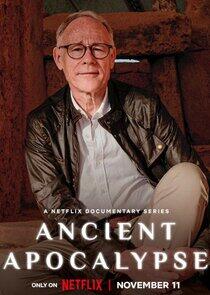
Hancock has written two fantasy novels and in 2013 delivered a controversial TEDx talk promoting the psychoactive drink ayahuasca. His ideas have inspired several films and he presented the Netflix series Ancient Apocalypse (2022) based on his theories. He makes regular appearances on the podcast The Joe Rogan Experience to promote his claims.
Biography from the Wikipedia article Graham Hancock. Licensed under CC-BY-SA. Full list of contributors on Wikipedia.
Known For
Recently Updated Shows

Brilliant Minds
Inspired by the extraordinary life and work of world-famous author and physician Oliver Sacks, Brilliant Minds follows a revolutionary, larger-than-life neurologist and his team of interns as they explore the last great frontier - the human mind - while grappling with their own relationships and mental health.

Star Trek: Starfleet Academy
Star Trek: Starfleet Academy is set in the 32nd century, a time period in the far-future of the Star Trek franchise where Starfleet and the United Federation of Planets are recovering from a cataclysmic event, as depicted in Star Trek: Discovery. It introduces viewers to a young group of cadets who come together to pursue a common dream of hope and optimism. Under the watchful and demanding eyes of their instructors, they discover what it takes to become Starfleet officers as they navigate blossoming friendships, explosive rivalries, first loves and a new enemy that threatens both the Academy and the Federation itself.

The Librarians: The Next Chapter
The Librarians: The Next Chapter centers on Vikram Chamberlain, a "Librarian" from the past who time traveled from 1847 and now finds himself stuck in the present. When Vikram returns to his castle in Belgrade, Serbia and discovers that it is now a museum, he inadvertently releases magic across the continent. With the help of a new team of eclectic heroes, including a savant in world history, a scientific genius, and a highly skilled Guardian, Vikram has only six months to clean up the mess he made.