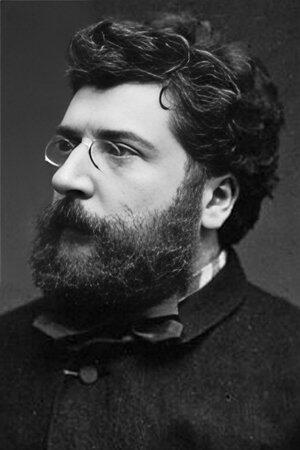
Georges Bizet
Country
Gender
Birthday
BiographyGeorges Bizet (né Alexandre César Léopold Bizet; 25 October 1838 – 3 June 1875) was a French composer of the Romantic era. Best known for his operas in a career cut short by his early death, Bizet achieved few successes before his final work, Carmen, which has become one of the most popular and frequently performed works in the entire opera repertoire.
During a brilliant student career at the Conservatoire de Paris, Bizet won many prizes, including the prestigious Prix de Rome in 1857. He was recognised as an outstanding pianist, though he chose not to capitalise on this skill and rarely performed in public. Returning to Paris after almost three years in Italy, he found that the main Parisian opera theatres preferred the established classical repertoire to the works of newcomers. His keyboard and orchestral compositions were likewise largely ignored; as a result, his career stalled, and he earned his living mainly by arranging and transcribing the music of others. Restless for success, he began many theatrical projects during the 1860s, most of which were abandoned. Neither of his two operas that reached the stage in this time—Les pêcheurs de perles and La jolie fille de Perth—were immediately successful.
After the Franco-Prussian War of 1870–1871, during which Bizet served in the National Guard, he had little success with his one-act opera Djamileh, though an orchestral suite derived from his incidental music to Alphonse Daudet's play L'Arlésienne was instantly popular. The production of his final opera, Carmen, was delayed because of fears that its themes of betrayal and murder would offend audiences. After its premiere on 3 March 1875, Bizet was convinced that the work was a failure; he died of a heart attack three months later, unaware that it would prove a spectacular and enduring success.
Bizet's marriage to Geneviève Halévy was intermittently happy and produced one son. After his death, his work, apart from Carmen, was generally neglected. Manuscripts were given away or lost, and published versions of his works were frequently revised and adapted by other hands. He founded no school and had no obvious disciples or successors. After years of neglect, his works began to be performed more frequently in the 20th century. Later commentators have acclaimed him as a composer of brilliance and originality whose premature death was a significant loss to French musical theatre.
Biography from the Wikipedia article Georges Bizet. Licensed under CC-BY-SA. Full list of contributors on Wikipedia.
During a brilliant student career at the Conservatoire de Paris, Bizet won many prizes, including the prestigious Prix de Rome in 1857. He was recognised as an outstanding pianist, though he chose not to capitalise on this skill and rarely performed in public. Returning to Paris after almost three years in Italy, he found that the main Parisian opera theatres preferred the established classical repertoire to the works of newcomers. His keyboard and orchestral compositions were likewise largely ignored; as a result, his career stalled, and he earned his living mainly by arranging and transcribing the music of others. Restless for success, he began many theatrical projects during the 1860s, most of which were abandoned. Neither of his two operas that reached the stage in this time—Les pêcheurs de perles and La jolie fille de Perth—were immediately successful.
After the Franco-Prussian War of 1870–1871, during which Bizet served in the National Guard, he had little success with his one-act opera Djamileh, though an orchestral suite derived from his incidental music to Alphonse Daudet's play L'Arlésienne was instantly popular. The production of his final opera, Carmen, was delayed because of fears that its themes of betrayal and murder would offend audiences. After its premiere on 3 March 1875, Bizet was convinced that the work was a failure; he died of a heart attack three months later, unaware that it would prove a spectacular and enduring success.
Bizet's marriage to Geneviève Halévy was intermittently happy and produced one son. After his death, his work, apart from Carmen, was generally neglected. Manuscripts were given away or lost, and published versions of his works were frequently revised and adapted by other hands. He founded no school and had no obvious disciples or successors. After years of neglect, his works began to be performed more frequently in the 20th century. Later commentators have acclaimed him as a composer of brilliance and originality whose premature death was a significant loss to French musical theatre.
Biography from the Wikipedia article Georges Bizet. Licensed under CC-BY-SA. Full list of contributors on Wikipedia.
Part of Crew

Recently Updated Shows
Recently updated shows that might be of your interest.

Jimmy Kimmel Live
Jimmy Kimmel Live features a diverse lineup of guests that include celebrities, athletes, musical acts, comedians and human-interest subjects, along with comedy bits and a house band.
GenreComedy


Last Week Tonight with John Oliver
On Last Week Tonight with John Oliver, John Oliver presents a satirical look at the week in news, politics and current events.
GenreComedy

Lioness
Lioness, inspired by an actual U.S. Military program, follows the life of Joe while she attempts to balance her personal and professional life as the tip of the CIA's spear in the war on terror. The Lioness Program, overseen by Kaitlyn Meade and Donald Westfield, enlists an aggressive Marine Raider named Cruz to operate undercover alongside Joe among the power brokers of State terrorism in the CIA's efforts to thwart the next 9/11.
