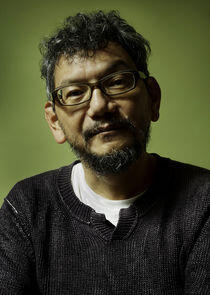

Hideaki Anno
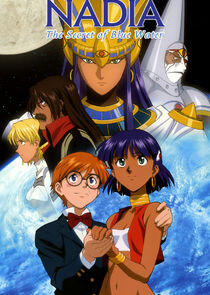
Anno began his career while attending Osaka University of Arts as an animator for the anime series The Super Dimension Fortress Macross (1982–1983), and produced the Daicon III and IV Opening Animations. He did not gain recognition until the release of his work on Hayao Miyazaki's 1984 film Nausicaä of the Valley of the Wind. Anno went on to become one of the co-founders of Gainax in December 1984. He worked as an animation director for their first feature-length film, Royal Space Force: The Wings of Honnêamise (1987), and ultimately became Gainax's premiere anime director, leading the majority of the studio's projects, including Gunbuster (1988) and Nadia: The Secret of Blue Water (1990–1991).
Anno's next project was the anime television series Neon Genesis Evangelion (1995–1996). Timing constraints at Gainax also forced Anno to replace the planned ending of Evangelion with two episodes set in the main characters' minds. In 1997, Gainax launched a project to re-adapt Evangelion's scrapped ending into a feature-length film. Budgeting issues left the film unfinished, and the completed 27 minutes of animation were included as the second act of Evangelion: Death and Rebirth. Eventually, the project culminated in The End of Evangelion, a three-act film that served as a finale to Neon Genesis Evangelion. Anno wrote and directed the Rebuild of Evangelion film series from 2007 to 2021, written to be more accessible to non-fans than the original anime series and films were.
Anno's other directorial works include Daicon Film's Return of Ultraman (1983), Gunbuster (1988), Kare Kano (1998), Love & Pop (1998), Shiki-Jitsu (2000), Cutie Honey (2004), Re: Cutie Honey (2004), and Shin Godzilla (2016), with the latter film marking the beginning of the Shin trilogy of tokusatsu franchise reboots, followed by Shin Ultraman (2022) and Shin Kamen Rider (2023). Several of Anno's anime have won the Animage Anime Grand Prix award, including Nadia: The Secret of Blue Water in 1990, Neon Genesis Evangelion in 1995 and 1996, and The End of Evangelion in 1997.
Biography from the Wikipedia article Hideaki Anno. Licensed under CC-BY-SA. Full list of contributors on Wikipedia.
Known For
Part of Crew
Recently Updated Shows
Brilliant Minds
Inspired by the extraordinary life and work of world-famous author and physician Oliver Sacks, Brilliant Minds follows a revolutionary, larger-than-life neurologist and his team of interns as they explore the last great frontier - the human mind - while grappling with their own relationships and mental health.

CIA
CIA centers on two unlikely partners — a fast-talking, rule-breaking loose cannon CIA case officer, and a by-the-book, seasoned and smart FBI agent who believes in the rule of law. When this odd couple are assigned to work out of CIA's New York Station, they must learn to work together to investigate cases and criminals posing threats on U.S. soil, finding that their differences may actually be their strength.

Star Trek: Starfleet Academy
Star Trek: Starfleet Academy is set in the 32nd century, a time period in the far-future of the Star Trek franchise where Starfleet and the United Federation of Planets are recovering from a cataclysmic event, as depicted in Star Trek: Discovery. It introduces viewers to a young group of cadets who come together to pursue a common dream of hope and optimism. Under the watchful and demanding eyes of their instructors, they discover what it takes to become Starfleet officers as they navigate blossoming friendships, explosive rivalries, first loves and a new enemy that threatens both the Academy and the Federation itself.

Invincible
Based on the eponymous comic book, Invincible revolves around Mark Grayson, a normal teenager except for the fact that his father is the most powerful superhero on the planet. Shortly after his 17th birthday, Mark begins to develop powers of his own and enters into his father's tutelage.