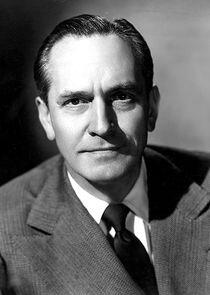

Fredric March
CountryUnited States 
GenderMale
BirthdayAug. 31, 1897
Death1975-04-14
BiographyFredric March (born Ernest Frederick McIntyre Bickel; August 31, 1897 – April 14, 1975) was an American actor, regarded as one of Hollywood's most celebrated stars of the 1930s and 1940s. As a performer he was known for his versatility. He received numerous accolades including two Academy Awards, a Golden Globe Award, two Tony Awards, two Volpi Cups, the Silver Bear, as well as nominations for three BAFTA Awards and three Emmy Awards.
March began his career in 1920, by working as an extra in movies filmed in New York City. He made his stage debut on Broadway in 1926 at the age of 29, and by the end of the decade, he had signed a film contract with Paramount Pictures. He made seven pictures in 1929. He went on to receive
two Academy Awards, for his performances in Dr. Jekyll and Mr. Hyde (1931) and The Best Years of Our Lives (1946). His other Oscar-nominated performances were in the films The Royal Family of Broadway (1930), A Star is Born (1937), and Death of a Salesman (1951).
March gained popularity after establishing himself with leading man roles in films such as Honor Among Lovers (1931), Merrily We Go to Hell (1932), Design for Living (1933), Death Takes a Holiday, The Barretts of Wimpole Street (both 1934), Les Misérables, Anna Karenina, The Dark Angel (all 1935), Anthony Adverse (1936), Nothing Sacred (1937), and I Married a Witch (1942). His later film roles include Executive Suite, The Bridges at Toko-Ri (both 1954), The Desperate Hours (1955), Inherit the Wind (1960), and Seven Days in May (1964). He made his final film appearance in The Iceman Cometh (1973).
March was also known for his stage roles; he made his Broadway debut in the play The Melody Man (1926), and during his stage career he twice won the Tony Award for Best Actor in a Play, for his performances in the Ruth Gordon play Years Ago (1947) and in Eugene O'Neill's Long Day's Journey into Night (1956). He and Helen Hayes are the only actors to have won both the Academy Award and the Tony Award twice.
Biography from the Wikipedia article Fredric March. Licensed under CC-BY-SA. Full list of contributors on Wikipedia.
March began his career in 1920, by working as an extra in movies filmed in New York City. He made his stage debut on Broadway in 1926 at the age of 29, and by the end of the decade, he had signed a film contract with Paramount Pictures. He made seven pictures in 1929. He went on to receive
two Academy Awards, for his performances in Dr. Jekyll and Mr. Hyde (1931) and The Best Years of Our Lives (1946). His other Oscar-nominated performances were in the films The Royal Family of Broadway (1930), A Star is Born (1937), and Death of a Salesman (1951).
March gained popularity after establishing himself with leading man roles in films such as Honor Among Lovers (1931), Merrily We Go to Hell (1932), Design for Living (1933), Death Takes a Holiday, The Barretts of Wimpole Street (both 1934), Les Misérables, Anna Karenina, The Dark Angel (all 1935), Anthony Adverse (1936), Nothing Sacred (1937), and I Married a Witch (1942). His later film roles include Executive Suite, The Bridges at Toko-Ri (both 1954), The Desperate Hours (1955), Inherit the Wind (1960), and Seven Days in May (1964). He made his final film appearance in The Iceman Cometh (1973).
March was also known for his stage roles; he made his Broadway debut in the play The Melody Man (1926), and during his stage career he twice won the Tony Award for Best Actor in a Play, for his performances in the Ruth Gordon play Years Ago (1947) and in Eugene O'Neill's Long Day's Journey into Night (1956). He and Helen Hayes are the only actors to have won both the Academy Award and the Tony Award twice.
Biography from the Wikipedia article Fredric March. Licensed under CC-BY-SA. Full list of contributors on Wikipedia.
Known For
Recently Updated Shows
Recently updated shows that might be of your interest.

Brilliant Minds
Inspired by the extraordinary life and work of world-famous author and physician Oliver Sacks, Brilliant Minds follows a revolutionary, larger-than-life neurologist and his team of interns as they explore the last great frontier - the human mind - while grappling with their own relationships and mental health.

The Morning Show
Nominated for three Golden Globes®, this unapologetically candid drama looks at the modern workplace through the lens of the people who help America wake up. Pull back the curtain on early morning TV.
GenreDrama