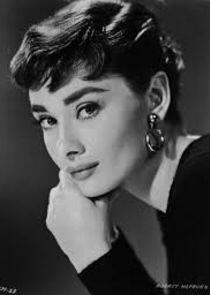
Audrey Hepburn
CountryBelgium 
GenderFemale
BirthdayMay 4, 1929
Death1993-01-20
BiographyAudrey Kathleen Hepburn (née Ruston; 4 May 1929 – 20 January 1993) was a British actress and humanitarian. Recognised as a film and fashion icon, she was ranked by the American Film Institute as the third-greatest female screen legend from the Classical Hollywood cinema. She was inducted into the International Best Dressed Hall of Fame and is one of only a few entertainers who have won competitive Academy, Emmy, Grammy and Tony Awards.
Born into an aristocratic family in Ixelles, Brussels, Hepburn spent parts of her childhood in Belgium, the United Kingdom and the Netherlands. She attended boarding school in Kent from 1936 to 1939. Hepburn returned to the Netherlands at the outbreak of the Second World War. She studied ballet at the Arnhem Conservatory during the war. By 1944, Hepburn was performing ballet to raise money to support the resistance. She studied with Sonia Gaskell in Amsterdam from 1945 to 1948 and then with Marie Rambert in London.
Hepburn began performing as a chorus girl in West End musical theatre productions and then had minor appearances in several films. She rose to stardom in the romantic comedy Roman Holiday (1953) alongside Gregory Peck, for which she became the first actress to win an Academy Award, a Golden Globe Award and a BAFTA Award for the same performance. The same year, Hepburn won a Tony Award for Best Leading Actress in a Play for her performance in Ondine. She went on to star in a number of successful films, such as Sabrina (1954), with Humphrey Bogart and William Holden; Funny Face (1957), a musical with Fred Astaire in which she sang her own parts; the drama The Nun's Story (1959); the romantic comedy Breakfast at Tiffany's (1961); the thriller-romance Charade (1963), opposite Cary Grant; and the musical My Fair Lady (1964).
In 1967, Hepburn starred in the thriller Wait Until Dark, receiving Academy Award, Golden Globe and BAFTA nominations. After that role, she only occasionally appeared in films, one being Robin and Marian (1976) with Sean Connery. Her last recorded performances were in Always (1989), an American romantic fantasy film directed and produced by Steven Spielberg, and the 1990 documentary television series Gardens of the World with Audrey Hepburn, for which she won a Primetime Emmy Award for Outstanding Individual Achievement – Informational Programming. Hepburn won three BAFTA Awards for Best British Actress in a Leading Role and BAFTA's Lifetime Achievement Award. She also won two Golden Globes and the Cecil B. DeMille Award. She was also recipient of a Screen Actors Guild Life Achievement Award and the Special Tony Award. In 1994, Hepburn's contributions to a spoken-word recording titled Audrey Hepburn's Enchanted Tales earned her a posthumous Grammy Award for Best Spoken Word Album for Children.
Later in life, Hepburn devoted much of her time to charity. She contributed to UNICEF, from 1954 onwards. Between 1988 and 1992, she worked in some of the poorest communities of Africa, South America, and Asia. In December 1992, Hepburn received the US Presidential Medal of Freedom in recognition of her work as a UNICEF Goodwill Ambassador. One month later, Hepburn died of appendix cancer at her home in Tolochenaz, Switzerland.
Biography from the Wikipedia article Audrey Hepburn. Licensed under CC-BY-SA. Full list of contributors on Wikipedia.
Born into an aristocratic family in Ixelles, Brussels, Hepburn spent parts of her childhood in Belgium, the United Kingdom and the Netherlands. She attended boarding school in Kent from 1936 to 1939. Hepburn returned to the Netherlands at the outbreak of the Second World War. She studied ballet at the Arnhem Conservatory during the war. By 1944, Hepburn was performing ballet to raise money to support the resistance. She studied with Sonia Gaskell in Amsterdam from 1945 to 1948 and then with Marie Rambert in London.
Hepburn began performing as a chorus girl in West End musical theatre productions and then had minor appearances in several films. She rose to stardom in the romantic comedy Roman Holiday (1953) alongside Gregory Peck, for which she became the first actress to win an Academy Award, a Golden Globe Award and a BAFTA Award for the same performance. The same year, Hepburn won a Tony Award for Best Leading Actress in a Play for her performance in Ondine. She went on to star in a number of successful films, such as Sabrina (1954), with Humphrey Bogart and William Holden; Funny Face (1957), a musical with Fred Astaire in which she sang her own parts; the drama The Nun's Story (1959); the romantic comedy Breakfast at Tiffany's (1961); the thriller-romance Charade (1963), opposite Cary Grant; and the musical My Fair Lady (1964).
In 1967, Hepburn starred in the thriller Wait Until Dark, receiving Academy Award, Golden Globe and BAFTA nominations. After that role, she only occasionally appeared in films, one being Robin and Marian (1976) with Sean Connery. Her last recorded performances were in Always (1989), an American romantic fantasy film directed and produced by Steven Spielberg, and the 1990 documentary television series Gardens of the World with Audrey Hepburn, for which she won a Primetime Emmy Award for Outstanding Individual Achievement – Informational Programming. Hepburn won three BAFTA Awards for Best British Actress in a Leading Role and BAFTA's Lifetime Achievement Award. She also won two Golden Globes and the Cecil B. DeMille Award. She was also recipient of a Screen Actors Guild Life Achievement Award and the Special Tony Award. In 1994, Hepburn's contributions to a spoken-word recording titled Audrey Hepburn's Enchanted Tales earned her a posthumous Grammy Award for Best Spoken Word Album for Children.
Later in life, Hepburn devoted much of her time to charity. She contributed to UNICEF, from 1954 onwards. Between 1988 and 1992, she worked in some of the poorest communities of Africa, South America, and Asia. In December 1992, Hepburn received the US Presidential Medal of Freedom in recognition of her work as a UNICEF Goodwill Ambassador. One month later, Hepburn died of appendix cancer at her home in Tolochenaz, Switzerland.
Biography from the Wikipedia article Audrey Hepburn. Licensed under CC-BY-SA. Full list of contributors on Wikipedia.
Known For

Recently Updated Shows
Recently updated shows that might be of your interest.