America from Scratch - Season 1
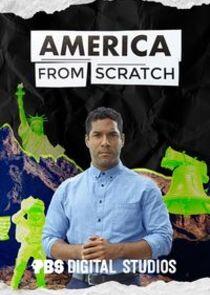
Season 1

Episodes

Should 12-Year-Olds be Allowed to Vote?
Voting age takes on new relevance today as young people across the country are making their voices heard in the wake of the Stoneman Douglas High School shooting earlier this year. Washington, D.C., is on track to lower the voting age to 16.

Should We Have a President?
We spend a lot of time thinking, worrying, debating—and, yes, fighting—over who should be our president. But is that the best use of our political energy? In this episode of "America From Scratch," we explore the idea of eliminating the presidency entirely—and some other alternatives to our current political structure. Experts share how you can make the biggest difference in government today.

What If There Were No States?
States: they're a fact of American life we take largely for granted. But why do we need them at all? Some experts believe that chopping up our country in a different way would make a lot more sense. So, if we started over today, would we keep the somewhat wacky geography of our states intact, or would we move to perhaps a more logical system that throws state lines out the window?

Should We Rewrite Our Constitution?
The average lifespan of a country's constitution is 12 years. But the U.S. Constitution has been around for more than 200. Is it time for a rewrite? And if we did re-do our user manual, who would lead the charge?

Should the U.S. Require Half of Its Government to be Female?
Women make up about half of the U.S. population. But Congress is only 20 percent women, and the U.S. lags behind more than 100 other countries when it comes to gender parity in government. Research has shown that women legislate differently, focusing on issues and proposing bills that male lawmakers typically don't.

Should It Be Illegal for Facebook to Sell Your Data?
Freedom of speech. Freedom of religion. Freedom of…private data? The United States Bill of Rights protects a great many freedoms but when it was drafted, our Founders had little idea that our possessions could one day be intangible.

Should We Elect Our Supreme Court Justices?
The right to an abortion, the right to marry, the Dred Scott decision—some of the United States' most controversial, historic and influential legal decisions have been made for us by a group of people we didn't get to choose.

Should We Have Mandatory Military Service?
More than 60 other countries require their adult citizens to serve in the military. If the U.S. were to start over today, would we make it a requirement?

Should We Make Voting Mandatory?
Imagine being required to vote by penalty of law. Sound a little extreme? Maybe. But for other countries around the world, it's a reality, and it helps get people to the polls. Meanwhile, in the U.S., only 55 percent of eligible people cast a vote for president in 2016.
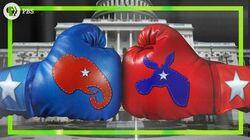
Should We Have More Than 2 Major Political Parties?
We blame a lot of our political dysfunction and polarization on our two-party system. So why do we keep it around? How did we get here? And what would happen if we had a lot more major parties? Host Toussaint Morrison investigates as we continue our democratic thought experiment.

Should We Police Our Police?
The people of the United States are not united on how they view law enforcement officers. But the majority would like to see some type of police reform. If we started over today, would we increase national regulations on the thousands of individual police departments across the country?

Should the USA Build a Wall on BOTH of Its Borders?
In this episode of "America From Scratch" we explore the security gaps on our northern border, as well as why our southern border gets so much media attention. Former federal prosecutor Matt Pinsker speaks on his experience on the southern border dealing with drug cartels. and an asylum seeker talks about how his asylum process has been a fight for safety.
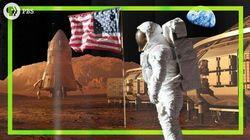
Should We Pay People to Move to Mars?
How long until people are permanently living on Mars, and how will we convince them to go there? In this episode of "America From Scratch" we explore the ways the government could motivate people to move to Mars and we draw comparisons to when settlers were incentivized to move out West. NASA tells us about their Moon to Mars mission, and why its important for us to become a multi-planet species.

What If Protesting Was Illegal?
1 in 5 Americans have participated in a protest since 2016. Protests have dominated national news headlines for the last few years, but what if these protests were illegal? Toussaint talks to Alicia Garza the cofounder of Black Lives Matter on whether or not protesting can go too far. He also meets with local lawmakers of a bill that would increase penalties for protesting on highways.

Should Shelter Be a Right?
In Maslow's hierarchy of needs he lists shelter at the base of the pyramid making it one of the few things most essential for survival. Today over half a million people live without permanent shelter across the United States. If we were founding our country today, would we ensure life, liberty, and shelter for all citizens? Toussaint visits a Minneapolis shelter to find out more.
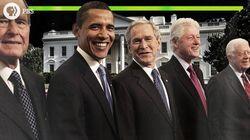
Do We Elect Narcissistic Leaders?
A study finds that politicians score higher than other professionals on the Narcissistic Personality Inventory, with a spike in characteristics like superiority, arrogance, and entitlement. Do we reward these characteristics with the way we vote? What would happen if we selected our leaders randomly, like we select our jurors for jury duty?
Recently Updated Shows

Harry Wild
Literature professor Harriet "Harry" Wild is adjusting to retirement when she's mugged. While recovering at the home of her son, a detective in the Dublin police, Harry gleans a clue for his current case. But when she's rebuffed, Harry decides to solve the crime herself. Recruiting an unlikely young sidekick, she finds a new path as a private investigator.

Ancient Aliens
Ancient Aliens explores the controversial theory that extraterrestrials have visited Earth for millions of years. From the age of the dinosaurs to ancient Egypt, from early cave drawings to continued mass sightings in the US, each episode in this hit History series gives historic depth to the questions, speculations, provocative controversies, first-hand accounts and grounded theories surrounding this age old debate. Did intelligent beings from outer space visit Earth thousands of years ago?