American Experience - Season 15

Season 15

Episodes
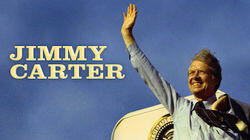
Jimmy Carter: Jimmy Who?
Jimmy Carter's story is one of the greatest dramas in American politics. In 1980, he was overwhelmingly voted out of office in a humiliating defeat. Over the subsequent two decades, he became one of the most admired statesmen and humanitarians in America and the world. Through interviews with the people who know him best, Jimmy Carter traces his rapid ascent in politics, dramatic fall from grace, and unexpected resurrection, including Carter family home movies and a rare film sequence of Carter's final hours in the Oval Office, when he and his advisors waited in vain for the release of the Americans who had been held hostage in Tehran for 444 days.
Carter was the first president to confront the challenge of militant Islam, then embodied by the Ayatollah Khomeini, leader of the Iranian revolution. Carter was also the first president to embark on what would prove to be the excruciating road to peace in the Middle East. But in the end, his presidency was undone by his failure to secure the hostages' release and by a plummeting economy. Yet the memories of his presidency — gas lines, inflation, recession, the Iran hostage crisis, an ineffectual and fractured administration, and the so-called national malaise — would be eclipsed, finally, by his post-presidential successes as a peacemaker in the world's most troubled areas, and his emergence as a champion for the poor in his own country.
Jimmy Carter: Hostage
Jimmy Carter's story is one of the greatest dramas in American politics. In 1980, he was overwhelmingly voted out of office in a humiliating defeat. Over the subsequent two decades, he became one of the most admired statesmen and humanitarians in America and the world. Through interviews with the people who know him best, Jimmy Carter traces his rapid ascent in politics, dramatic fall from grace, and unexpected resurrection, including Carter family home movies and a rare film sequence of Carter's final hours in the Oval Office, when he and his advisors waited in vain for the release of the Americans who had been held hostage in Tehran for 444 days.
Carter was the first president to confront the challenge of militant Islam, then embodied by the Ayatollah Khomeini, leader of the Iranian revolution. Carter was also the first president to embark on what would prove to be the excruciating road to peace in the Middle East. But in the end, his presidency was undone by his failure to secure the hostages' release and by a plummeting economy. Yet the memories of his presidency — gas lines, inflation, recession, the Iran hostage crisis, an ineffectual and fractured administration, and the so-called national malaise — would be eclipsed, finally, by his post-presidential successes as a peacemaker in the world's most troubled areas, and his emergence as a champion for the poor in his own country.
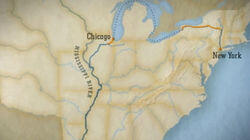
Chicago: City of the Century: Mudhole to Metropolis

Chicago: City of the Century: The Revolution Has Begun
Chicago: City of the Century: Battle for Chicago
The Murder of Emmett Till
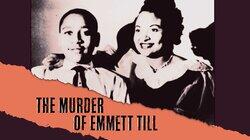
In August 1955, a 14-year-old black boy whistled at a white woman in a grocery store in Money, Mississippi. Emmett Till, a teen from Chicago, didn't understand that he had broken the unwritten laws of the Jim Crow South until three days later, when two white men dragged him from his bed in the dead of night, beat him brutally, and then shot him in the head. Although his killers were arrested and charged with murder, they were both acquitted quickly by an all-white, all-male jury. Shortly afterward, the defendants sold their story, including a detailed account of how they murdered Till, to a journalist. The murder and the trial horrified the nation and the world. Till's death was a spark that helped mobilize the Civil Rights movement. Three months after his body was pulled from the Tallahatchie River, the Montgomery bus boycott began.
The Transcontinental Railroad

Partners of the Heart

The Pill
Daughter from Danang

Seabiscuit
On New Year's Eve, 1938, columnist Walter Winchell published his annual list of the year's top ten newsmakers. Franklin Delano Roosevelt was among those mentioned. So was British Prime Minister Neville Chamberlain and Nazi leader Adolf Hitler. The tenth spot, however, went to a horse.
In the 1930s, when Americans longed to escape the grim realities of Depression era, Seabiscuit became a working man's hero. At the height of his career, Seabiscuit became a national obsession. His name was used to sell everything from oranges to hotels, from ladies' hats to dry-cleaning services. Tens of thousands of fans swarmed to the racetracks just to see him work out. One writer called the phenomenon Seabiscuit-itus.
Bataan Rescue

Murder at Harvard
Recently Updated Shows

Doc
Doc centers on the hard-charging, brilliant Dr. Amy Larsen, Chief of Internal and Family Medicine at Westside Hospital in Minneapolis. After a brain injury erases the last eight years of her life, Amy must navigate an unfamiliar world where she has no recollection of patients she's treated, colleagues she's crossed, the soulmate she divorced, the man she now loves and the tragedy that caused her to push everyone away. She can rely only on her estranged 17-year-old daughter, whom she remembers as a 9-year-old, and a handful of devoted friends, as she struggles to continue practicing medicine, despite having lost nearly a decade of knowledge and experience.


Dark Matter
Hailed as one of the best sci-fi novels of the decade, Dark Matter is a story about the road not taken. The series follows Jason Dessen, a physicist, professor, and family man who – one night while walking home on the streets of Chicago – is abducted into an alternate version of his life. Wonder quickly turns to nightmare when he tries to return to his reality amid the multiverse of lives he could have lived. In this labyrinth of mind-bending realities, he embarks on a harrowing journey to get back to his true family and save them from the most terrifying, unbeatable foe imaginable: himself.