American Experience - Season 23

Season 23

Episodes
God in America: A New Adam
A New Adam explores the origins of Christian religion in America and examines how the New World changed the faiths that the settlers brought with them.
God in America: A New Eden
A New Eden explores how an unlikely alliance between evangelical Baptists and enlightenment figures such as Thomas Jefferson served as the foundation of American religious liberty.
God in America: A Nation Reborn
During the 19th century, the forces of modernity challenged traditional faith and drove a wedge between liberal and conservative believers. "A Nation Reborn" explores slavery, and how it splits the nation as abolitionists and slaveholders find justification in the Bible. Frederick Douglass condemns Christianity; President Lincoln struggles to make sense of the war's carnage and the death of his young son. Lincoln, who previously had favored reason over revelation, embarks on a spiritual journey that transforms his ideas about God and the Civil War's ultimate meaning.
God in America: A New Light
"A New Light" explores the intellectual and cultural conflicts between traditional religious beliefs and the forces of modernity, which reached a crescendo in the 1925 trial of John Scopes, a Tennessee teacher arrested for teaching evolution.
God in America: Soul of a Nation
"Soul of a Nation" explores the post-World War II era, when rising evangelist, Billy Graham, tried to inspire a religious revival that fused faith with patriotism in a Cold War battle with "Godless Communism." As Americans flocked in record numbers to houses of worship, non-believers and religious minorities appealed to the U.S. Supreme Court to test the constitutionality of religious expression in public schools. Civil rights leader Martin Luther King Jr. emerged as a modern-day prophet calling upon the nation to honor both biblical teachings and the founders' democratic ideals of equal justice.
God in America: Of God and Caesar
"Of God and Caesar" explores the religious and political aspirations of conservative evangelicals' moral crusade over divisive social issues such as abortion and gay marriage. Across America, the religious marketplace expanded as new waves of immigrants from Asia, the Middle East and Latin America made the United States the most religiously diverse nation. The 2008 presidential election brought the re-emergence of a religious voice in the Democratic Party, bringing the country to a new plateau in its struggle to reconcile faith with politics. The 6-hour series closes with reflections on the role of faith in the public life of the country.
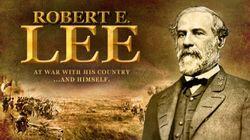
Robert E. Lee
He is celebrated by handsome equestrian statues in countless cities and towns across the American South, and by two postage stamps issued by the government he fought against during the four bloodiest years in American history. Nearly a century and a half after his death, Robert E. Lee, the leading Confederate general of the American Civil War, remains a source of fascination and, for some, veneration. This two-hour film examines the life and reputation of the Confederacy's pre-eminent general, whose military successes made him the scourge of the Union and the hero of the Confederacy during the Civil War, and who was elevated to almost god-like status by his admirers after his death.
Dinosaur Wars
Panama Canal
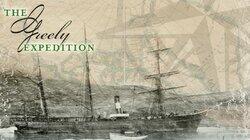
The Greely Expedition
In 1881, 25 men led by Adolphus Greely set sail from Newfoundland to Lady Franklin Bay in the high Arctic, where they planned to collect a wealth of scientific data from a vast area of the world's surface that had been described as a "sheer blank." Three years later, only six survivors returned, with a daunting story of shipwreck, starvation, mutiny, and cannibalism.
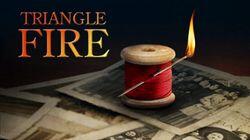
Triangle Fire
It was the deadliest workplace accident in New York City's history. A dropped match on the 8th floor of the Triangle Shirtwaist Factory sparked a fire that killed over a hundred innocent people trapped inside. The private industry of the American factory would never be the same. The 1911 fire at the Triangle Shirtwaist Factory in New York's Greenwich Village resulted in legislation ensuring the most comprehensive workplace safety laws in the U.S.
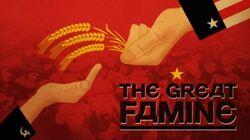
The Great Famine
The American Experience looks at Hebert Hoover's American Relief Administration and its efforts to distribute food during the Great Russian Famine of 1921.
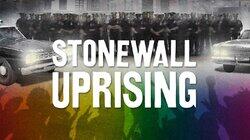
Stonewall Uprising
When police raided the Stonewall Inn, a popular gay bar in the Greenwich Village section of New York City on June 28, 1969, the street erupted into violent protests that lasted for the next six days. The Stonewall riots, as they came to be known, marked a major turning point in the modern gay civil rights movement in the United States and around the world.
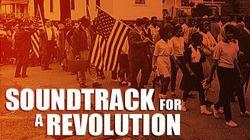
Soundtrack for a Revolution
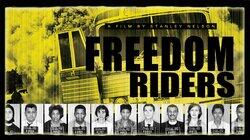
Freedom Riders
Freedom Riders is the powerful, harrowing, and ultimately inspirational story of six months in 1961 that changed America forever. From May until November 1961, more than 400 black and white Americans risked their lives—and many endured savage beatings and imprisonment—for simply traveling together on buses and trains as they journeyed through the Deep South. Deliberately violating Jim Crow laws in order to test and challenge a segregated interstate travel system, the Freedom Riders met with bitter racism and mob violence along the way, sorely testing their belief in nonviolent activism.
From award-winning filmmaker Stanley Nelson (Wounded Knee, Jonestown: The Life and Death of Peoples Temple, The Murder of Emmett Till), Freedom Riders features testimony from a fascinating cast of central characters: the Riders themselves, state and federal government officials, and journalists who witnessed the Rides firsthand. The two-hour documentary is based on Raymond Arsenault's book Freedom Riders: 1961 and the Struggle for Racial Justice.
Recently Updated Shows


Doc
Doc centers on the hard-charging, brilliant Dr. Amy Larsen, Chief of Internal and Family Medicine at Westside Hospital in Minneapolis. After a brain injury erases the last eight years of her life, Amy must navigate an unfamiliar world where she has no recollection of patients she's treated, colleagues she's crossed, the soulmate she divorced, the man she now loves and the tragedy that caused her to push everyone away. She can rely only on her estranged 17-year-old daughter, whom she remembers as a 9-year-old, and a handful of devoted friends, as she struggles to continue practicing medicine, despite having lost nearly a decade of knowledge and experience.


Dark Matter
Hailed as one of the best sci-fi novels of the decade, Dark Matter is a story about the road not taken. The series follows Jason Dessen, a physicist, professor, and family man who – one night while walking home on the streets of Chicago – is abducted into an alternate version of his life. Wonder quickly turns to nightmare when he tries to return to his reality amid the multiverse of lives he could have lived. In this labyrinth of mind-bending realities, he embarks on a harrowing journey to get back to his true family and save them from the most terrifying, unbeatable foe imaginable: himself.
