Ancient Apocalypse - Season 2

Season 2

Episodes
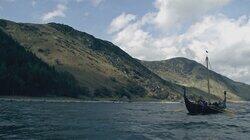
The Greenland Vikings
Led by Erik the Red, in 985 AD, an initial wave of Vikings from Scandinavia establish two successful outposts along the fjords of Southern Greenland – the ‘Eastern' and ‘Western' settlements. Numbering around 4,000 at their peak, they construct manor house and work the harsh terrain, to make it suitable for their European pastoralist life. They raise sheep, goats, and cattle; they trade furs, walrus-tusk ivory, and other arctic goods with Europe. For hundreds of years, they hold a quasi-monopoly on the European ivory trade, and almost all of it comes from walruses hunted by the Norsemen in Greenland. However, despite their commercial success, the Norse suddenly and mysteriously disappear from historical record at the start of the 15th century. The fate of the Norse will continue to bewilder archaeologists for centuries to come.
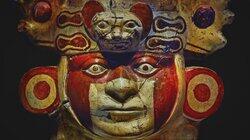
The Moche
The Moche flourished in a narrow strip between the Pacific Ocean and the Andres mountains of Peru for 650 years (100-750 AD). Sometimes referred to as the 'Greeks of the Andes', the Moche may have founded the first South American state. Their culture was contemporary with the Nazca civilisation but through conquest and expansion they were able to accumulate the wealth and power necessary to become the most important pre-Incan culture. Despite desert conditions, they created a prosperous agricultural civilisation: their engineers building canals up to 32 km long to irrigate the land. Their temples and monuments include enormous pyramid mounds which dominate the landscape to this day. But their society is short-lived and around the 6th century AD, the Moche succumb to a series of disasters that lead to the end of their culture.
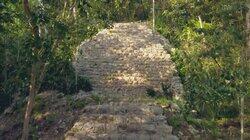
The Aztecs
The Aztec Empire was the last great civilisation and dominant power of Mesoamerica in the 15th and 16th centuries. By the time the Spanish arrived in 1519, the Aztecs had built an empire covering an area of about 200km2. Its capital city of Tenochtitlan was a huge trading centre and it supported up to 140,000 people, making it the largest city in the Pre-Columbian Americas. Underpinning this empire was its military power of conscripted adult males. Aztec cities boasted temples, palaces and artwork displaying devotion to many gods. They developed sophisticated writing systems, calendars, and a religion that required human sacrifice. Yet their powerful empire would soon be decimated by their encounters with European colonisers and their demise does not just lie in the technological advantages their conquerors had against them.
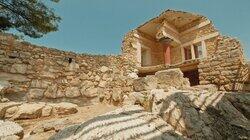
The Minoans
The Minoans, considered by many as the first European civilisation, flourished in the islands of the Aegean in the 3rd and 2nd millennia BCE before eventually disappearing around 1100 BC. A sophisticated people, both artistically and technologically, they are described as the first literate society in Europe, having left behind an unmatched legacy of unique art and architecture, incredible labyrinth-like palace complexes and fine artefacts. Their mercantile culture led to their presiding over a vast trade network and the grandeur of their civilisation is immortalised in the myth of King Minos and the Minotaur trapped beneath his palace at Knossos. But despite an extended period of cultural growth, Minoan civilisation is abruptly ended around 1550 BC as a result of a powerful explosive event.
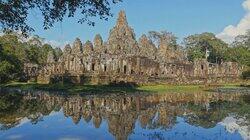
The Khmer
Founded at the beginning of the 9th century CE, the Khmer Empire had been one of the most powerful states in Southeast Asia, covering much of Cambodia, Thailand, Laos, and Southern Vietnam. The jewel in the crown was the capital city of the Khmer – Angkor – containing the largest religious structure ever built, Angkor Wat. The key to this growth was the Khmer mastery of rice cultivation and water management. Khmer cities were ‘hydraulic cities', made up of complex systems of canals and reservoirs called ‘barays', which steered water from the Khulen mountains to the plains of Angkor, ensuring a year-round supply for the population, agriculture, and livestock. Soon, however, the very factors that allowed the empire to rise lead to the abandonment of the Khmer's magnificent temple-cities and their reclaim by the rainforest.
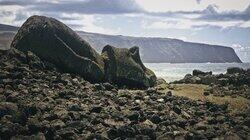
The Rapa Nui
Hundreds of years ago, sea-faring people called the Rapa Nui flourished on a small island at the easternmost edge of the Polynesian Islands – the Easter Island. When Europeans explorers first arrived in 1722, they found a tropical paradise, a land safeguarded by mysterious stone figures known as the moai. Hundreds of these statues dot the land to this day, facing inwards on the island, as if protecting its people.
Scholars and archaeologists have spent centuries sifting through discoveries, trying to solve the mystery of the Rapa Nui. They soon discovered that the outbreak of a major conflict had devastating effects for the population on the Easter Island. Suddenly after, the Rapa Nui further succumbed to a series of deadly events that saw the entire social order of the island collapse and their culture, lost to history.
Recently Updated Shows

Beyond the Gates
Beyond the Gates is set in a leafy Maryland suburb just outside of Washington D.C., and in one the most affluent African American counties in the United States. Here you'll find a posh gated community with winding tree-lined streets and luxurious mansions to call home. At the center of this community are the Duprees, a powerful and prestigious multi-generational family that is the very definition of Black royalty. But behind these pristine walls and lush, manicured gardens are juicy secrets and scandals waiting to be uncovered. And those that live outside these gates are watching closely. These are the places where our characters live, love, work and play. Those who have "made it" and those who haven't are all trying to navigate life … and some with more grace than others.

Days of Our Lives
Days of our Lives is set in the fictitious Midwestern town of Salem. The core families are the Bradys, the Hortons and the DiMeras, and the multi-layered storylines involve elements of romance, adventure, mystery, comedy and drama.
Beginning on September 12, 2022, DAYS became exclusive to streaming on Peacock.

Jeopardy!
Jeopardy! is a classic game show -- with a twist. The answers are given first, and the contestants supply the questions. Three contestants, including the previous show's champion, compete in six categories and in three rounds (with each round's "answers" being worth more prize money).
Survivor
Eighteen to twenty castaways will compete against each other on Survivor. All castaways will compete to outwit, outplay, outlast and ultimately be crowned Sole Survivor.

Last Week Tonight with John Oliver
On Last Week Tonight with John Oliver, John Oliver presents a satirical look at the week in news, politics and current events.