Begin Japanology - Season 3 / Year 2009
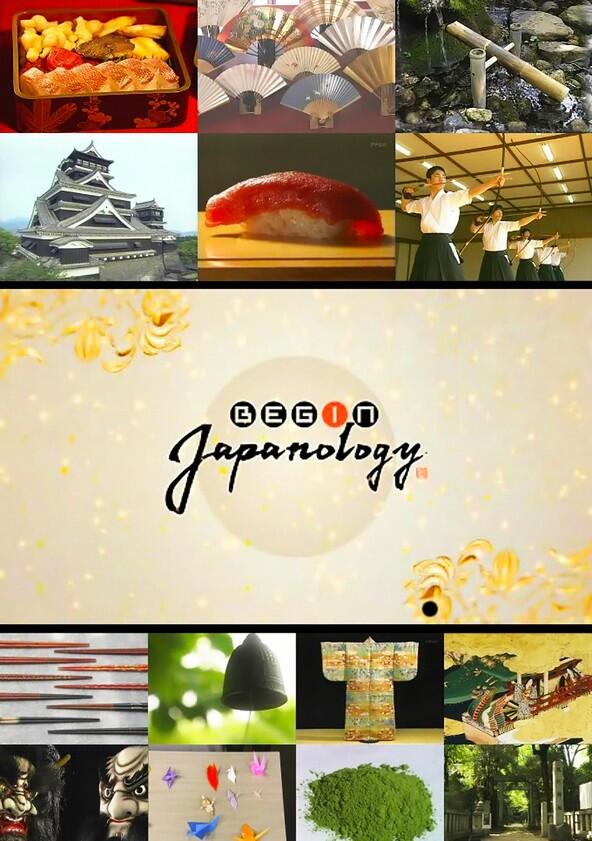
Season 3 / Year 2009

Episodes

Nishijin-ori
Kyoto Lacquerware
Sake
Katsura Rikyu
Bonsai
The Four Seasons
Hina Dolls
Nagasaki
Five-Story Pagodas
Cherry Blossoms
Chopsticks
Aizome
Bunraku
Kiriko Cut Glass
Traditional Folk Houses
Tea Ceremony
Soba
Affordable, casual and tasty, soba noodles are one of the most popular foods in Japan. Whether as a light lunch, as part of an evening's carousing, or at special once-a-year ceremonies, these nourishing noodles made from buckwheat flour are enjoyed throughout the country. The custom of eating soba caught on more than three centuries ago as an affordable street food among the ordinary people of Japan. It was a specialty of the shogun's capital, Edo (modern-day Tokyo), where it dovetailed perfectly with the busy lifestyle of the townspeople. There are various types of soba noodle, and they're prepared in many different ways - cold, with a simple dip; hot in a rich, savory soup; or served with a variety of tasty toppings, such as tempura, egg, deep-fried tofu, or slices of duck meat. These preparations are enjoyed year-round. Generations of soba craftsmen have developed techniques to draw out the flavor from the plain-tasting buckwheat grain. There are still many restaurants that make their noodles in the traditional way. In recent years, there's also been a boom for home-made noodles. Soba-making classes attract plenty of aspiring soba-makers, often middle-aged or older men aiming to take their love of soba to the next level. Discover how these simple noodles developed from a humble street food and are now prized by local gourmets.
Origami
Imari Porcelain
Folding Fan
Kaiseki Cuisine
The Sounds of Japan
Masks
Satoyama
Kendo
The Fragrances of Japan
Spinning Tops
Rock and Stone
Ink Brushes
Since ancient times, people in Japan have devoted themselves to the traditional art of calligraphy, shodo. Writing characters with ink on paper, they create works that express the inherent beauty of the Japanese written language. In shodo, brushes are used for applying the ink to the paper. The expressiveness of the characters derives from variations in the speed and force that the calligrapher uses to move the brush. The brushes themselves are simple objects, made from bundles of animal hair or other materials bundled together and fixed to a shaft. The actual materials used will depend on the style of calligraphy that is desired. Around 80 percent of Japanese ink brushes are produced in Kumano, Hiroshima Prefecture. There are numerous workshops in this town where skilled craftsmen still make the brushes by hand in the traditional way. On this edition of BEGIN Japanology, we examine the history, development and contemporary applications of ink brushes, introducing these simple implements that have been so essential to the development of Japanese writing and painting.
Tsukemono
Dogs
Ramen
Rice
Shinto Shrine
Festivals
In Japan, festivals are known as matsuri. Many matsuri are colorful and boisterous occasions. Matsuri are typically associated with a Shinto shrine. Local people gather to pray and give thanks to the enshrined deity for agricultural bounty, health, safety and security. Over the years, these gatherings have evolved into elaborate events that frequently feature dancing, masks and magnificent floats. Entire local communities may be drawn into the preparations for festivals, which have nurtured some of the most refined arts and crafts in Japan. Even the sophisticated Noh theatre has festival origins, and, in some communities, apprentices will spend years learning a craft such as woodcarving specifically for its application in an annual matsuri. Some festivals involve breathtaking demonstrations of courage and skill, and all contribute to stronger family and community bonds. On this edition of BEGIN Japanology, we present some of the most famous festivals in Japan and consider the links to community and culture.
Shinkansen
Gagaku
Marriage
Shogi
Nabe Cuisine
Sword
Recently Updated Shows

Law & Order: Special Victims Unit
In the criminal justice system, sexually-based offenses are considered especially heinous. In New York City, the dedicated detectives who investigate these vicious felonies are members of an elite squad known as the Special Victims Unit. These are their stories.
Rick and Morty
Rick is a mentally gifted, but sociopathic and alcoholic scientist and a grandfather to Morty; an awkward, impressionable, and somewhat spineless teenage boy. Rick moves into the family home of Morty, where he immediately becomes a bad influence.

The Agency
The Agency follows Martian, a covert CIA agent ordered to abandon his undercover life and return to London Station. When the love he left behind reappears, romance reignites. His career, his real identity and his mission are pitted against his heart; hurling them both into a deadly game of international intrigue and espionage.