British Isles: A Natural History - Season 1
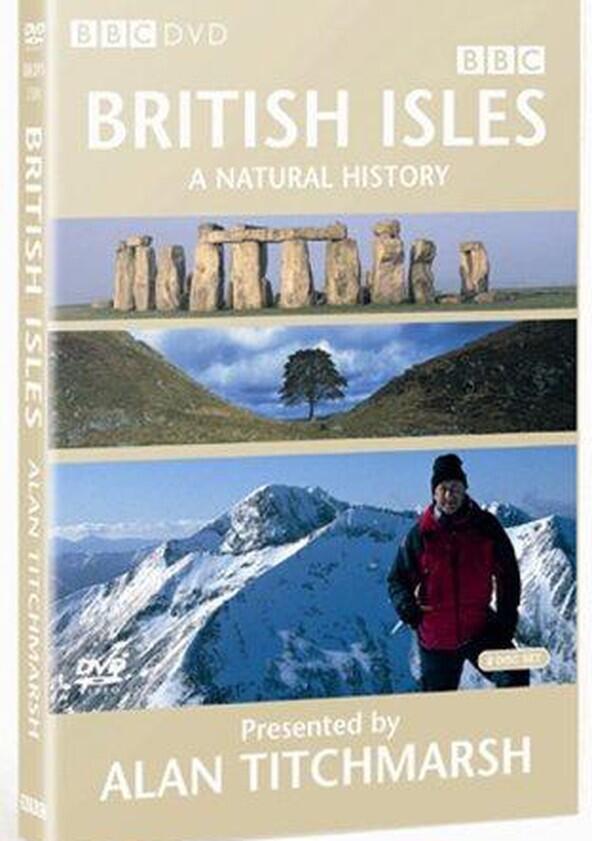
Season 1

Episodes
Three Billion Years in the Making
Beginning in a familiar garden setting, Alan peels back the layers of Britain's varied past. He travels to his native Yorkshire to reveal how innocent sounding place names provide evidence of a wild legacy. On Scotland's Isle of May, he discovers how white seal pups hold a clue to Britain's snowy heritage. Finally, Alan explores how diverse rock formations are a testament to Britain's turbulent past.

Dinosaurs, Deserts, Volcanoes
From Jurassic Oxford to Scotland's Himalayas, Alan explores the secret history hidden in the rocks beneath our feet. He discovers how Scotland and England drifted together from their original locations, near the Equator and the South Pole, and finds fossils which reveal that the Yorkshire Dales was once a sea with coral reefs. The volcanic eruption which created the Giant's Causeway marked the birth of the Atlantic Ocean and the emergence of the British Isles.

Ice Age
Alan gets under the skin of the much misunderstood Neanderthal man, examines relics from the past and discovers that an ice sheet covering most of Britain stopped at London's Finchley Road tube station. Armed with a geologist's microphone, he eavesdrops on the groans of a Norwegian glacier.
In Trafalgar Square, 19th century builders found an extraordinary collection of bones, including those of hippos, hyenas and lions, demonstrating that the Ice Age was not unrelentingly cold.

Islands Apart
Alan ventures 50 metres below the Channel, scales an ancient tree in the New Forest and stalks red deer in Scotland to tell the story of how island Britain was created. He searches for clues across the country, discovering tropical nickar nuts in Scotland, palm trees growing at latitudes where polar bears should feel more at home and watching whooper swans in Cambridgeshire who arrive from Siberia for Britain's milder winters.
Taming the Wild
Piecing together clues from the natural and man-made landscape, Alan looks at the dramatic changes that have affected the British Isles from the Stone Age to the Industrial Revolution. The entire population of Britain could fit into a football stadium 8000 years ago. Today we probably see more people on the way to work than one of our ancestors would have seen in a lifetime. The clearing of forests for agriculture and the introduction of new species changed the landscape for ever.
Revolution
The way of life of many animals was shaped by the industrial age. The canal network not only provided transport for bulk goods, it was also a fantastic new habitat. In Wales slate quarries, with their cliff-like ledges, provided a new home for coastal birds and falcons. London in the 1800s was the largest city in the world. Coal fires choked the city and the Victorians planted large numbers of London plane trees. They became the capital's lungs, changing the tree-scape of cities forever.
Modern Times
Alan tracks down red squirrels in Lancashire, a rare butterfly on the Norfolk Broads and plays with high explosives on the moorlands of Northumberland to find out just how Britain's flora and fauna has adapted to the amazing transformations that have taken place over the last century. Two world wars, a rising population and huge technological developments have had a significant impact on man's relationship with the landscape.
Our Future
A Mediterranean climate, an eternal winter or a devastating flood, Alan examines the options for the future of Britain. In the Lake District, Alan spots Wordsworth's famous daffodils blooming a month early. Leaves are falling later and migrating birds arrive earlier. But these changing temperatures are nothing new.
Recently Updated Shows

Rebus
Rebus follows 40-year-old police detective John Rebus, who finds himself at a psychological crossroads following an altercation with an infamous Edinburgh gangster. At odds with a job increasingly driven by corporate technocrats, involved in a toxic affair he knows he needs to end, and all but supplanted in his daughter's life by his ex-wife's wealthy new husband, Rebus begins to wonder if he still has a role to play – either as a family man or a police officer.
In a world of divisive politics and national discord, does the law still have meaning, or is everyone reverting to an older set of rules? And if so, why shouldn't Rebus do so too?
True Detective
Touch darkness and darkness touches you back. True Detective centers on troubled cops and the investigations that drive them to the edge. Each season features a new cast and a new case.
True Detective is an American anthology crime drama television series created and written by Nic Pizzolatto.
Shōgun
Shōgun is set in Japan in the year 1600 at the dawn of a century-defining civil war. Lord Yoshii Toranaga is fighting for his life as his enemies on the Council of Regents unite against him, when a mysterious European ship is found marooned in a nearby fishing village.

Sugar
John Sugar is an American private investigator on the heels of the mysterious disappearance of Olivia Siegel, the beloved granddaughter of legendary Hollywood producer Jonathan Siegel. As Sugar tries to determine what happened to Olivia, he will also unearth Siegel family secrets; some very recent, others long-buried.