We Are Making a New World

In a major re-calibration of 20th-century British paintings, art historian James Fox argues that British painting from 1910 to 1975 was an extraordinary flowering of genius. He predicts that art historians of the future will rank the period alongside the Golden Ages of Renaissance Italy and Impressionist France.
Drawing upon the work of Paul Nash, Graham Sutherland, Francis Bacon, Stanley Spencer and David Hockney, among others, Fox explores why, during the 20th century, British painters were often dismissed for being old-fashioned. He reveals how these artists carefully reconciled tradition and modernity, providing a unique creative tension that now makes the period seem so exciting.
Over the course of the three-part series, Fox presents his theory that this period of artistic excellence was closely linked to a dramatic shift in Britain's fortunes. He suggests that the demise of the British Empire, as much as the two world wars, defines Britain's unique take on modern art: a determination to rediscover and cling on to 'Britishness' while the country's territorial assets and global influence fell away.
In the years immediately before and during the First World War, a radical generation of painters determined to eject Victorian sentimentality and nostalgia from their art pioneered a new style of painting that would capture and make sense of the modern experience. Walter Sickert shocked the public by making the low-lives of Camden Town and a brutal murder the subject of his gaze. Wyndham Lewis and David Bomberg broke with centuries of realist tradition, reducing humanity to cold geometric forms. But as the country descended into war, three painters - Christopher Nevinson, Paul Nash and Stanley Spencer - reconciled what was best of the avant-garde with Britain's rich painterly tradition to create powerful images of war that would speak to us all.
Trailer
Recently Updated Shows

Lioness
Lioness, inspired by an actual U.S. Military program, follows the life of Joe while she attempts to balance her personal and professional life as the tip of the CIA's spear in the war on terror. The Lioness Program, overseen by Kaitlyn Meade and Donald Westfield, enlists an aggressive Marine Raider named Cruz to operate undercover alongside Joe among the power brokers of State terrorism in the CIA's efforts to thwart the next 9/11.

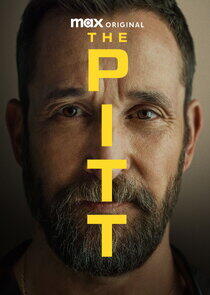
The Pitt
The Pitt is a realistic examination of the challenges facing healthcare workers in today's America as seen through the lens of the frontline heroes working in a modern-day hospital in Pittsburgh, Pennsylvania. Each episode follows an hour of Dr. Robby's 15-hour shift as the chief attendant in Pittsburgh Trauma Medical Hospital's emergency room.

Dark Matter
Hailed as one of the best sci-fi novels of the decade, Dark Matter is a story about the road not taken. The series follows Jason Dessen, a physicist, professor, and family man who – one night while walking home on the streets of Chicago – is abducted into an alternate version of his life. Wonder quickly turns to nightmare when he tries to return to his reality amid the multiverse of lives he could have lived. In this labyrinth of mind-bending realities, he embarks on a harrowing journey to get back to his true family and save them from the most terrifying, unbeatable foe imaginable: himself.

Murdoch Mysteries
Set in Toronto at the dawn of the 20th century, Murdoch Mysteries is a one-hour drama series that explores the intriguing world of William Murdoch, a methodical and dashing detective who pioneers innovative forensic techniques to solve some of the city's most gruesome murders. Murdoch's colleagues include the love of his life, coroner and psychiatrist Dr. Julia Ogden, a staunch ally who shares the detective's fascination for science; Constable George Crabtree, Murdoch's eager but sometimes naïve right-hand man; Inspector Brackenreid, Murdoch's skeptical yet reluctantly supportive boss; and coroner Dr. Emily Grace, Dr. Ogden's protégé.