The Cult of Progress
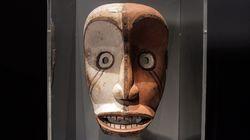
If David Olusoga's first film in Civilisations is about the art that followed and reflected early encounters between different cultures, his second explores the artistic reaction to imperialism in the 19th century. David shows the growing ambivalence with which artists reacted to the idea of progress – both intellectual and scientific - that underpinned the imperial mission and followed the Enlightenment and the Industrial Revolution. Advances in knowledge and technology imbued Europeans in the 19th century with a sense of their civilisation's superiority. It justified their imperial ideology. But it created among artists a deep fascinations with other civilisations which in turn produced a scepticism about their own. By contrast, as European artists questioned their civilisation's ‘advance', in America painters sought to capture an idea of their new nation's ‘manifest destiny' in landscapes. And in their representation of the Native Americans they sought to record for posterity the world and the cultures they were violently displacing. But this was not always the case.
David shows how in New Zealand one artist was co-opted by the Maori who used his sills to record their culture and celebrate their ancestors. As the 19th Century came to an end, the certainties of industrial and scientific advance were increasingly questioned; many artists (Gauguin and Picasso amongst them) turned to non-Western art and culture for inspiration. And in the face of the catastrophic conflict of the First World War, the idea that progress, reason and industrial advance were guarantors of higher ‘civilisation' was rejected.
David ends the film with a powerful meditation on Otto Dix's nightmarish and ironic evocation of the horror of the trenches, the triptych Der Krieg (The War).
Trailer
Recently Updated Shows

Love Is Blind
With no distractions from the outside world, the singles talk to a stream of potential love interests and when a meaningful connection is made, they propose and then lay their eyes on their fiancé for the first time. Engaged and back in the real world, as the couples plan their wedding day, they will quickly discover whether they can turn their emotional connection into a physical one before the fast-approaching ceremony.

Doc
Doc centers on the hard-charging, brilliant Dr. Amy Larsen, Chief of Internal and Family Medicine at Westside Hospital in Minneapolis. After a brain injury erases the last eight years of her life, Amy must navigate an unfamiliar world where she has no recollection of patients she's treated, colleagues she's crossed, the soulmate she divorced, the man she now loves and the tragedy that caused her to push everyone away. She can rely only on her estranged 17-year-old daughter, whom she remembers as a 9-year-old, and a handful of devoted friends, as she struggles to continue practicing medicine, despite having lost nearly a decade of knowledge and experience.


Dark Matter
Hailed as one of the best sci-fi novels of the decade, Dark Matter is a story about the road not taken. The series follows Jason Dessen, a physicist, professor, and family man who – one night while walking home on the streets of Chicago – is abducted into an alternate version of his life. Wonder quickly turns to nightmare when he tries to return to his reality amid the multiverse of lives he could have lived. In this labyrinth of mind-bending realities, he embarks on a harrowing journey to get back to his true family and save them from the most terrifying, unbeatable foe imaginable: himself.