Civilization: Is the West History? - Season 1
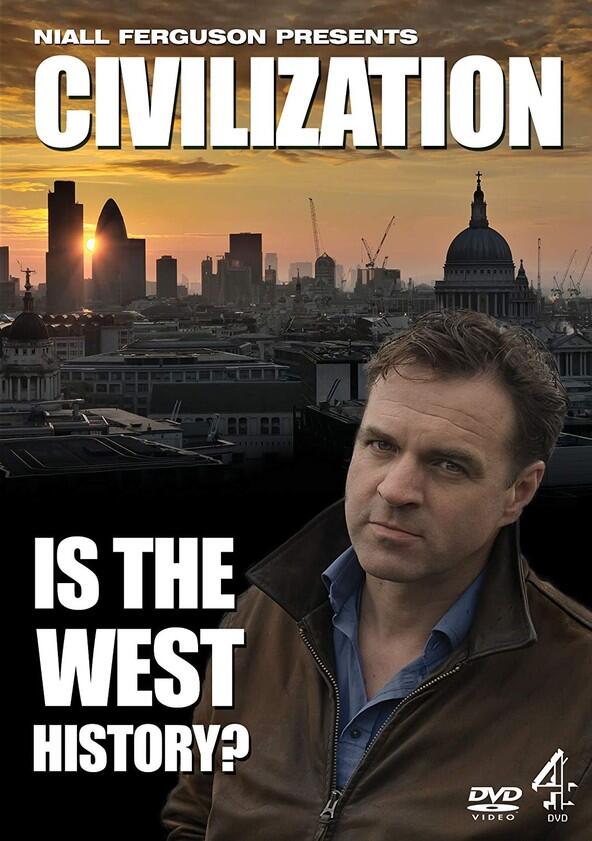
Civilization: Is the West History? - Season 1

Season 1

Network
Episodes6
Datesmars 6, 2011 - avr. 10, 2011

Episodes

Competition
Season 1Episode 160 min

Competition

The first episode begins in 1420 when Ming China had a credible claim to be the most advanced civilization in the world: 'All Under Heaven'. England on the eve of the Wars of the Roses would have seemed quite primitive by contrast. Yet the lead that China had established in technology was not to be translated into sustained economic growth. In China a monolithic empire stifled colonial expansion and economic innovation. In Europe political division bred competition. The question for our own time is whether or not we have lost that competitive edge to a rapidly ascending Asia.
mars 6, 2011
Science
Season 1Episode 260 min

Science

In 1683 the Ottoman army laid siege to Vienna, the capital of Europe's most powerful empire. Domination of West by East was an alarmingly plausible scenario. But the Ottoman army was defeated: not so much by firepower as by science. Ferguson asks why the Islamic world didn't participate in the Scientific Revolution and the Enlightenment, and if the West is still capable of maintaining its scientific lead at a time when educational attainment in science subjects is declining.
mars 13, 2011
Property
Season 1Episode 360 min

Property

Ferguson asks why North America succeeded while Latin America for so many centuries lagged behind. The two had much in common (not least the subjugation of indigenous peoples and the use of slavery by European immigrants), but they differed profoundly on individual property rights, the rule of law and representative government. There were two revolutions against royal rule between 1776 and 1820, yet Simón Bolívar was never able to be George Washington, and Latin America remained politically fragmented, socially divided and economically backward even as the United States rose to global primacy. However, Niall Ferguson asks whether North and South are converging today, linguistically and economically.
mars 20, 2011
Modern Medicine
Season 1Episode 460 min

Modern Medicine

The French Empire consciously set out to civilize Africa by improving public health as well as building a modern infrastructure. Yet in other European empires – notably Germany's in southwest Africa – colonial rule led to genocide. What was the link from medical science to racial pseudo-science? The imperialists talked of their civilizing mission, but their rivalry ultimately caused world wars that endangered the West's global dominance. Today, have Western aid agencies learned lessons from the past? Or is China in the process of building a new African empire?
mars 27, 2011
Consumerism
Season 1Episode 560 min

Consumerism

Today the world is becoming more homogenous and, with increasingly few exceptions, big-name brands dominate main streets, high streets and shopping malls all around the globe. We dress the same; we want the same latest technological kit; we drive the same cars. But where did this uniformity come from? The answer is the combination of the industrial revolution and the consumer society. Originating in UK but flourishing most spectacularly in United States, the advent of mass consumption has changed the way the world worked. Led by the Japanese, one non-Western society after another has adopted the same model, embracing the Western way of manufacturing and consuming. Only the Muslim world has resisted. But how long can the burkha hold out against Levi's? Niall Ferguson examines whether we are now seeing the first effective challenge to the global dominance of Western consumerism.
avr. 3, 2011
Work Ethic
Season 1Episode 660 min

Work Ethic

The sixth element that enabled the West to dominate the rest was the work ethic. Max Weber famously linked it to Protestantism, but the reality is that any culture, regardless of religion, is capable of embracing the spirit of capitalism by working hard, saving, and accumulating capital. The question is why that ethic seems now to be fading in the West. Europeans no longer work long hours, and Americans have almost given up saving completely. The real workers and savers in the world are now the heirs of Confucius, not Calvin. Perhaps, ironically, the biggest threat to Western civilization could turn out to be this Westernization of the world, if the consequence of Asian economic growth is to change the global climate for the worse. Yet these fears may underestimate the ability of Western civilization to solve the world's problems. In the final episode, Niall Ferguson argues that the real threat to our survival is our loss of faith not in religion but in ourselves.
avr. 10, 2011

Recently Updated Shows

Recently updated shows that might be of your interest.
Ghosts
Running

Ghosts

Samantha and Jay throw caution to the wind when they convert their recently inherited country estate into a bed-and-breakfast. Call it mislaid plans. Not only is the place falling apart, but it's also inhabited by spirits of previous residents -- whom only Samantha can see and hear. Ghosts spins the funny, heartfelt story about a newfound dream that reveals connection and self-discovery aren't just for the living.

Young Sherlock
Running

Young Sherlock

Young Sherlock is touted as an irreverent, action-packed origin story of Sir Arthur Conan Doyle's beloved detective in an explosive re-imagining of this iconic character. At age 19, Sherlock Holmes is disgraced, raw, unfiltered, and unformed, when he finds himself caught up in a murder mystery at Oxford University which threatens his freedom. Diving into his first-ever case with a wild lack of discipline, Sherlock manages to unravel a globe-trotting conspiracy that will change his life forever.
Star Trek: Starfleet Academy
Running

Star Trek: Starfleet Academy

Star Trek: Starfleet Academy is set in the 32nd century, a time period in the far-future of the Star Trek franchise where Starfleet and the United Federation of Planets are recovering from a cataclysmic event, as depicted in Star Trek: Discovery. It introduces viewers to a young group of cadets who come together to pursue a common dream of hope and optimism. Under the watchful and demanding eyes of their instructors, they discover what it takes to become Starfleet officers as they navigate blossoming friendships, explosive rivalries, first loves and a new enemy that threatens both the Academy and the Federation itself.

Murdoch Mysteries
Running

Murdoch Mysteries

Set in Toronto at the dawn of the 20th century, Murdoch Mysteries is a one-hour drama series that explores the intriguing world of William Murdoch, a methodical and dashing detective who pioneers innovative forensic techniques to solve some of the city's most gruesome murders. Murdoch's colleagues include the love of his life, coroner and psychiatrist Dr. Julia Ogden, a staunch ally who shares the detective's fascination for science; Constable George Crabtree, Murdoch's eager but sometimes naïve right-hand man; Inspector Brackenreid, Murdoch's skeptical yet reluctantly supportive boss; and coroner Dr. Emily Grace, Dr. Ogden's protégé.

Will Trent
Running

Will Trent

In Will Trent Special Agent Will Trent of the Georgia Bureau of Investigations was abandoned at birth and endured a harsh coming-of-age in Atlanta's overwhelmed foster care system. But now, determined to use his unique point of view to make sure no one is abandoned like he was, Trent has the highest clearance rate in the GBI.

GenreDrama, Crime