Die Deutschen - Season 2
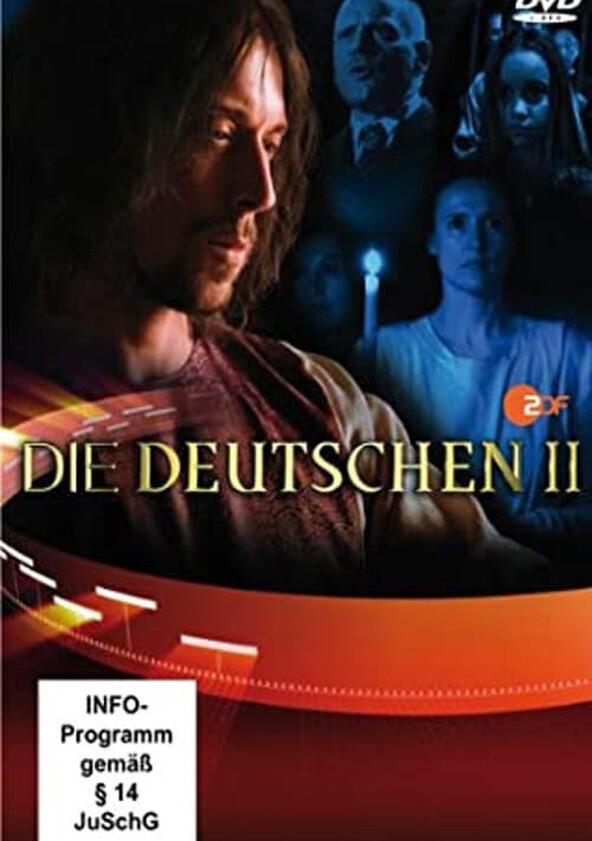
Die Deutschen - Season 2

Season 2

Network
Episodes10
DatesNov 14, 2010 - Dec 14, 2010
Previous Season

Episodes

Charlemagne and the Saxons
Season 2Episode 145 min

Charlemagne and the Saxons

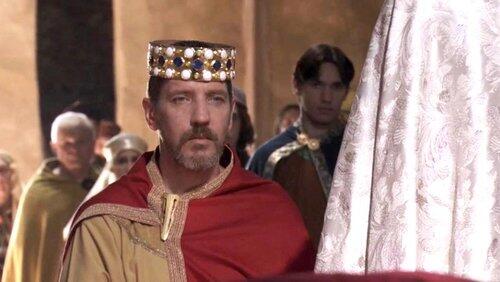
He was already considered the "Father of Europe" by his contemporaries: Charlemagne (probably 748-814). He created a foundation that shaped the continent. Germans and French alike regard the legendary Carolingian as the progenitor.
Nov 14, 2010
Frederick II and the Crusade
Season 2Episode 245 min

Frederick II and the Crusade

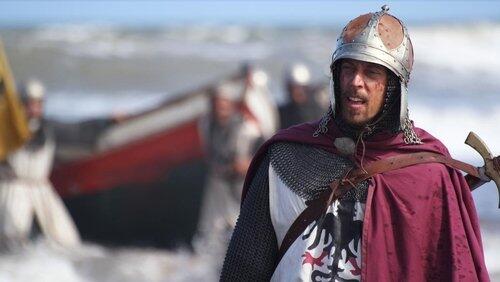
"The wonder of the world" is what some contemporaries called the Staufer Frederick II (1194-1250), whose empire stretched from Sicily to the North Sea coast. In addition to German, he spoke Italian, French, Greek and Arabic, wrote poetry and philosophy, and wrote a book on falconry. As a small child he already possessed the German royal dignity, his mother, Constance of Sicily, had him crowned monarch there. On German soil, a bitter dispute over the throne was once again raging between the Hohenstaufen and Guelph dynasties. Once again, the princely camp was divided, and the pope got involved.
Nov 16, 2010
Hildegard of Bingen and the Power of Women
Season 2Episode 345 min

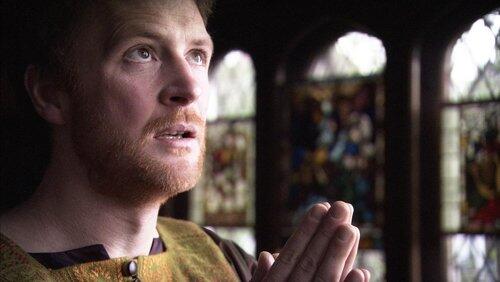
Hildegard of Bingen and the Power of Women

Hildegard von Bingen (1098-1179) is the most popular German of the Middle Ages - on a par with the powerful of her time. She was a visionary, a natural scientist, a politician and composer, a theologian, and even the manager of two monasteries she founded. Many of her writings, especially her knowledge of natural medicine, have lost none of their relevance to this day. Others still raise questions. While some suspect in Hildegard's visions a kind of drug intoxication of the herbalists, others see in it a prophetic gift, even a proof of her holiness.
Nov 21, 2010
Charles IV and the Black Death
Season 2Episode 445 min

Charles IV and the Black Death

The reign of Charles IV (1316-1378) is one of the most dramatic periods in German history. Around the middle of the 14th century, the plague swept away a third of the Germans. The king who ruled during this terrible time was descended from the Luxembourg dynasty. Charles IV was born in Prague in 1316. His father John had married a Bohemian princess and thus became one of the most powerful men in the empire. In 1346, the ambitious Luxembourger succeeded in having his son Charles elected as counter-king to the incumbent Louis the Bavarian by paying horrendous bribes. Charles' position in the empire was initially weak, but the sudden death of Louis, a few months after the election, changed the situation.
Nov 23, 2010
Thomas Müntzer and the Peasants' War
Season 2Episode 545 min

Thomas Müntzer and the Peasants' War

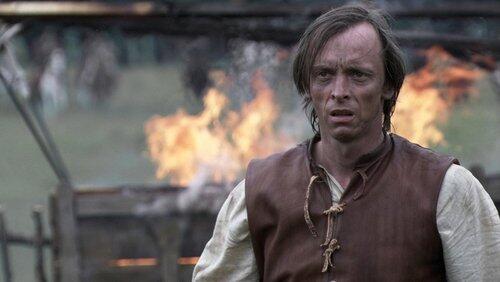
It was the time of upheaval, the Reformation shook the existing order. In 1521, there was turmoil in Zwickau, Saxony: the young priest Thomas Müntzer (1489-1525), who preached at St. Mary's Church, turned against the ecclesiastical and secular authorities and demanded the God-given right to freedom and equality for all people. Müntzer was not a man of compromise. The church criticism of Luther, whom he had once admired, did not go far enough for him. Not only the papacy but also the secular order based on the estates were a thorn in his side.
Nov 28, 2010
Augustus the Strong and Love
Season 2Episode 645 min

Augustus the Strong and Love

He is considered one of the most enigmatic monarchs of modern times: Elector Friedrich August I of Saxony, known as "August the Strong" (1670 to 1733). His princely self-portrayal was comparable only to that of another European monarch: Louis XIV. August's court was to be in no way inferior to that of the French Sun King. Hundreds of festivities a year, balls, masquerades and animal hatches were organized by the king.
Nov 30, 2010
Karl Marx and the Class Struggle
Season 2Episode 745 min

Karl Marx and the Class Struggle

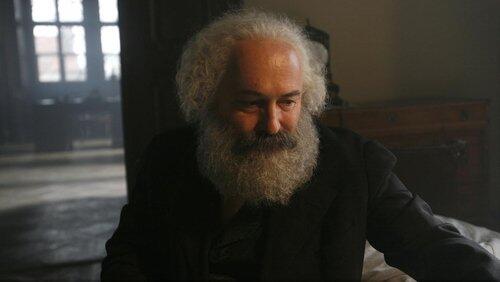
He is one of the most effective best-selling authors in the history of the world, and yet few have read his work in its entirety. His teachings have become a substitute religion, even though the author never saw himself as a founder of faith, but as a scientific analyst. "I am not a Marxist," flirted Karl Marx (1818-1883), whose work influenced the course of world history like no German since Luther. From the middle of the 20th century, about half of humanity was led by governments that invoked the German thinker.
Dec 5, 2010
Ludwig II and the Bavarians
Season 2Episode 845 min

Ludwig II and the Bavarians

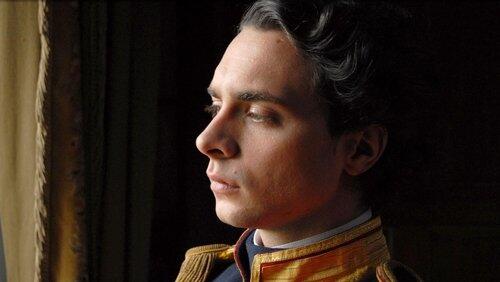
Myths and legends surround the figure of Ludwig II of Bavaria (1845-1886), known as the "fairytale king. He shunned politics and devoted himself above all to his rapturous passions: the operas of Richard Wagner and the construction of magnificent castles such as Neuschwanstein, Linderhof and Herrenchiemsee. However, Ludwig was by no means just a dreamy dreamer, but pursued clear political goals: he believed in the "Third Germany," in an independent power alongside Prussia and Austria. In the mid-19th century, the federal confederation of small and medium-sized German states was a counter-model to a federal state under Prussian leadership. The vision failed because of the political genius of Otto von Bismarck and the military strength of the Hohenzollern state.
Dec 7, 2010
Rosa Luxemburg and Freedom
Season 2Episode 945 min

Rosa Luxemburg and Freedom

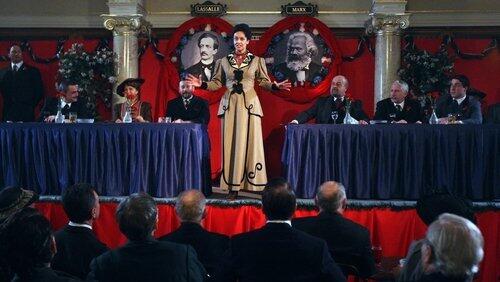
Since her youth, Rosa Luxemburg was convinced that the world had to change. She wanted to realize her dream of a socialist revolution, first in the SPD and later in the German Communist Party, which she co-founded. But the revolution failed. On November 9, 1918, a revolution did indeed break out in Germany - but it ultimately ended with the adoption of the new Weimar Constitution.
Dec 12, 2010
Gustav Stresemann and the Republic
Season 2Episode 1045 min

Gustav Stresemann and the Republic

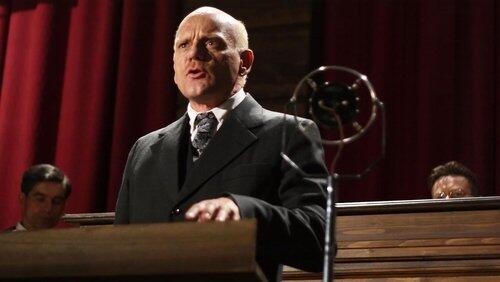
Gustav Stresemann (1878 - 1929) became Reich Chancellor when the young Weimar Republic was once again plunged into chaos: in the crisis year of 1923. Germany was still suffering the consequences of the lost war and the Treaty of Versailles. France and Belgium occupied the Ruhr region to force billions in reparations and gain control over the important industrial region. Inflation reached its peak. Communist uprisings threatened from the left, and the radical right called for a national dictatorship. Becoming chancellor at such a time was "really political suicide," Stresemann wrote to his wife.
Dec 14, 2010

Recently Updated Shows

Recently updated shows that might be of your interest.
The Terror
Running

The Terror

The Terror is an American anthology television series exploring historical speculative fiction based on true events.

The series is named after Dan Simmons's 2007 novel, which serves as the basis for the first season and is a fictionalized account of Captain Sir John Franklin's lost expedition to the Arctic in 1845–1848.

The second season, subtitled Infamy, bears no relation to the book or first season and is mostly set in an American-run Japanese internment camp during World War II.

FBI
Running

FBI

FBI is a fast-paced drama about the inner workings of the New York Field Office of the Federal Bureau of Investigation. These first-class agents, including Special Agent Maggie Bell and her partner, Special Agent Omar Adom 'OA' Zidan, bring all their talents, intellect and technical expertise on major cases in order to keep New York and the country safe.

GenreDrama, Crime
Tracker
Running

Tracker

Tracker features lone-wolf survivalist Colter Shaw, who roams the country as a "reward seeker," using his expert tracking skills to help private citizens and law enforcement to solve all manner of mysteries while contending with his own fractured family.

NCIS
Running

NCIS

NCIS (Naval Criminal Investigative Service) is more than just an action drama. With liberal doses of humor, it's a show that focuses on the sometimes complex and always amusing dynamics of a team forced to work together in high-stress situations. Leroy Jethro Gibbs, a former Marine gunnery sergeant, whose skills as an investigator are unmatched, leads this troupe of colorful personalities. Rounding out the team are Anthony DiNozzo, an ex-homicide detective whose instincts in the field are unparalleled and whose quick wit and humorous take on life make him a team favorite; the youthful and energetic forensic specialist Abby Sciuto, a talented scientist whose sharp mind matches her Goth style and eclectic tastes; Caitlin Todd, an ex-Secret Service Agent; and Timothy McGee, an MIT graduate whose brilliance with computers far overshadows his insecurities in the field; Assisting the team is medical examiner Dr. Donald "Ducky" Mallard, who knows it all because he's seen it all, and he's not afraid to let you know. From murder and espionage to terrorism and stolen submarines, these special agents travel the globe to investigate all crimes with Navy or Marine Corps ties.

Star Trek: Starfleet Academy
Running

Star Trek: Starfleet Academy

Star Trek: Starfleet Academy is set in the 32nd century, a time period in the far-future of the Star Trek franchise where Starfleet and the United Federation of Planets are recovering from a cataclysmic event, as depicted in Star Trek: Discovery. It introduces viewers to a young group of cadets who come together to pursue a common dream of hope and optimism. Under the watchful and demanding eyes of their instructors, they discover what it takes to become Starfleet officers as they navigate blossoming friendships, explosive rivalries, first loves and a new enemy that threatens both the Academy and the Federation itself.