Empire: How Britain Made the Modern World - Season 1
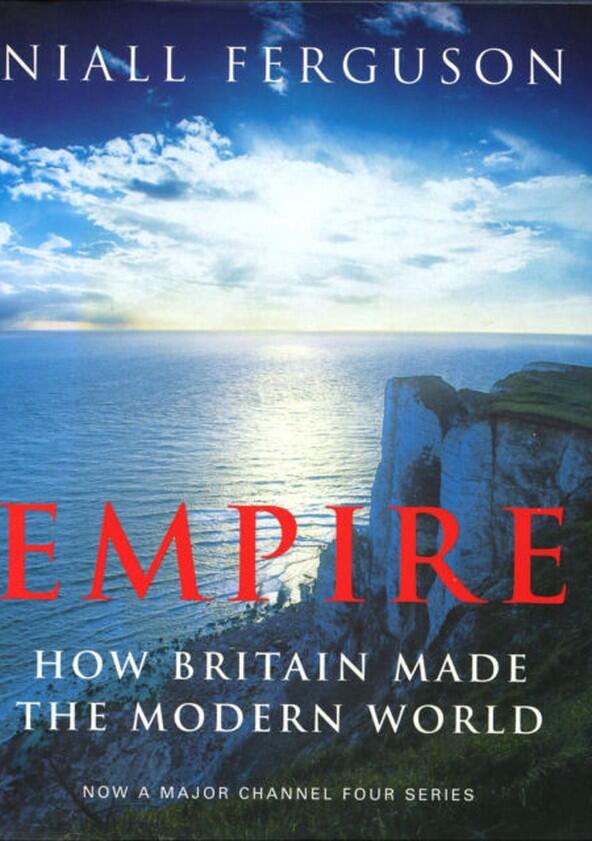
Empire: How Britain Made the Modern World - Season 1

Season 1

Network
Episodes6
Datesjanv. 4, 2003 - févr. 8, 2003

Episodes

Why Britain?
Season 1Episode 150 min

Why Britain?

In this programme we learn about the origins of the British empire in the 17th century and how its foundations were laid, not by a grand political strategy but by British pirates, especially in the Caribbean. The British economic style of reinvesting in places like Jamaica led to commercial success as its raw materials – sugar, tobacco and coffee – were in huge demand back at home in Britain. Seventeenth-century India was a rich nation, producing a quarter of the world's output, so it is no surprise that the major nations fought over it. The British won the seven-year war with France over supremacy in the colonies, thanks to its superior warships and much stronger finances, which left Britain as the controlling force in India. We get a glimpse of how the British lived in India, the central role played by the East India Company, and how a commercial base developed into political control.
janv. 4, 2003
White Plague
Season 1Episode 250 min

White Plague

The concept of 'plantation' is explored in this programme, yet presenter Niall Ferguson is not referring to crops but the settlement of British people into the colonies. Without this mass white emigration there would have been no empire. Visiting Northern Ireland, the USA and Australia, we explore how the first colonies of the British empire developed. In contrast to the Spanish, the British viewed the colonies as a way to gain land to settle on and use, rather than just conquest and plunder. The east coast of the USA was first settled by puritans wanting religious freedom, including those who sailed on the famous ship 'The Mayflower' in 1620. The combination of cheap land and abundant natural resources made this an ideal location for sugar and tobacco plantations. Niall goes on to describe the American War of Independence a century and a half later.
janv. 11, 2003
The Mission
Season 1Episode 350 min

The Mission

Following the religious revival that started in the late 18th century, missionaries began working in Africa and India in an attempt to bring Christianity and civilisation to societies perceived as heathens. We learn of David Livingstone's adventures in Africa as he attempted to link the three 'C's – Christianity, commerce and civilisation. From his discovery of the Victoria Falls to his famous meeting with Henry Stanley, we follow the career of this fascinating character. Presenter Niall Ferguson also travels to India and examines the changing attitudes towards Indian religions and culture during the 19th century. He also traces the Indian mutiny of 1857 and its brutal aftermath in which thousands were brutally killed.
janv. 18, 2003
Heaven's Breed
Season 1Episode 450 min

Heaven's Breed

In this programme we discover how a few thousand British people ruled over India, a country of more than 250 million people and the centre point of the whole British empire. Niall Ferguson demonstrates the vital role played by the Indian army both within India and beyond, and the role of British technology in developing the army and modern Indian cities. Modern-day footage of the hill station at Simla gives us a glimpse of colonial life in late 19th century India. From the early 19th century an elite class of well-educated Indians was encouraged, with men like JN Bose becoming successful lawyers and administrators. In fact, the British administrators were so few in number that it was essential to involve Indian people in their own government. Yet by the end of the 19th century the White Mutiny threatened to end this liberal attitude and ultimately led to a genuine Nationalist movement.
janv. 25, 2003
Maxim Force
Season 1Episode 550 min

Maxim Force

The 'Scramble for Africa' by competing European nations during the last years of Queen Victoria's reign is the compelling tale of this programme. We learn how 10,000 independent African kingdoms became 40 European colonies over the course of two decades, in a drastic redrawing of the map. Indeed, by 1900 Britain owned half of Africa. No longer dominated by moral and religious concerns, this new era was about power and the economy as the battle for raw materials progressed. Power was in the hands of bankers and industrialists such as Rothschild and Cecil Rhodes, as illustrated by their use of the new Maxim guns to keep any opponents in check. By this stage it was businessmen doing the colonising and not governments.
févr. 1, 2003
Empire for Sale
Season 1Episode 650 min

Empire for Sale

The fall of the British empire is usually attributed to Nationalist groups fighting for independence, yet as Niall Ferguson argues in this final programme of the series, it was really due to the crippling cost of running the empire and financing the two World Wars. He reflects on the achievements and problems of the empire and concludes that in its twilight years Britain did more good than harm in fighting two far worse empires, namely Japan and Germany. Visiting some of the hot spots of the two World Wars and of the campaigns for independence that followed, such as Gallipoli, Istanbul, Suez, Amritsar and Singapore, presenter Niall Ferguson gives us a vivid picture of an empire on its last legs.
févr. 8, 2003

Recently Updated Shows

Recently updated shows that might be of your interest.
The Terminal List
Running

The Terminal List

Based on the best-selling novel by Jack Carr, The Terminal List follows James Reece after his entire platoon of Navy SEALs is ambushed during a high-stakes covert mission. Reece returns home to his family with conflicting memories of the event and questions about his culpability. However, as new evidence comes to light, Reece discovers dark forces working against him, endangering not only his life but the lives of those he loves.

Black Mirror
Running

Black Mirror

Over the last ten years, technology has transformed almost every aspect of our lives before we've had time to stop and question it. In every home; on every desk; in every palm - a plasma screen; a monitor; a smartphone--a black mirror of our 21st Century existence. Black Mirror is a contemporary British re-working of The Twilight Zone with stories that tap into the collective unease about our modern world.

The Librarians: The Next Chapter
Running

The Librarians: The Next Chapter

The Librarians: The Next Chapter centers on Vikram Chamberlain, a "Librarian" from the past who time traveled from 1847 and now finds himself stuck in the present. When Vikram returns to his castle in Belgrade, Serbia and discovers that it is now a museum, he inadvertently releases magic across the continent. With the help of a new team of eclectic heroes, including a savant in world history, a scientific genius, and a highly skilled Guardian, Vikram has only six months to clean up the mess he made.

Law & Order: Special Victims Unit
Running

Law & Order: Special Victims Unit

In the criminal justice system, sexually-based offenses are considered especially heinous. In New York City, the dedicated detectives who investigate these vicious felonies are members of an elite squad known as the Special Victims Unit. These are their stories.

Landman
Running

Landman

Set in the proverbial boomtowns of West Texas, Landman is a modern day tale of fortune seeking in the world of oil rigs. The series is an upstairs/downstairs story of roughnecks and wildcat billionaires fueling a boom so big, it's reshaping our climate, our economy and our geopolitics.

GenreDrama