Journeys in Japan - Season 12 / Year 2021

Season 12 / Year 2021

Episodes
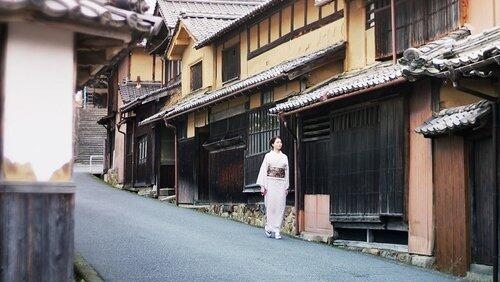
Kyoto: Tango Chirimen
The Kyotango area of northern Kyoto Prefecture is known as the birthplace of Tango Chirimen, a variety of crepe silk with a finely crimped texture and luxuriously soft feel. For 300 years, this fabric has been an essential part of its history and culture. On this episode of Journeys in Japan, we meet the people who produce Tango Chirimen, from the craftsmen who maintain the traditional skills of weaving and dyeing, to the modern artisans creating contemporary designs. And we explore the deep connection of this fabric with the natural environment of the Kyotango area.
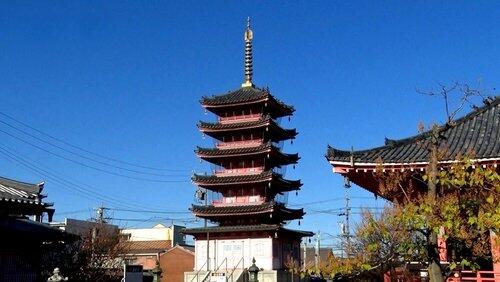
Tsu: A Path to the Heart
Tsu in Mie Prefecture prospered as a castle town during the Edo period (1603-1868). Situated close to Ise Jingu, one of Japan's most significant Shinto shrines, it has been a crossing point for pilgrims since ancient times. Tsu is known for its appealing post town architecture, as well as its historic shrines and temples. Dance performer, and local resident, Yuko tours the sacred sites while holding a wish for the pandemic's end in her heart.
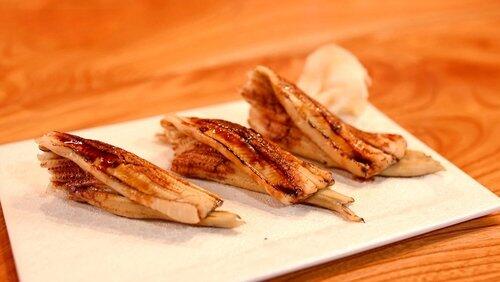
Tsushima: Slow Living on a Frontline Island
The island of Tsushima, in Nagasaki Prefecture, lies between Japan and South Korea, just 50 kilometers from the South Korean port city of Busan. Thanks to its location, the island developed as a thriving hub for trade and cultural exchanges between Japan, the Korean Peninsula and mainland China. Tsushima has also played a strategic role on the frontline between the regional powers. From the Battle of Baekgang (663) and the Mongolian expeditions of Japan (1274 and 1281) to Japan's invasions of Korea under Toyotomi Hideyoshi (1592-1598) and the Russo-Japanese War (1904-5), it has had a long and turbulent history but has overcome all challenges. On this episode of Journeys in Japan, Brandon Chin explores Tsushima, meets the residents, and discovers the important role the island has played in Japan's history and international relations.
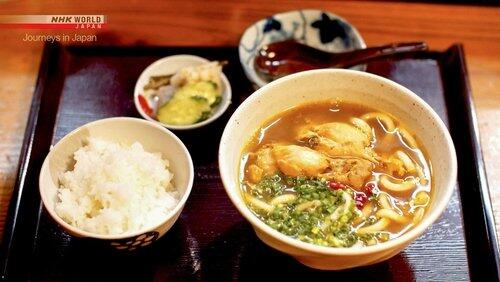
Moji: Gateway to the World
Moji, just over 800 kilometers west of Tokyo, is on the northernmost tip of Kyushu. Facing the Kanmon Strait -- an easy access route for Japan's main island and mainland Asia -- Moji prospered as a major sea transportation post from the Meiji to early Showa periods. Businesses catering to the port visitors, including foreigners, cropped up. And much of the Western-style architecture of the time has been preserved. On Journeys in Japan, Winnie Tsu strolls around the old port town, tracing its legacy.

Poetic Beauty of Wintry Kussharo
Winter in Hokkaido Prefecture... It's a fascinating time to visit for the stunning snowscapes and natural phenomena caused by the severe cold. Kussharo, located in a huge caldera, is part of the Akan-Mashu National Park. Cradled by the outer rim of the crater, heavy, cold air accumulates and the temperature plummets below minus 20 degrees Celsius on windless days. Lake Kussharo is the largest lake in Japan that completely freezes over. Hot springs gush out from many spots, releasing steam. Snow, ice and the steam interact in the ultra-low temperatures to create mysterious and stunning natural works of art.
Otaru: Herring and Glassware; Keeping Alive Otaru's Tradition
The city of Otaru, on the Sea of Japan coast of Hokkaido Prefecture, was founded about 150 years ago and grew rapidly as the main port for shipping coal from mines in the region. It also became the primary fishing port for the massive herring catch. The fish were used as fertilizer by farms growing cotton. For this reason, demand was strong and herring fetched a high price. Many people made their way to Otaru hoping to prosper from the herring business, and the city's population grew rapidly. In response to this economic boom in Otaru, as many as 25 banks opened branches in the city and it became Hokkaido's financial and trading center. On this episode of Journeys in Japan, Isis Berns explores the city of Otaru, delving into its history of fishing and glass-making, to discover the proud vestiges of its past prosperity.
Eye on Nagoya: A City's Identity through Architecture
Nagoya is in Aichi Prefecture in central Japan. While it is sometimes compared unfavorably to Tokyo, Kyoto Prefecture and Osaka Prefecture, there is more to the city than meets the eye. It's a fascinating place steeped in history. From the ancient Atsuta Jingu, a shrine with deep ties to the Imperial Family, to contemporary buildings we explore renowned architecture old and new to reflect on the culture of Nagoya.
Yamatokoriyama: Water Brimming with Goldfish
Elegant and charming, goldfish have captured the hearts of people in Japan for centuries. One of the main areas where they are produced is the historic city of Yamatokoriyama in Nara Prefecture. Although this region of Japan does not receive a lot of rainfall, there is abundant groundwater. There are many rivers running through the city, and reservoirs have been built to make use of their water. Over the centuries, the terrain was modified until it was perfect for goldfish breeding, and it took off in a big way. This time on Journeys in Japan, US photographer Seri Nieves visits Yamatokoriyama to explore the deep connection with water and goldfish in this ancient castle town.
Minami Shinshu: A Solo Alps Journey
Outdoor guide Daniel Moore gets a taste of deep mountain life on a drive around Minami Shinshu in southern Nagano Prefecture. On his way he stays in an abandoned old post town, hikes with a hunter, visits a master wood artisan, camps under a blanket of stars, shoots down the Tenryu River in a traditional boat and sips tea high up on a farmer couple's terraced slope.
Toba Islands: Life and Love in a Traditional Community
The Ise-Shima National Park is one of Japan's most popular sightseeing areas, but not so many people visit the islands that lie offshore from Toba City. On this episode of Journeys in Japan, Ogawa Niki visits 2 of those islands. In Toshijima he explores the back alleys of a fishing town, where the distinctive tradition and local culture remain strong. And in Kamishima he discovers the setting for a novel that has become one of Japan's most popular love stories.
The Trail to Chiyanoki: Mountain Biking Revives Village
A stunning mountain bike course has been carved into a mountain of a Genkai-shuraku -- a marginal hamlet where more than 50% of the population is aged 65 or over -- in Saga City. The trail has attracted new faces and energy to Chiyanoki Village, which is facing depopulation and super-aging. Masunaga Eiichi, who ran a mountain bike shop in Fukuoka City, spearheaded the trail project and eventually relocated there. He spent years cultivating relations with the locals before they would allow him to design and build his trail. His strategy was patience, and offering community volunteer work along with his bike rider friends. Eventually, he got the green light. And in return he and his colleagues regularly help trim back vegetation and clear roads. Residents and newcomers are now forging a vibrant culture.
Ishinomaki: A Decade On - Remembering and Moving Ahead
Located on the coast of Miyagi Prefecture, Ishinomaki City long flourished through fisheries. The 2011 Great East Japan Earthquake ravaged the city, leaving 4,000 people dead or missing -- making it one of the worst hit areas. Richard Halberstadt from Great Britain was a victim of the disaster. Now as the director of the city's information center on March 11, he conveys the reality of that time to visitors. On Journeys in Japan, Richard and his friends take us on a tour of recovery. Looking back, they're passing on the memory of the earthquake and tsunami.
Michinoku the Legend of Gold
This time, we trace Japan's legend of gold. The precious metal was actually first mined in Michinoku -- an old name for northern Iwate and Miyagi Prefectures -- in the 8th century Nara period. A photographer visits Hiraizumi and its golden Konjikido, meets a gold leaf artisan, ducks into an old mine and even pans for gold.
Kasama: A Pottery Community in Evolution
The traditional pottery town of Kasama lies about 100 kilometers northeast of Tokyo, about 1.5 hours away by train or car. Surrounded by verdant hills, it enjoys an abundant natural environment. Until the early Showa era (1930s-1940s), Kasama was a major production center of ceramics for everyday use, such as pots and mortars. In recent decades, along with changes in people's lifestyle, the focus of Kasama ware has shifted to tableware and interior goods. Thanks to the town's relaxed atmosphere and openness to outsiders, many potters have moved there from other parts of Japan, producing their own individual works, often using methods they have developed themselves. Euan Craig is a potter from Australia who has lived in Japan for about 30 years. On this episode of Journeys in Japan, Euan visits Kasama, to meet the local craftspeople who live and work in this evolving pottery town.
Recently Updated Shows

The Ark
The Ark takes place 100 years in the future when planetary colonization missions have begun as a necessity to help secure the survival of the human race. The first of these missions on a spacecraft known as Ark One encounters a catastrophic event causing massive destruction and loss of life. With more than a year left to go before reaching their target planet, a lack of life-sustaining supplies and loss of leadership, the remaining crew must become the best versions of themselves to stay on course and survive.

The Walking Dead: Dead City
The Walking Dead: Dead City envisions the popular Maggie and Negan characters travelling into a post-apocalyptic Manhattan long ago cut off from the mainland. The crumbling city is filled with the dead and denizens who have made New York City their own world full of anarchy, danger, beauty, and terror.

Pluribus
The most miserable person on Earth must save the world from happiness.

Grey's Anatomy
The doctors of Grey Sloan Memorial Hospital deal with life-or-death consequences on a daily basis -- it's in one another that they find comfort, friendship and, at times, more than friendship. Together they're discovering that neither medicine nor relationships can be defined in black and white. Real life only comes in shades of grey.

The Grand Tour
Jeremy Clarkson, Richard Hammond and James May are back with The Grand Tour. A show about adventure, excitement and friendship... as long as you accept that the people you call friends are also the ones you find extremely annoying. Sometimes it's even a show about cars. Follow them on their global adventure.