Light
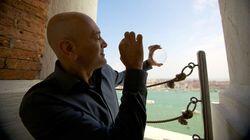
The story of how we used light to reveal the cosmos begins in the 3rd century BC when, by trying to understand the tricks of perspective, the Greek mathematician Euclid discovered that light travels in straight lines, a discovery that meant that if we could change its path we could change how we see the world. In Renaissance Italy 2,000 years later, Galileo Galilei did just that by using the lenses of his simple telescope to reveal our true place in the cosmos.
With each new insight into the nature of light came a fresh understanding of the cosmos. It has allowed us to peer deep into space and even revealed the composition and lifecycles of the stars.
In the 1670s, the Danish astronomer Ole Roemer discovered that light travelled at a finite speed, a discovery that had a profound implication. It meant the further one looks out into the universe, the further one looks back in time. And in 1964, by detecting the cosmic microwave background, the afterglow of the big bang, we captured the oldest light in the universe and saw as far back as it is possible to see with light.
Trailer
Recently Updated Shows

MobLand
With the most powerful clients in Europe, MobLand will see family fortunes and reputations at risk, odd alliances unfold, and betrayal around every corner; and while the family might be London's most elite fixers today, the nature of their business means there is no guarantee what's in store tomorrow.
MobLand follows two generations of gangsters, the businesses they run, the complex relationships they weave and the man they call upon to fix their problem.


Survivor
Eighteen to twenty castaways will compete against each other on Survivor. All castaways will compete to outwit, outplay, outlast and ultimately be crowned Sole Survivor.
Last Week Tonight with John Oliver
On Last Week Tonight with John Oliver, John Oliver presents a satirical look at the week in news, politics and current events.