Lost Worlds: The Story of Archaeology - Season 1

Season 1

Episodes
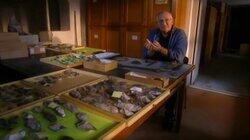
Stones and Bones
The Birth of Archaeology In the last 250 years, archaeologists have changed the basic understanding of time and human existence. This program looks at the birth of modern archaeology, an event that stirred all of Europe's imagination: the unearthing of the ruins of Pompeii and Herculaneum in the 18th century, buried since Roman times under volcanic ash. It follows the early excavations of Pitt Rivers in Egypt and England; the classification of the Stone, Bronze, and Iron Ages; the momentous discovery of cave paintings in Spain and France; and Mary Leakey's finds in Africa which took human history back over 3 million years.
Treasure Seekers
Archaeology Turns from Passion to Plunder Archaeology was born of treasure-seeking, but it became the stimulus for rampant pillaging of antiquities in the 18th and 19th centuries. This program charts the escalation of archaeological acquisition from gentlemanly passion to national plunder, from Lord Elgin and the marble friezes of the Parthenon to Richard Lepsius and his Egyptian collection that took sixty barges to transport to Berlin. Also examined is how greed gave way to altruism and preservation, most notably under August Mariette, the acquisitions expert for the Louvre who curtailed the sacking of Egypt and created the Cairo Museum.

Looking for the One Beginning
The Fallacy of Diffusionism When explorers examined the remains of an advanced Mexican culture, they concluded that a superior race must have come from elsewhere to build the palaces and pyramids: the theory of diffusionism was born. This program charts the 150-year search for civilization's origins, which most 19th and early 20th century archaeologists believed to be a single source. Though questioned in the 1950s by Henri Frankfort, the diffusion theory persisted, as this program shows, and received interpretations ranging from Thor Heyerdahl's idea that the Mexican pyramids were built by the Egyptians to notions that they were made by aliens—all under the premise that the ancient Mexicans could not have done it themselves.
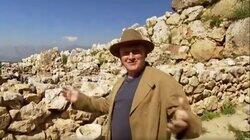
Digging by the Book
Program Archaeology While most read Homer's Iliad as an entertaining epic, one man believed it was more than a story and could actually be used as a literary map to find ancient Troy; his name was Heinrich Schliemann and he found treasure and a buried city in what is now Turkey. But was it Troy? This video looks at "program archaeology," how archaeologists dig in the ground to find evidence for the stories in books. In a similar context, the episode covers the work of Flinders Petrie, who unearthed proof that the Israelites had really once lived in Egypt. Inspired by Schliemann's example and Petrie's findings, a whole wave of excavations ensued with the hopes of verifying the existence of various figures from the Bible.
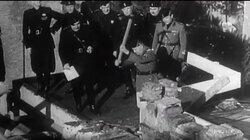
At the Service of the State
Archaeology as Political Tool In 1940, Hitler's archaeologists excavated sites in Poland to try to prove that Germans had lived there before the Poles—an anthropological justification for political aggression and military invasion. This program explores the use of archaeology as a tool for propaganda and diplomatic machination by focusing on the long-standing connections between Germany and Greece. The program also looks at how Mussolini, like Hitler, used Greek motifs and Roman regalia to package the image of his party and, by so doing, align the destiny of fascist Italy with ancient traditions.

The Future of the Past
What are the concerns of archaeology today? How will improved methods and scientific technology shift perspective on the past? The last episode of this series looks at the shift from excavating grand palaces to discovering and learning more about some of the earliest communities, such as at San Jose Magote in the Oaxaca Valley in Mexico, where evidence has been found of human habitation dating back 3,000 years. The program also interviews Professor George Bass of the Institute of Nautical Archaeology in Texas, the father of underwater archaeology, who has discovered and cataloged numerous shipwrecks off the coast of modern Turkey, some dating from the Bronze Age.
Recently Updated Shows

NCIS
NCIS (Naval Criminal Investigative Service) is more than just an action drama. With liberal doses of humor, it's a show that focuses on the sometimes complex and always amusing dynamics of a team forced to work together in high-stress situations. Leroy Jethro Gibbs, a former Marine gunnery sergeant, whose skills as an investigator are unmatched, leads this troupe of colorful personalities. Rounding out the team are Anthony DiNozzo, an ex-homicide detective whose instincts in the field are unparalleled and whose quick wit and humorous take on life make him a team favorite; the youthful and energetic forensic specialist Abby Sciuto, a talented scientist whose sharp mind matches her Goth style and eclectic tastes; Caitlin Todd, an ex-Secret Service Agent; and Timothy McGee, an MIT graduate whose brilliance with computers far overshadows his insecurities in the field; Assisting the team is medical examiner Dr. Donald "Ducky" Mallard, who knows it all because he's seen it all, and he's not afraid to let you know. From murder and espionage to terrorism and stolen submarines, these special agents travel the globe to investigate all crimes with Navy or Marine Corps ties.

Landman
Set in the proverbial boomtowns of West Texas, Landman is a modern day tale of fortune seeking in the world of oil rigs. The series is an upstairs/downstairs story of roughnecks and wildcat billionaires fueling a boom so big, it's reshaping our climate, our economy and our geopolitics.

The Creep Tapes
Based on a collection of videotapes in the secret vault of the world's deadliest and most socially uncomfortable serial killer, who hires his victims to film him for the day under false pretenses, each episode exposes a new victim from one of the fabled 'Creep Tapes'.

America's Funniest Home Videos
ABC's longest-running primetime entertainment show, America's Funniest Home Videos, returns for season 36 this fall with the same mission -- giving families something genuinely funny to enjoy together on Sunday nights.
"AFV," the longest-running primetime entertainment show in ABC history, returns for season 36 with the same mission - to provide viewers with hysterical moments that fly by at a dizzying pace.

The Real Housewives of Potomac
Just up the river from our nation's capital lies a hidden gem—Potomac, Maryland. Its rolling hills, gated mansions, sophisticated prep schools, and exclusive country clubs all serve to keep the area invitation-only. Sprinkled throughout this community are a handful of old-line, wealthy African-American families who have historically broken racial barriers to provide a life of privilege for their children. The Real Housewives of Potomac follows the upscale lives of six intriguing, well-to-do women: Gizelle Bryant, Katie Rost, Karen Huger, Charrisse Jackson-Jordan, Robyn Dixon, and Ashley Darby, all of whom have fought for their places in this society by way of legacy or marriage. In a town where entry is granted only through class, pedigree, and lineage, how far will these ladies go to secure their spot at the top of this prestigious circle?