Lucy Worsley Investigates - Season 1
Season 1
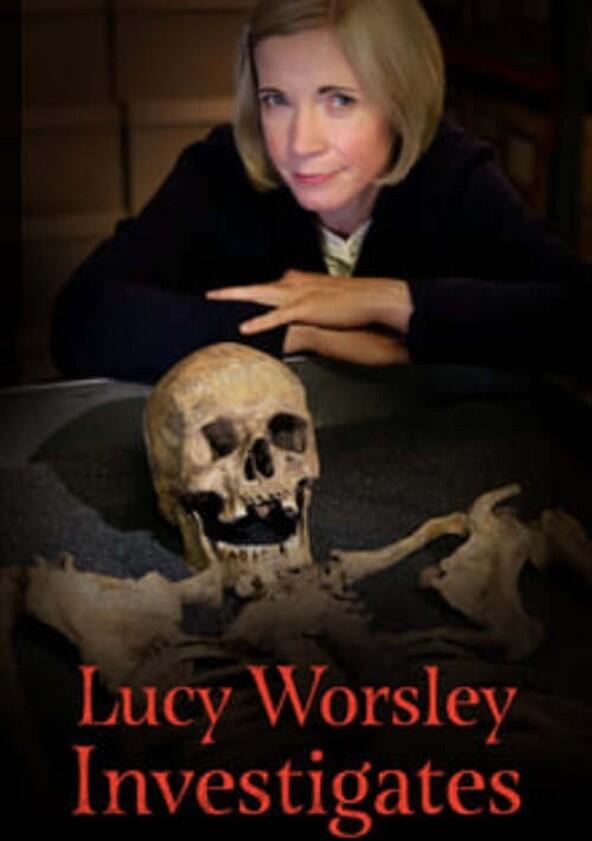
Who killed the Princes in the tower in 1483? What actually caused the Black Death? Why did a witch craze sweep 16th-century Britain? Was George III really mad? These are some of the most enduring and perplexing questions that have baffled academics and fascinated history fans for years. In Lucy Worsley Investigates, the historian turns sleuth by reopening and completely re-evaluating these infamous mysteries. She follows the evidence, bringing a contemporary perspective to each mystery. Worsley explores how changing attitudes to gender politics, class inequality, mental health, and children can challenge our perceptions of the past and provide new answers to each mystery.

Episodes
The Witch Hunts
Lucy begins her investigation in North Berwick, a seaside town near Edinburgh where the first witch hunts began. The story goes that in 1590 a coven of witches gathered here to cast a spell to try to kill the King of Scotland, James VI. Viewing an account from the time, called Newes From Scotland, and other first-hand sources, Lucy uncovers a web of political intrigue that led to a woman called Agnes Sampson, a faith healer and midwife, being investigated. Agnes is accused of witchcraft and interrogated at Holyrood Castle by King James himself, before being tortured and executed.
Agnes was caught in a perfect storm - hard-line Protestant reformers intent on making Scotland devout, a King keen to prove himself a righteous leader, and a new ideology which claimed the Devil was actively recruiting women as witches. Under torture Agnes gave the names of her supposed accomplices, some 59 other innocent people, making hers the first successful large-scale witch hunt in Scotland. Its brutal success became the model for witch trials rolled out across Scotland and England for the next 100 years.
The Black Death
For centuries it was uncertain what caused the pestilence of 1348, until a vast plague pit was uncovered in Smithfield, London in the 1980s. The find revealed the bones of hundreds of victims of the 14th century pandemic.
Now stored in the basement of the Museum of London, Lucy learns how DNA extracted from the skeletons enabled scientists to finally identify a bacteria called Yersinia Pestis - a pathogen to which the mediaeval population had no immunity.
In little more than a year, almost half the population had been wiped out by the Black Death. Lucy investigates what this sudden loss of life meant for the church, landowners and for the those who survived.
Exploring the social structure of mediaeval England, made up largely of rural peasants indentured to landowners, Lucy discovers a rare and remarkable set of documents: the Court Rolls of the Suffolk village of Walsham the Willows, providing a perfect microcosm of life across the country before, during and after the pandemic.
Lucy discovers how, despite the unfolding apocalypse, rather than shaking people's belief in God, it entrenched their faith. Many went on devotional pilgrimages to sacred sites like Canterbury Cathedral.
Despite the devastation, the plague propagated a shake-up of the status quo. Workers were in short supply and could demand higher wages, shifting the balance of power. Women occupied professions and roles that were previously closed to them and acquired an independence and status that would previously have been impossible.
Princes in the Tower
What really happened to the Princes in the Tower? Lucy Worsley uncovers the story of the two boys whose disappearance in 1483 has led to centuries of mystery and speculation.
The story of the princes in the tower is as familiar as a fairy tale – two innocent boys murdered in their beds at the behest of their evil uncle Richard so he could seize the throne for himself and be crowned King Richard III. But there is very little evidence about what happened in 1483, and no real proof that the boys were murdered. They simply disappeared from sight – and from known historical record.
The two princes, Edward and Richard, lived during the Wars of the Roses, a decades-long fight over the English throne between the house of Lancaster and the house of York. Edward IV, the boy's father, was the first Yorkist King. His eldest son, Edward, was destined to inherit the throne – and this fact entirely shaped his young life.
Edward was just 12 when his father died and he succeeded him as King – but his age meant he wasn't considered quite ready to rule. Edward IV had appointed his brother Richard to be the young Kings protector - but not everyone was happy with this arrangement. What followed was a tussle for control between Richard and the Queen's family, the Woodvilles, revealing fascinating ideas about childhood, and the nature of politics and power in medieval England.
Uncle Richard had young Edward and Richard installed at the Tower of London 'for their own protection', but when a priest declared that the boys were actually illegitimate, Richard was next in line to the throne, and it was he who was crowned King Richard III.
As far as we know, the boys were not seen again. The gaps in the historical record have fuelled 500 years of speculation. Lucy speaks to historian Prof Tim Thornton, who has found evidence that may back up one account of what really happened to them, written by Thomas More a generation after the events.
In the light of all the evidence she's had access to, Lucy makes up her own mind about Richard's guilt. But importantly, this story has also revealed much about the lot of a royal child in medieval England. And one thing Lucy is certain about is that the story of the Princes in the Tower shows how interpretations are never fixed, there's always the possibility that new evidence will come to light, and that this story will continue to fascinate us.
Madness of King George
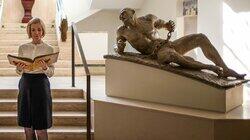
How did George III's mental illness change Britain? Lucy Worsley uncovers Royal papers and explores how the assassination attempt on his life by a mentally ill subject changed psychiatry forever.
Lucy delves into the madness of King George to ask what we can learn about how attitudes toward mental health were affected by Britain having a so-called "mad" monarch. Lucy examines recently released royal papers and explores the King's profoundly tragic personal trauma: the death of two of his young children. She also explores the enormous political pressures George was under as ruler at a time of political upheaval. Revolution was brewing in France; an emperor had been murdered in Russia, and Britain was facing the imminent loss of the American colonies after nearly two centuries of British rule. Speaking with leading experts in psychiatry, it becomes clear to Lucy that all of these enormous stresses led to his bouts of mental illness, which would now have been diagnosed as bipolar disorder. She also investigates how the attempt on his life by a mentally ill woman named Margaret Nicholson affected the King and eventually led to a change in the understanding and treatment of mental illness.
Recently Updated Shows

Lioness
Lioness, inspired by an actual U.S. Military program, follows the life of Joe while she attempts to balance her personal and professional life as the tip of the CIA's spear in the war on terror. The Lioness Program, overseen by Kaitlyn Meade and Donald Westfield, enlists an aggressive Marine Raider named Cruz to operate undercover alongside Joe among the power brokers of State terrorism in the CIA's efforts to thwart the next 9/11.
The Pitt
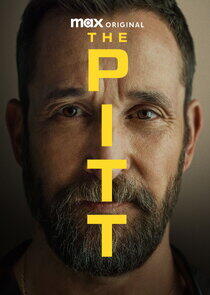
The Pitt is a realistic examination of the challenges facing healthcare workers in today's America as seen through the lens of the frontline heroes working in a modern-day hospital in Pittsburgh, Pennsylvania. Each episode follows an hour of Dr. Robby's 15-hour shift as the chief attendant in Pittsburgh Trauma Medical Hospital's emergency room.

Dark Matter
Hailed as one of the best sci-fi novels of the decade, Dark Matter is a story about the road not taken. The series follows Jason Dessen, a physicist, professor, and family man who – one night while walking home on the streets of Chicago – is abducted into an alternate version of his life. Wonder quickly turns to nightmare when he tries to return to his reality amid the multiverse of lives he could have lived. In this labyrinth of mind-bending realities, he embarks on a harrowing journey to get back to his true family and save them from the most terrifying, unbeatable foe imaginable: himself.


Murdoch Mysteries
Set in Toronto at the dawn of the 20th century, Murdoch Mysteries is a one-hour drama series that explores the intriguing world of William Murdoch, a methodical and dashing detective who pioneers innovative forensic techniques to solve some of the city's most gruesome murders. Murdoch's colleagues include the love of his life, coroner and psychiatrist Dr. Julia Ogden, a staunch ally who shares the detective's fascination for science; Constable George Crabtree, Murdoch's eager but sometimes naïve right-hand man; Inspector Brackenreid, Murdoch's skeptical yet reluctantly supportive boss; and coroner Dr. Emily Grace, Dr. Ogden's protégé.