New York: A Documentary Film - Season 1
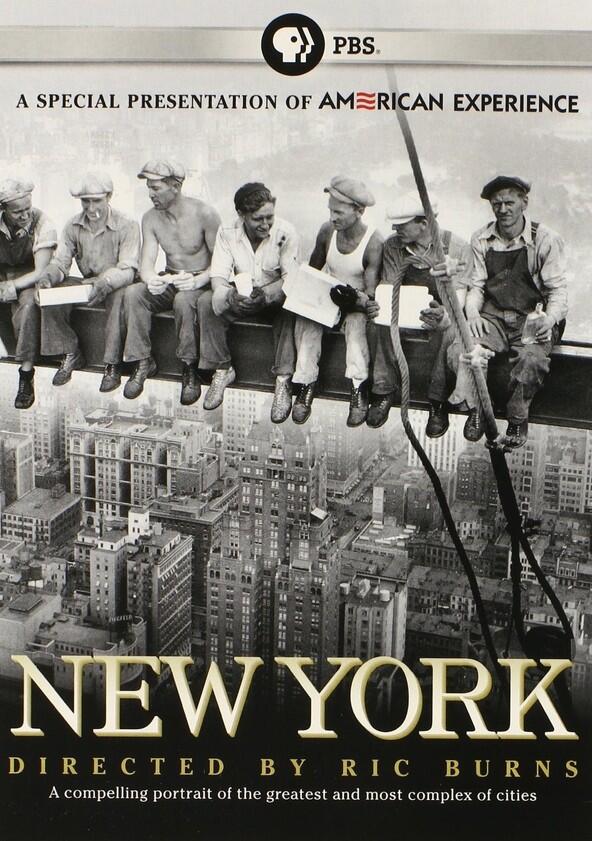
New York: A Documentary Film - Season 1

Season 1

Network
Episodes8
Datesnov. 14, 1999 - sept. 8, 2003

Episodes

The Country and the City (1609-1825)
Season 1Episode 1120 min

The Country and the City (1609-1825)

The series begins by identifying the key themes that shaped New York's history: commerce and capitalism, diversity and democracy, transformation and creativity. The episode charts the development of the city founded by the Dutch as a purely commercial enterprise, first as New Amsterdam, a freewheeling enclave of trade and opportunity; then as the British New York, a colony fueled by slavery which was bestowed as a birthday gift upon the Duke of York by his brother, King Charles; soon after as a strategically pivotal locale in the American Revolution; and ultimately as the city of New York: the nation's first capital and the place destined to define urban life in America -- and American ideals.
nov. 14, 1999
Order and Disorder (1825-1865)
Season 1Episode 2120 min

Order and Disorder (1825-1865)

Already established as America's premier port, New York City swelled into the nation's greatest industrial metropolis as a massive wave of German and Irish immigration turned the city into one of the world's most complex urban environments, bringing with it a host of new social problems. Episode Two reveals how the city's artists, innovators and leaders, from poet Walt Whitman to Frederick Law Olmsted and Calvert Vaux (the designers of Central Park) grappled with the city's growing conflicts -- which culminated in the catastrophic Civil War Draft Riots of 1863.
nov. 15, 1999
Sunshine and Shadow (1865-1898)
Season 1Episode 3120 min

Sunshine and Shadow (1865-1898)

Now the spotlight shines on the growth, glamour and grief of New York during America's giddy postwar "Gilded Age." Exploring the incomparable wealth of the robber barons and the unabashed corruption of political leaders, such as Tammany Hall boss William M. Tweed, the episode examines the era when the expansion of wealth and poverty -- and the schism between them -- built to a crescendo. The program ends as the city itself dramatically expands its boundaries, annexing Brooklyn, Queens, the Bronx and Staten Island into a single massive metropolis -- Greater New York.
nov. 16, 1999
The Power and the People (1898-1918)
Season 1Episode 4120 min

The Power and the People (1898-1918)

As New York spilled into the new century, the extraordinary interplay of capitalism, democracy and transformation surged to a climax. During a single generation, over 10 million immigrants arrived in New York. The city itself became an even more dramatic lure with the construction of the first subways and skyscrapers. And arising from the plight of New York's most exploited citizens came landmark legislation that would eventually transform the lives of all Americans.
nov. 17, 1999
Cosmopolis (1919-1931)
Season 1Episode 5120 min

Cosmopolis (1919-1931)

In this short but dazzling period, New York became the focal point of an extraordinary array of human and cultural energies, reaching its highest levels of urban excitement and glamour. In just over a decade, New York gave birth to its signature skyscrapers, the Chrysler and Empire State Buildings, and to artistic creations like F. Scott Fitzgerald's THE GREAT GATSBY, George Gershwin's "Rhapsody in Blue," and to the jazz compositions of Duke Ellington and Louis Armstrong. Along the way, Harlem emerged as the undisputed capital of the African- American experience and the new media industries of advertising, radio networks, public relations, and magazines found their homes in midtown Manhattan.
nov. 18, 1999
City of Tomorrow (1929-1941)
Season 1Episode 6120 min

City of Tomorrow (1929-1941)

In little more than ten years, immense new forces were unleashed in New York, from the Depression itself to the New Deal, which permanently altered the city and the country. Along the way, two of the most remarkable New Yorkers of all time came to the fore: Mayor Fiorello La Guardia and master builder Robert Moses, both of whom attempted to create, in the darkest of times, a bold new city of the future. The episode examines their careers in detail, as well as the immense public works that transformed the city in the '30s. Also explored are the demise of Mayor Jimmy Walker, the coming of the New Deal, the fate of Harlem during the Depression, and the increasingly complex impact of the automobile on the city.
sept. 30, 2001
The City and the World (1945-2000)
Season 1Episode 7120 min

The City and the World (1945-2000)

In exploring the social, economic and physical forces that swept through the city in the post-war period, Episode Seven examines the great African-American migration and Puerto Rican immigration of the '40s, '50s, and '60s; the beginnings of white flight and suburbanization; and the massive physical changes wrought by highways and urban renewal -- all of which were directed, to a surprising degree, by one man: Robert Moses. The film comes to a climax with the destruction of Penn Station, the battle over the Lower Manhattan Expressway, the social and fiscal crises of the '60s and '70s, and New York's miraculous revival in the last quarter-century.
oct. 1, 2001
The Center of the World (1946-2003)
Season 1Episode 8120 min

The Center of the World (1946-2003)

Examines the rise and fall of the World Trade Center -- from its conception in the post-World War II economic boom, through its controversial construction in the 1960s and 1970s, to its tragic demise in the fall of 2001 and extraordinary response of the city in its aftermath.
sept. 8, 2003

Recently Updated Shows

Recently updated shows that might be of your interest.
The Simpsons
Running

The Simpsons

The Simpsons is the longest running scripted show in US television history. It captures the adventures of Homer, Marge, Maggie, Bart and Lisa who are living in a fictional town called Springfield.

Last Week Tonight with John Oliver
Running

Last Week Tonight with John Oliver

On Last Week Tonight with John Oliver, John Oliver presents a satirical look at the week in news, politics and current events.

GenreComedy
Saturday Night Live
Running

Saturday Night Live

Saturday Night Live is an Emmy Award-winning late-night comedy showcase.

Since its inception in 1975, "SNL" has launched the careers of many of the brightest comedy performers of their generation. As The New York Times noted on the occasion of the show's Emmy-winning 25th Anniversary special in 1999, "in defiance of both time and show business convention, 'SNL' is still the most pervasive influence on the art of comedy in contemporary culture." At the close of the century, "Saturday Night Live" placed seventh on Entertainment Weekly's list of the Top 100 Entertainers of the past fifty years.

Lioness
Running

Lioness

Lioness, inspired by an actual U.S. Military program, follows the life of Joe while she attempts to balance her personal and professional life as the tip of the CIA's spear in the war on terror. The Lioness Program, overseen by Kaitlyn Meade and Donald Westfield, enlists an aggressive Marine Raider named Cruz to operate undercover alongside Joe among the power brokers of State terrorism in the CIA's efforts to thwart the next 9/11.

The Pitt
Running

The Pitt

The Pitt is a realistic examination of the challenges facing healthcare workers in today's America as seen through the lens of the frontline heroes working in a modern-day hospital in Pittsburgh, Pennsylvania. Each episode follows an hour of Dr. Robby's 15-hour shift as the chief attendant in Pittsburgh Trauma Medical Hospital's emergency room.