Scanning History - Season 1

Season 1

Episodes

The Fall of the World's First Empire
Over 4,500 years ago, the Akkadian Empire emerged as the first known major empire, rising in the fertile crescent between the Tigris and Euphrates rivers. Led by Sargon the Great, the Akkadians replaced the Sumerians and expanded their reach from Syria to Oman. They introduced irrigation, organized agriculture, and a centralized bureaucracy—dramatically boosting productivity and governance. But just two centuries later, their cities were abandoned, overtaken by sand and nomadic herders.
What caused the empire's sudden decline has long been debated—ranging from volcanic eruptions and meteorite impacts to war-induced economic collapse or climate-driven drought. However, recent isotope analysis of human remains from northern Mesopotamian sites shows no catastrophic environmental shift. Instead, evidence suggests the Akkadians adapted and remained in the region, even as their political grip weakened and rival powers rose to reclaim the lands Sargon had once conquered.

Unfolding The Silver Scroll
Jerash, a city founded during the Hellenistic period—possibly by veterans under Alexander the Great—flourished through Roman and early Islamic times until a devastating earthquake struck in 749 CE. Among its remarkable discoveries is the Jerash Silver Scroll, inscribed in two scripts, the primary one being pseudo-Arabic. Though Arabic had not yet become the dominant language, the scroll reveals its emerging cultural significance and use in magical or ritual contexts. The artifact reflects both continuity in local traditions and the gradual shift toward a new linguistic and religious identity in the region.
The Jerash Scroll opens the door to decoding other ancient texts through cutting-edge technology. At LMU Munich, scientists have employed DeepMind's AI to translate over 300,000 lines of ancient Persian by reconstructing fragmented texts. With tools like the AI program Ithaca, researchers are now uncovering lost insights from Greek, Roman, and other ancient civilizations. As deep learning and neural networks evolve, they bring us closer to solving some of the greatest linguistic mysteries—perhaps even unlocking the undeciphered language of the Minoans.

Mapping the Amber Road
One man's lifelong quest to uncover the forgotten Amber Road—the most vital trade route of the late Middle Ages—takes us deep into the heart of Europe. Before the 18th century, much of Europe's rural communication relied on unpaved tracks. While some evolved into the roads we use today, most of the medieval routes were abandoned and lost to time. Now, a mix of cutting-edge technology and human insight is helping uncover this ancient network.
By analyzing high-resolution digital elevation models from LIDAR data, researchers can detect traces of old roadways, often intersecting with natural features like streams or landslides and man-made structures such as fortresses. These patterns, along with signs of erosion and terrain changes, help reconstruct the once-thriving arteries of European trade. Layered with historical mapping and research, this data is revealing the Amber Road's path—and its enduring impact on the continent's history.

Newgrange: Neolithic Bloodlines
DNA has been used to confirm the existence of an elite social class in the Stone Age Ireland, similar to those found among the pharaohs of ancient Egypt and the "god-kings" of South America's Inca Empire.
A key piece of evidence comes from an adult male buried at the 5,000-year-old Newgrange monument in Co. Meath, Ireland. The team headed up by Dr Lara Cassidy were able to extract DNA from the petrous bone of the ancient corpse, a dense part of the inner ear. Ancient DNA is only preserved well in the body's densest bones, making the petrous portion an ideal extraction point.
By sampling the hard-rock bone using a grinder they were able to place the bone shavings in a solution that releases DNA from the bone; allowing them to sequence the entire ancient human genome. After sampling 44 whole genomes, they were able to reveal that the adult man's parents were first-degree relatives - brother and sister or parent and child. Evidence of incestuous unions like that found at Newgrange is rare in human history; they are taboo for interlinked biological and cultural reasons. Where they do occur, it is often within royal dynasties that have been granted divine status. Brother-sister or parent and child marriages paired with the construction of extravagant monuments are usually indicators of a royal lineage, similar to Tutankhamun's parents who are thought to have been full siblings. And with Newgrange being older than Stonehenge and the Pyramids of Giza, the fact the man's remains were laid in a richly decorated recess in the inner chamber, suggests he was one member of an expansive ‘clan' that were buried at impressive stone monuments across Ireland.

Legacy Of The Ore Mountains
The Ore Mountains, straddling Saxony and the Czech Republic, have long been a key source of silver and tin in Central Europe. While mining in Freiberg was first documented in 1168, LiDAR scans and archaeological findings reveal Bronze Age tin mining dating back to 2500 BC. This early expertise spread across Europe by 2000 BC. Recent discoveries at Dippoldiswalde and Niederpöbel show medieval mining was more extensive than previously known. Advanced technologies like LiDAR, GPS, AR/VR, and Unreal Engine have helped visualize these vast underground complexes.
This region played a pivotal role in transforming mining from a craft into a large-scale industry—laying groundwork for the Industrial Revolution. Mining towns in the Ore Mountains were deliberately founded, with planned infrastructure like town halls, guild systems, and public services. This development spurred innovations in hydraulic engineering, metallurgy, and urban planning, while creating demand for timber, stone, clay, and ores. The region's economic and technological advancements helped pave the way to the modern world.

Baiae: Rome's Sunken Gem
Baiae was the Roman Empire's ultimate luxury resort—a "vortex of luxury" and "harbor of vice," as described by the poet Sextus Propertius. Frequented by elites like Pompey the Great and Julius Caesar, the city thrived for centuries on the Cumaean Peninsula. But its location in the volcanically active Phlegraean Fields, believed to be the realm of the fire god Vulcan, led to parts of the city sinking beneath the sea.
Today, Baiae is one of the world's few underwater archaeological parks. Using advanced tools like high-frequency acoustic mapping, multibeam sonar, and AI-powered monitoring systems, researchers can now reconstruct submerged ruins in stunning detail. These systems not only track the site's physical features but also monitor water quality, currents, and other environmental data—offering a high-tech window into the decadent heart of ancient Rome
Recently Updated Shows

Beyond the Gates
Beyond the Gates is set in a leafy Maryland suburb just outside of Washington D.C., and in one the most affluent African American counties in the United States. Here you'll find a posh gated community with winding tree-lined streets and luxurious mansions to call home. At the center of this community are the Duprees, a powerful and prestigious multi-generational family that is the very definition of Black royalty. But behind these pristine walls and lush, manicured gardens are juicy secrets and scandals waiting to be uncovered. And those that live outside these gates are watching closely. These are the places where our characters live, love, work and play. Those who have "made it" and those who haven't are all trying to navigate life … and some with more grace than others.

In the City
In the city that never sleeps, a group of New Yorkers navigates the biggest transitions of their lives — marriage, parenthood, reinvention, and the reality of growing up without growing apart. Can they have it all, or will they need to choose between the lives they've built and the futures they never saw coming?
FROM
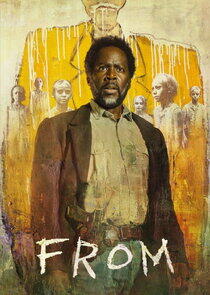
FROM unravels the mystery of a nightmarish town that traps all those who enter. As the unwilling residents fight to keep a sense of normalcy and search for a way out, they must also survive the threats of the surrounding forest – including the terrifying creatures that come out when the sun goes down. In season two, hidden truths about the nature and terrifying origins of the town begin to emerge, even as life for its residents is plunged into chaos by the arrival of mysterious newcomers.

Next Gen NYC
Next Gen NYC follows a tangled web of friends raised in the spotlight — or at least close enough for good lighting — as they stumble into adulthood one brunch, breakup and spontaneous decision at a time. Whether stepping out of their parents' shadows or creating their own legacies from scratch, these twentysomethings are determined to conquer Manhattan — if they can figure out how to adult first. Together, they'll navigate friendships, careers and romance, proving that trouble runs on espresso martinis and questionable decisions.

Brilliant Minds
Inspired by the extraordinary life and work of world-famous author and physician Oliver Sacks, Brilliant Minds follows a revolutionary, larger-than-life neurologist and his team of interns as they explore the last great frontier - the human mind - while grappling with their own relationships and mental health.