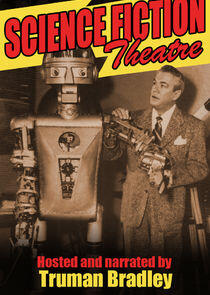
Science Fiction Theatre (1955-1957)
EndedScripted showScience-Fiction
Scientific speculation from the 1950s told in a science fiction format. That was the basis for this anthology of futuristic stories, hosted and narrated by Truman Bradley. The series speculated on such things as visitors from other planets, UFO incidents, space fight, espionage technology, and miracle drugs that could cure all ills. Stories of crackpots, who turn out to be visionaries, and eyewitnesses to the fantastic, fighting to be believed. The show also utilized experts as consultants to help keep the show within the known realm of the scientific possibilities speculated at the time.
Network


Recent Episodes
| Episode | Name | Airdate |
|---|---|---|
| S02E39 | The Sound That Kills | Apr 6, 1957 |
| S02E38 | The Strange Lodger | Feb 9, 1957 |
| S02E37 | Bolt of Lightning | Feb 2, 1957 |
| S02E36 | The Magic Suitcase | Jan 26, 1957 |
| S02E35 | Gravity Zero | Jan 19, 1957 |
Frequently Asked Questions Warning: Spoilers
When did Science Fiction Theatre premiere?
Science Fiction Theatre premiered on April 9, 1955.
Who was the host of Science Fiction Theatre?
Truman Bradley was the host of Science Fiction Theatre.
What was the format of Science Fiction Theatre?
Science Fiction Theatre was an anthology series featuring different stories and characters in each episode, often exploring scientific concepts and futuristic ideas.
Can you provide an example of a notable episode from Science Fiction Theatre?
One notable episode of Science Fiction Theatre was "Y..O..R..D..".
What was the general tone of the stories featured in Science Fiction Theatre?
The stories featured in Science Fiction Theatre ranged from thought-provoking and speculative to thrilling and imaginative, covering a wide range of scientific and technological themes.
Did Science Fiction Theatre focus on space exploration and alien encounters?
Yes, Science Fiction Theatre did explore space exploration and alien encounters in some of its episodes, tapping into the fascination with the unknown.
How did Science Fiction Theatre contribute to the science fiction genre of the 1950s?
Science Fiction Theatre contributed to the science fiction genre of the 1950s by bringing futuristic and speculative ideas to television, captivating audiences with its imaginative storytelling.
Were there recurring themes or motifs in Science Fiction Theatre?
Yes, recurring themes in Science Fiction Theatre included advancements in technology, ethical dilemmas, and the impact of scientific discoveries on society.
Did Science Fiction Theatre incorporate elements of morality into its storytelling?
Yes, Science Fiction Theatre often delved into ethical and moral considerations surrounding scientific advancements and the consequences of human actions.
How did Science Fiction Theatre connect with the audience's fascination with science and technology?
Science Fiction Theatre connected with the audience's fascination with science and technology by presenting speculative scenarios that reflected real-world concerns and aspirations.
Can you describe the visual style of Science Fiction Theatre?
Science Fiction Theatre featured a visual style that embraced futuristic and imaginative elements, utilizing special effects and set designs to bring its speculative stories to life.
Did Science Fiction Theatre feature any well-known guest stars or actors?
Yes, Science Fiction Theatre featured appearances by established actors and rising stars, adding to the appeal of the show.
What was the impact of Science Fiction Theatre on the television landscape of the 1950s?
Science Fiction Theatre contributed to expanding the possibilities of storytelling on television by introducing audiences to speculative and futuristic themes, paving the way for the exploration of science fiction in the medium.
How did Science Fiction Theatre reflect the cultural and societal context of the 1950s?
Science Fiction Theatre reflected the cultural and societal context of the 1950s by channeling the era's fascination with scientific progress and the potential of technology, mirroring the optimism and concerns of the time.
What legacy did Science Fiction Theatre leave within the science fiction genre?
Science Fiction Theatre left a legacy within the science fiction genre by demonstrating the potential of speculative storytelling on television and inspiring future creators to explore the boundaries of scientific imagination.
Recently Updated Shows
Recently updated shows that might be of your interest.


* This is an affiliate link. If you click and purchase, we will receive a commission from the provider. This will not incur any additional costs for you and you will support our project. We thank you for your support!