Seven Ages of Britain - Season 1
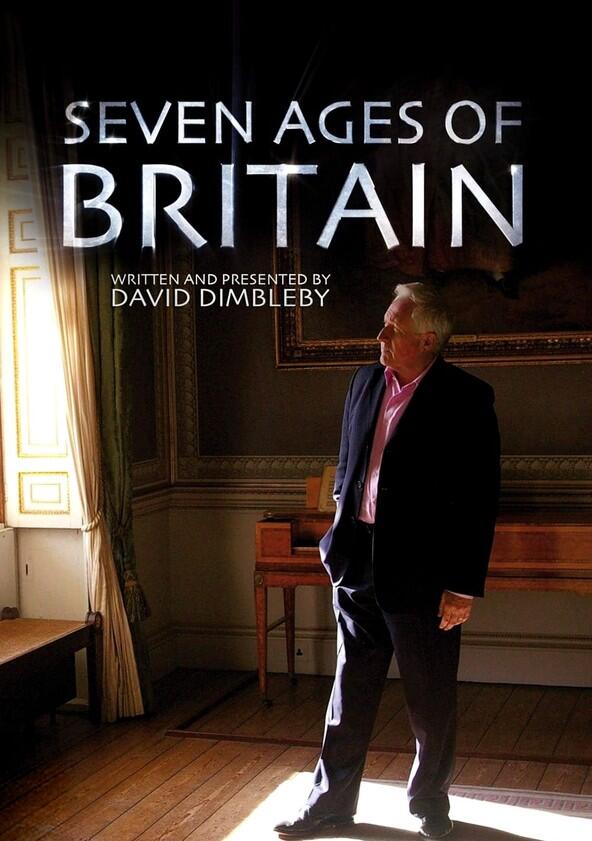
Season 1

Episodes
Age of Conquest
David Dimbleby tells the story of Britain through its art and treasure. The first part of the chronicle begins with the Roman invasion and ends with the Norman Conquest.
David travels throughout Britain in search of the greatest works of art from the time: the mosaics of Bignor Roman Villa, the burial treasure of Sutton Hoo, Anglo-Saxon poetry and Alfred the Great's jewel. He also goes abroad, throughout Europe, to find objects either made in Britain, or which tell us something about our past.
In Aphrodisias, Turkey, he finds the oldest image of Britannia; in Florence, a beautiful illuminated Bible made by Northumbrian monks in the 8th century; in Normandy, the Bayeux Tapestry, now believed to have been made by English nuns. He ends at the Tower of London, now seen as a symbol of Britishness, but originally built by William the Conqueror to subdue the people of England.
Age of Worship
The story of British art in the Middle Ages, spanning from the murder of Thomas Becket in 1170 to the death of Richard II in 1400. It was an age defined by worship - whether worship of God, the king, or one's lady love.
David Dimbleby looks at the finest creations of the medieval Church, like the stained glass of Canterbury Cathedral and the colourful Bury Bible, and is winched 40 feet off the ground to see a rare surviving church Doom - a painting of the Last Judgement - close up.
During the reign of Edward I a new fad, chivalry, gripped the nation, resulting in fabulous creations like the Eleanor Cross of Geddington, Edward III's vast ceremonial sword at Windsor, and the tomb of the Black Prince. The artistic high point of the Middle Ages came with the reign of Richard II, whose patronage inspired three masterpieces: the famous timber roof of Westminster Hall, Chaucer's Canterbury Tales and the Wilton Diptych altarpiece.
David travels to Munich to see the only surviving English medieval crown, which belonged to Richard's wife, Anne of Bohemia.
Age of Power
This episode looks at the Tudors and spans from Henry VIII's accession in 1509 to the first performance of Shakespeare's Henry VIII exactly 100 years later.
David Dimbleby shows how the Tudors used art as an instrument of power and propaganda. Featuring a look at Henry VIII and the lavish, gilded tomb in Westminster Abbey he commissioned for his father; the epic Field of Cloth of Gold painting in Hampton Court made to celebrate his diplomatic triumph over the French; and the extraordinary patron-artist relationship he cultivated with Hans Holbein. Henry favoured blunt statements of power, but his daughter Elizabeth was more subtle.
Dimbleby's journey also takes in the Reformation, the wreck of the Mary Rose, John White's extraordinary watercolours of the New World, the mouthwatering Cheapside Hoard, the Spanish Armada, Henry VIII's armour and Drake's Drum.

Age of Revolution
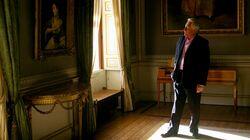
In the 17th century, the people of Britain learned to question everything. The result was the Civil War, in which everyone, including artists, had to take sides. Out of it came a reinvented monarchy, a scientific revolution and, ultimately, the great cathedral of St Paul's. Highlights include the courtly portraits of Rubens, Van Dyck and Peter Lely, and the fabulous creations of the Royal Society.
The programme includes: Charles I's execution shirt and painting of Charles with his head sewn back on (Museum of London); Rubens's Apotheosis of James I (Banqueting House); Van Dyck portraits (Tate Britain); Puritan tracts; Civil War re-enactment; Verney family tomb (Claydon House); Thomason Collection (British Library); portraits of Cromwell (National Portrait Gallery); Grinling Gibbons's golden statue of Charles I (Royal Hospital Chelsea); Peter Lely's Windsor Beauties (Hampton Court); Royal Observatory (Greenwich); Hooke's microscope and Micrographia (Science Museum); Wren's plan for London; and St Paul's Cathedral.
Age of Money
In the 18th century, the triumph of commerce led to the emergence of a new 'middle' class, a group of people who craved pleasure and novelty, and developed its own tastes in art. The result was a golden age in painting, with Hogarth, Reynolds and Gainsborough reinventing the British style.
The story ends in 1805 with the burial of Horatio Nelson, a commoner, at the heart of St Paul's: the supremacy of the middle class assured.

Age of Empire
The story of the British Empire from 1750 to 1900, revealed through its art and treasures. David Dimbleby travels through Britain, America and India, tracing the descent from adventure and inspiration into moral bankruptcy as the Empire became a self-serving bureaucratic machine.
In Britain, David looks at William Hodges' paintings of Captain Cook's famous voyages, Sir Hiram Maxim's original machine gun, the relics of General Gordon brought back from the Sudan, and some of the priceless trophies plundered in foreign campaigns: Tipu's mechanical Tiger and the Benin Bronzes.
In Philadelphia, he explores William Penn's utopian Old Town, the Liberty Bell, and painter Benjamin West's pictorial white-washing of history in Penn's Treaty With the Indians.
In India, David looks at the colonial architecture of Calcutta, and some fabulous frescoes in a Rajasthan village mocking British customs and personalities.
The programme ends at the Victoria Memorial in front of Buckingham Palace, not so much a monument to the British Empire as its mausoleum.
Age of Ambition
In the last episode, David Dimbleby looks at how the 20th century saw ordinary Britons upturning ancient power structures and class hierarchies. The catalyst was the First World War, which embroiled the whole nation and called traditional values into question. The result was an ever-growing 'democratization' of culture, with art coming off gallery walls, becoming an instrument of self-expression at the service of the individual.
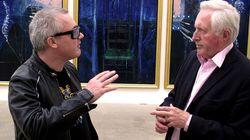
Dimbleby looks at some of the great masterworks of modern British art (Paul Nash's 'Menin Road', Francis Bacon's 'Crucifixion'), but also champions lesser appreciated art forms like broadcasting and domestic design. Finally, he meets some of the personalities who are shaping modern British art today: Damien Hirst, Tracey Emin, Anish Kapoor and Gilbert and George.
Recently Updated Shows
Last Week Tonight with John Oliver
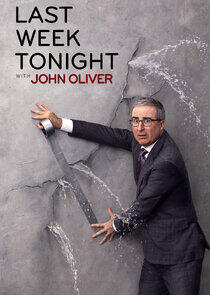
On Last Week Tonight with John Oliver, John Oliver presents a satirical look at the week in news, politics and current events.

Lioness
Lioness, inspired by an actual U.S. Military program, follows the life of Joe while she attempts to balance her personal and professional life as the tip of the CIA's spear in the war on terror. The Lioness Program, overseen by Kaitlyn Meade and Donald Westfield, enlists an aggressive Marine Raider named Cruz to operate undercover alongside Joe among the power brokers of State terrorism in the CIA's efforts to thwart the next 9/11.

The Pitt
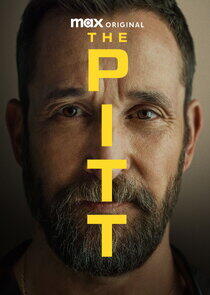
The Pitt is a realistic examination of the challenges facing healthcare workers in today's America as seen through the lens of the frontline heroes working in a modern-day hospital in Pittsburgh, Pennsylvania. Each episode follows an hour of Dr. Robby's 15-hour shift as the chief attendant in Pittsburgh Trauma Medical Hospital's emergency room.