The African Americans: Many Rivers to Cross - Season 1
Season 1

Episodes
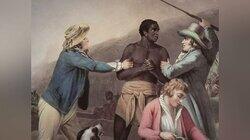
The Black Atlantic (1500-1800)
This episode explores the global experiences that created the African-American people. Beginning a century before the first documented "20-and-odd" slaves who arrived at Jamestown, Virginia, the episode portrays the earliest Africans, slave and free, who arrived on these shores. The transatlantic slave trade soon became a vast empire connecting three continents. Through stories of individuals caught in its web, the episode traces the emergence of plantation slavery in the American South and examines what the late 18th-century era of revolutions - American, French, and Haitian - would mean for African Americans and slavery in America.
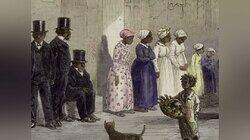
The Age of Slavery (1800-1860)
This episode illustrates how black lives changed dramatically in the aftermath of the American Revolution. For free black people, these years were a time of opportunity, but for most African Americans, the era represented a new nadir. King Cotton fueled the rapid expansion of slavery into new territories and the forcible relocation of African Americans to the Deep South. Yet, as slavery intensified, so did resistance. Individuals including Harriet Tubman, Richard Allen, and Frederick Douglass pushed the issue of slavery to the forefront of national politics. From individual acts to mass rebellions, African Americans demonstrated their determination to undermine and ultimately eradicate slavery.
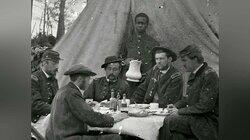
Into the Fire (1861-1896)
This episode examines the most tumultuous and consequential period in African-American history: the Civil War and the end of slavery, and Reconstruction's thrilling but brief "moment in the sun." From the beginning, African Americans were agents of their liberation - by fleeing the plantations and taking up arms to serve in the United States Colored Troops. After Emancipation, African Americans sought to realize the promise of freedom - rebuilding families shattered by slavery; demanding economic, political, and civil rights; even winning elected office - but a few years later, an intransigent South mounted a swift and vicious campaign of terror to restore white supremacy and roll back African-American rights. Yet the achievements of Reconstruction remained in the collective memory of the African-American community.
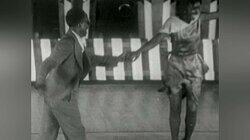
Making a Way Out of No Way (1897-1940)
This episode portrays the Jim Crow era when African Americans struggled to build their own worlds within the harsh, narrow confines of segregation. At the turn of the 20th century, a steady stream of African Americans left the South, fleeing the threat of racial violence and searching for opportunities in the North and West. Leaders like Ida B. Wells, W.E.B. Du Bois, Booker T. Washington, and Marcus Garvey organized, offering different strategies to further black empowerment and equality. The ascendance of black arts and culture showed that a community with a strong identity and sense of pride was taking hold in spite of Jim Crow. "The Harlem Renaissance" redefined how America saw African Americans - and how African Americans saw themselves.
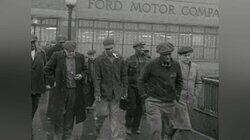
Rise! (1940-1968)
This episode examines the long road to civil rights when the deep contradictions in American society finally became unsustainable. African Americans who fought fascism in World War II came home to face the same old racial violence. But mass media - from print to radio and TV - broadcast that injustice, planting seeds of resistance. The success of black entrepreneurs and entertainers fueled African-American hopes and dreams. In 1955, Rosa Parks refused to give up her seat on a city bus in Montgomery, Alabama, heralding the dawn of a movement of resistance, with Dr. Martin Luther King, Jr. as its public face. Before long, masses of African Americans practiced this nonviolent approach to integrate blacks and whites in public schools, lunch counters, and more. Nonviolence, however, was often met with violence. In 1968, Dr. King was assassinated, unleashing a new call for "Black Power" across the country.
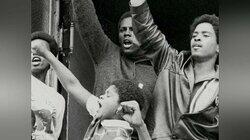
A More Perfect Union (1968-2013)
After 1968, African Americans set out to build a bright future on the foundation of the civil rights movement's victories, but a growing class disparity threatened to split the black community. As African Americans won political office across the country and the black middle class made progress, larger economic and political forces isolated the black urban poor. When Barack Obama was elected president in 2008, many hoped that America had finally transcended racism. By the time of his second victory, however, it was clear that many issues, including true racial equality, remain to be resolved. How will African Americans help redefine the United States in the years to come?
Recently Updated Shows

NCIS
NCIS (Naval Criminal Investigative Service) is more than just an action drama. With liberal doses of humor, it's a show that focuses on the sometimes complex and always amusing dynamics of a team forced to work together in high-stress situations. Leroy Jethro Gibbs, a former Marine gunnery sergeant, whose skills as an investigator are unmatched, leads this troupe of colorful personalities. Rounding out the team are Anthony DiNozzo, an ex-homicide detective whose instincts in the field are unparalleled and whose quick wit and humorous take on life make him a team favorite; the youthful and energetic forensic specialist Abby Sciuto, a talented scientist whose sharp mind matches her Goth style and eclectic tastes; Caitlin Todd, an ex-Secret Service Agent; and Timothy McGee, an MIT graduate whose brilliance with computers far overshadows his insecurities in the field; Assisting the team is medical examiner Dr. Donald "Ducky" Mallard, who knows it all because he's seen it all, and he's not afraid to let you know. From murder and espionage to terrorism and stolen submarines, these special agents travel the globe to investigate all crimes with Navy or Marine Corps ties.

Landman
Set in the proverbial boomtowns of West Texas, Landman is a modern day tale of fortune seeking in the world of oil rigs. The series is an upstairs/downstairs story of roughnecks and wildcat billionaires fueling a boom so big, it's reshaping our climate, our economy and our geopolitics.

The Creep Tapes
Based on a collection of videotapes in the secret vault of the world's deadliest and most socially uncomfortable serial killer, who hires his victims to film him for the day under false pretenses, each episode exposes a new victim from one of the fabled 'Creep Tapes'.

America's Funniest Home Videos
ABC's longest-running primetime entertainment show, America's Funniest Home Videos, returns for season 36 this fall with the same mission -- giving families something genuinely funny to enjoy together on Sunday nights.
"AFV," the longest-running primetime entertainment show in ABC history, returns for season 36 with the same mission - to provide viewers with hysterical moments that fly by at a dizzying pace.
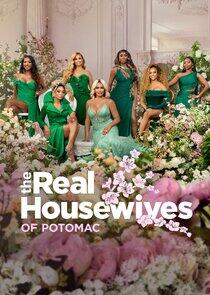
The Real Housewives of Potomac
Just up the river from our nation's capital lies a hidden gem—Potomac, Maryland. Its rolling hills, gated mansions, sophisticated prep schools, and exclusive country clubs all serve to keep the area invitation-only. Sprinkled throughout this community are a handful of old-line, wealthy African-American families who have historically broken racial barriers to provide a life of privilege for their children. The Real Housewives of Potomac follows the upscale lives of six intriguing, well-to-do women: Gizelle Bryant, Katie Rost, Karen Huger, Charrisse Jackson-Jordan, Robyn Dixon, and Ashley Darby, all of whom have fought for their places in this society by way of legacy or marriage. In a town where entry is granted only through class, pedigree, and lineage, how far will these ladies go to secure their spot at the top of this prestigious circle?