The Ascent of Man - Season 1

Season 1

Episodes

Lower Than the Angels
The following episodes examine intellectual, cultural, and scientific breakthroughs in man's four-million-year evolution. Shows importance of new ideas and how they transcend other historical events in their cumulative, irreversible effects. Written-narrated by Jacob Bronowski.

The Harvest of the Seasons
In the long spring following the Ice Ages man develops agriculture and domesticates animals, imposing his will on wild wheat and horses. With the Neolithic cultivators come the mounted Nomads, the predators, and the roots of human warfare. Shot largely in central Iran.

The Grain in the Stone
Man splits a stone and reassembles the pieces to build a wall, a cathedral, a city. This program is about man, the architect, builder, and sculptor. Shots of Greek temples of Paestum, cathedrals of medieval France, Inca cities of Peru juxtaposed with shots of modern cities.

The Hidden Structure
From ancient Oriental metallurgy, through mystical alchemy this program traces the roots of chemistry. Shang bronze craftsmen and Samurai sword smiths are the starting point for a journey leading from medieval Europe to Dalton's atomic theory and our modern knowledge of the elements.

Music of the Spheres
Program covers the evolution of math. Pythagoras, father of Greek math, considered numbers the language of nature. Follows spread of Greek ideas through the Islamic Empire to Moorish Spain and Renaissance Europe. Explores the alliance of math to music, astronomy, and painting.

The Starry Messenger
Studies man's attempts to map the forces which move the planets. The static nature of South American astronomy is contrasted with ideas of Renaissance Europe. Traces the origins of the scientific revolution in the conflict between truth and dogma, symbolized by the trial of Galileo.

The Majestic Clockwork
Newton and Einstein, the two giants of physics, imposed great systems of order on the world. This production illustrates the revolution that occurred when Einstein's theory of relativity turned Newton's elegant description of the universe inside out.

The Drive for Power
Program covers the industrial and political revolutions of the 18th century. Forces of nature were harnessed and the basics of political power shifted. Bronowski argues that in man's progress, the Industrial Revolution was a step forward as significant as the Renaissance.

The Ladder of Creation
From the countryside of Wales to the jungles of the Amazon, follows the stories of Alfred Russell Wallace and Charles Darwin who had the same idea simultaneously - evolution by natural selection. Their ideas helped others to probe the nature and origins of life.

World Within World
In the vaults of ancient Polish salt mines Bronowski embarks on a journey to the hidden world inside the atom. He traces the history of the men and the ideas that made 20th century physics the greatest achievement of the human imagination.

Knowledge or Certainty
Bronowski's statement on information and responsibility's a moral dilemma to scientists. Principle of certainty in physics applies to all knowledge. Examines implications of bombing Japan. Contrasts humanist tradition of Gottingen University with the inhumanities of Auschwitz.

Generation Upon Generation
Math and physics brought revolution to man's ideas of life. From Mendel's work to discoveries of today, Bronowski unravels complex code of human inheritance. Sees sex as an instrument of evolution that makes every human unique yet breeds care between individuals.

The Long Childhood
In this final program Bronowski - poet, playwright, mathematician, philosopher - draws together many threads of the series. He takes stock of man's complex, sometimes precarious, ascent. Argues that man's growth to self-knowledge is the longest childhood of all.
Recently Updated Shows

Survivor
Eighteen to twenty castaways will compete against each other on Survivor. All castaways will compete to outwit, outplay, outlast and ultimately be crowned Sole Survivor.
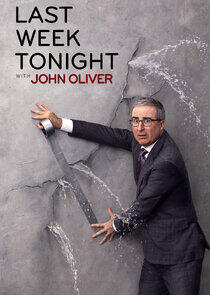
Last Week Tonight with John Oliver
On Last Week Tonight with John Oliver, John Oliver presents a satirical look at the week in news, politics and current events.

Lioness
Lioness, inspired by an actual U.S. Military program, follows the life of Joe while she attempts to balance her personal and professional life as the tip of the CIA's spear in the war on terror. The Lioness Program, overseen by Kaitlyn Meade and Donald Westfield, enlists an aggressive Marine Raider named Cruz to operate undercover alongside Joe among the power brokers of State terrorism in the CIA's efforts to thwart the next 9/11.

Doc
Doc centers on the hard-charging, brilliant Dr. Amy Larsen, Chief of Internal and Family Medicine at Westside Hospital in Minneapolis. After a brain injury erases the last eight years of her life, Amy must navigate an unfamiliar world where she has no recollection of patients she's treated, colleagues she's crossed, the soulmate she divorced, the man she now loves and the tragedy that caused her to push everyone away. She can rely only on her estranged 17-year-old daughter, whom she remembers as a 9-year-old, and a handful of devoted friends, as she struggles to continue practicing medicine, despite having lost nearly a decade of knowledge and experience.

Dark Matter
Hailed as one of the best sci-fi novels of the decade, Dark Matter is a story about the road not taken. The series follows Jason Dessen, a physicist, professor, and family man who – one night while walking home on the streets of Chicago – is abducted into an alternate version of his life. Wonder quickly turns to nightmare when he tries to return to his reality amid the multiverse of lives he could have lived. In this labyrinth of mind-bending realities, he embarks on a harrowing journey to get back to his true family and save them from the most terrifying, unbeatable foe imaginable: himself.