The Beauty of Books - Season 1
Season 1

Episodes
Ancient Bibles
The British Library in London is home to 14 million books, on shelves that stretch over 600km. Extraordinary vessels of ideas and knowledge, they testify to the love affair we have with books. This series explores the enduring appeal and importance of books from a 4th century bible to present day paperbacks.
The Codex Sinaiticus is the world's oldest surviving bible. Made around 350 AD, it is a unique insight into early Christians and their effort to find a single version of the biblical text that everyone could accept - a bible fit for the Roman Empire. 800 years later, an illuminated bible rich in gold and lapis lazuli and produced in Winchester, recalls a time when bibles were at the centre of the Church's struggle with the State for ultimate authority.
Both of these bibles are works of art and remarkable achievements in book technology. They are also annotations on the political era in which they were created, providing fascinating commentary on the life of Jesus and the murder of Thomas Becket.
Medieval Masterpieces
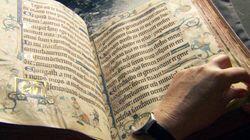
The medieval era was the heyday of illuminated manuscripts. In the 14th and 15th centuries, there was a flowering of religious texts set into beautifully decorated pages. Among these devotional books were psalters, or books of psalms. Hundreds of these were produced, but the Luttrell Psalter is remarkable for its whimsical, humorous and vivid pictures of rural life and a demonic world that is terrifying and grotesque.
This period also saw the development of literature in English. The great Geoffrey Chaucer, often called the father of English literature, took the bold decision to reject literary convention and write in English. His brilliant, bawdy satire the Canterbury Tales became a medieval bestseller and, as a result, when William Caxton set up his first printing press in London, he chose Chaucer's tales as his first major English publication.
These wonderful books contain clever, often mysterious references for their readers and are crucial milestones in the story of the book, charting the last phase of the manuscript and the arrival of the printed book.
Illustrated Wonderlands
The Victorians were masters of illustrated books, especially for children. Thanks to an emerging middle class readership, new printing technology and a sentimentalised regard for childhood, fairy tales and fantasy fiction containing words and pictures grew into an established genre.
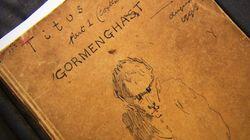
First published in 1865, Alice in Wonderland by Lewis Carroll was one of the most remarkable books of the period, a combination of the genius of Carroll's nonsense verse and prose and the meticulously detailed illustrations of John Tenniel. Creating a handshake on the page, they formed an inseparable bond that has since become a cultural phenomenon. But beyond Tenniel, Carroll's masterpiece has been illustrated hundreds of times by artists like Salvador Dali, Ralph Steadman and Mervyn Peake, all creating their own distinctive Wonderlands. Peake was also a talented writer, and his Gormenghast trilogy of 1946 is an illustrated series of fantasy novels that re-interpreted the genre in the 20th century.
Today, illustrated or 'picture' books are still thriving for the youngest readership. The Gruffalo by Julia Donaldson and Axel Scheffler reveals how the genius of the writer and illustrator partnership continues to enthral and enrich the story of the book.
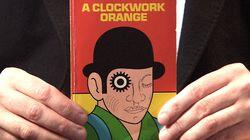
Paperback Writer
The paperback book democratized reading in the 20th century, and printing directly onto the covers became a way of selling a book in the mass market.
Nineteen Eighty-Four by George Orwell was a book written in and for this era, emerging as a paperback in 1954. Its changing cover design reflects each decades approach to selling the book to new readers: from its classic 50s Penguin cover to the latest design from Jon Gray, they are signs of our times.
As an example of how cover design has become art, the iconic 'cog eye' design by David Pelham of Anthony Burgess's A Clockwork Orange has permeated society since the first paperback of 1972.
Bringing the story of the book up to the 21st century, the arrival of electronic readers has sent traditional publishing into a tailspin. The paperback and its cover design has been replaced by the concept of mass storage and electronic pages. As this new technology gains new fans the paper book comes under renewed scrutiny. Whether society accommodates both ways of disseminating knowledge in the future depends on our continued devotion to good writing, editing and design.
Recently Updated Shows

Lioness
Lioness, inspired by an actual U.S. Military program, follows the life of Joe while she attempts to balance her personal and professional life as the tip of the CIA's spear in the war on terror. The Lioness Program, overseen by Kaitlyn Meade and Donald Westfield, enlists an aggressive Marine Raider named Cruz to operate undercover alongside Joe among the power brokers of State terrorism in the CIA's efforts to thwart the next 9/11.

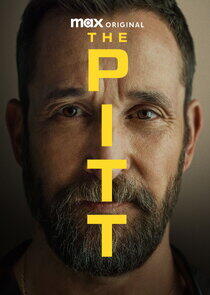
The Pitt
The Pitt is a realistic examination of the challenges facing healthcare workers in today's America as seen through the lens of the frontline heroes working in a modern-day hospital in Pittsburgh, Pennsylvania. Each episode follows an hour of Dr. Robby's 15-hour shift as the chief attendant in Pittsburgh Trauma Medical Hospital's emergency room.

Dark Matter
Hailed as one of the best sci-fi novels of the decade, Dark Matter is a story about the road not taken. The series follows Jason Dessen, a physicist, professor, and family man who – one night while walking home on the streets of Chicago – is abducted into an alternate version of his life. Wonder quickly turns to nightmare when he tries to return to his reality amid the multiverse of lives he could have lived. In this labyrinth of mind-bending realities, he embarks on a harrowing journey to get back to his true family and save them from the most terrifying, unbeatable foe imaginable: himself.
