The Sky at Night - Season 33 / Year 1989

The Sky at Night - Season 33 / Year 1989

Season 33 / Year 1989

Network
DatesJan 15, 1989 - Dec 10, 1989
Previous SeasonNext Season

Episodes

Mysteries of the Winter Sky
Year 1989Episode 130 min

Mysteries of the Winter Sky

The winter sky is magnificent, with Orion dominant; this year there are also two of the brilliant planets, Jupiter and Mars. But there are puzzles to solve, too. For example, why was Sirius once described as a red star rather than a white one - and has Alcor, the companion to Mizar in the Great Bear, brightened since ancient times? Patrick Moore takes a look round the winner sky, and discusses some of these curious mysteries.
Jan 15, 1989
Icebergs and Crouching Giants
Year 1989Episode 230 min

Icebergs and Crouching Giants

How many star systems or galaxies are there? It now seems that there are many more than has been believed - some of them so dim that they are barely visible, so that we are seeing only 'the tip of the iceberg'; others so compact, like crouching giants, that they have been mistaken for stars. Professor Michael Disney of Cardiff University, who has been deeply involved in this new research, joins Patrick Moore to give the latest results.
Feb 12, 1989
Cosmic Lighthouse
Year 1989Episode 330 min

Cosmic Lighthouse

Pulsars are among the most bizarre objects in the universe. They are very small, amazingly dense and spinning round rapidly. Astronomers have been waiting to see whether the supernova in the Large Magellanic Cloud, seen in 1987, will produce a pulsar. Reports from the Cerro Tololo Observatory in Chile indicate that this may well be the case, as Dr Paul Murdin discusses with Patrick Moore.
Mar 12, 1989
Observing from La Silla
Year 1989Episode 430 min

Observing from La Silla

High in the Andes mountains of Chile lies one of the world's major observatories, La Silla, with its 15 telescopes. Conditions there are ideal - far better than anywhere in Europe. In this programme Patrick Moore visits La Silla , talks to the astronomers there, and even has what may be his last view of Halley's Comet.
Apr 9, 1989
Exploring the Ultraviolet Sky
Year 1989Episode 530 min

Exploring the Ultraviolet Sky

The IUE or International Ultraviolet Explorer satellite was launched in 1978. It had an estimated lifespan of three years, but it is still operating and has revolutionised our whole understanding of the stars. In this month's Sky at Night, Patrick Moore is joined by Professor Robert Wilson , who has been the prime mover in the IUE experiment.
May 7, 1989
Telescopes for the 90s
Year 1989Episode 630 min

Telescopes for the 90s

New generation astronomical telescopes are entirely different from those of the past. They have different types of mountings; their main mirrors are made in a new way, and in some cases there are separate telescopes working in combination. Dr Ron Maddison talks about this new revolution in telescope making.
Jun 4, 1989
The Curious Little World Of Pluto
Year 1989Episode 730 min

The Curious Little World Of Pluto

Pluto is the smallest of the planets, and also one of the most puzzling. It is so far from the sun that it takes almost 248 years to complete one orbit; it is made up of a mixture of rock and ice; it has an extensive though thin atmosphere; and it is attended by a companion. This autumn Pluto reaches its closest point to the sun, and Patrick Moore takes the opportunity to sum up what is known about this curious little world.
Jul 2, 1989
Eclipse Of The Moon
Year 1989Episode 820 min

Eclipse Of The Moon

The eclipse of the Moon, due on the early morning of 17 August, will be well seen from all over Britain. Patrick Moore talks about the eclipse, and H. J. P. Arnold explains how to take good photographs of it with an ordinary camera.

Jul 30, 1989
Observing from the Atacama
Year 1989Episode 930 min

Observing from the Atacama

The Atacama Desert of Chile is an exceptionally good site for astronomers; three major observatories have been set up there. One (La Silla) was the subject of a Sky at Night programme earlier this year. Patrick Moore visits the other two, Cerro Tololo and Las Campanas, and talks to the astronomers working there.
Aug 20, 1989
Neptune: Voyager's Last Planet
Year 1989Episode 1035 min

Neptune: Voyager's Last Planet

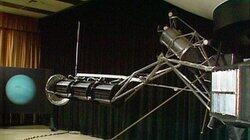
Voyager 2, launched in 1977, has already passed by the giant planets Jupiter, Saturn and Uranus, all of which have provided plenty of surprises. Voyager has now passed Neptune, sending back remarkable new information about the outermost planet.

Patrick Moore is joined by Dr Garry Hunt and other experts from the American team to summarise what has been discovered about this lonely, remote world. (1989)


Sep 10, 1989
The Making Of An Astronomer
Year 1989Episode 1130 min

The Making Of An Astronomer

Do you want to become a professional astronomer? If so, you will need a proper qualification. One of the leading courses for would-be professional astronomers is at Birmingham University. Patrick Moore goes there to be joined by Professor Peter Willmore , Dr Ken Elliott and, of course, the students.
Oct 15, 1989
The Bull in the Sky
Year 1989Episode 1230 min

The Bull in the Sky

Patrick Moore talks about Taurus the Bull, one of the most interesting objects in the winter night sky. It contains one brilliant star, two beautiful star clusters (one of which, the Pleiades or Seven Sisters, is familiar to many people), and much else
Nov 12, 1989
Voyager's Grand Tour
Year 1989Episode 1330 min

Voyager's Grand Tour

In 1977 Voyager 2, the most ambitious of all space-craft, was launched toward the outer planets. Since then it has surveyed Jupiter, Saturn, Uranus and Neptune in turn, and has sent back amazing pictures as well as a vast amount of new information. Patrick Moore sums up what Voyager has told us, and goes on a grand tour of the outer solar system.
Dec 10, 1989

Recently Updated Shows

Recently updated shows that might be of your interest.
Fire Country
Running

Fire Country

In Fire Country, seeking redemption and a shortened prison sentence, young convict Bode Donovan joins a firefighting program that returns him to his small Northern California hometown, where he and other inmates work alongside elite firefighters to extinguish massive blazes across the region.

Elsbeth
Running

Elsbeth

Elsbeth follows Elsbeth Tascioni, an astute but unconventional attorney who utilizes her singular point of view to make unique observations and corner brilliant criminals alongside the NYPD. After leaving her successful legal career in Chicago to tackle a new investigative role in New York City, Elsbeth finds herself jockeying with the toast of the NYPD, Captain C.W. Wagner, a charismatic and revered leader. Working alongside Elsbeth is Officer Kaya Blanke, a stoic and ethical officer who quickly develops an appreciation for Elsbeth's insightful and offbeat ways.

Slow Horses
Running

Slow Horses

Slow Horses follows the story of a group of British intelligence agents who serve in a dumping ground department of MI5 called Slough House after the big mistakes they've made that resulted in the end of their mainstream careers.

This quick-witted spy drama follows a dysfunctional team of MI5 agents—and their obnoxious boss, the notorious Jackson Lamb—as they navigate the espionage world's smoke and mirrors to defend England from sinister forces.

Chicago Fire
Running

Chicago Fire

No job is more stressful, dangerous or exhilarating than those of the Firefighters, Rescue Squad and Paramedics of Chicago Firehouse 51. These are the courageous men and women who forge headfirst into danger when everyone else is running the other way and whose actions make the difference between life and death. These are their stories.

High Potential
Running

High Potential

High Potential follows Morgan, a single mom with an exceptional mind, whose unconventional knack for solving crimes leads to an unusual and unstoppable partnership with a by-the-book seasoned detective.