The Universe - Season 6
Season 6
Episodes
Catastrophes That Changed the Planets
The planets of our solar system have experienced epic catastrophes throughout their long history, both raining down from outside and bubbling up from within. We'll voyage back in time to investigate the violent events that profoundly shaped the planets, including earth itself. We'll witness stunning revelations about what transformed Mars into a barren, hostile desert...The disaster that changed Venus from temperate to hellish...The impact that blew away Mercury's mantle, turning it into a planetary core...A colossal disturbance that rearranged the orbits of the gas giants...Titanic impacts on Jupiter...And how a lost moon may finally explain Saturn's rings.
Nemesis: The Sun's Evil Twin
Could there be a monstrous, undiscovered star orbiting our own Sun? Could it be scattering killer comets throughout our Solar System like clockwork every 26 million years? New scientific surveys are probing the edges of our Solar System--a realm populated by giant worlds and mysterious planetoid--hunting for Nemesis, the Sun's purported evil twin. We may be on the verge of discovering this ultimate death star, suspected of causing every mass extinction in Earth's history. We employ everyday experiences to explain what Nemesis is and why it's been so hard to find. Experts start a wildfire on a dry California hillside, race a NASCAR around an oval track, and juggle fire, all in the effort to present how Nemesis works, and why life on Earth may depend on its discovery.
How the Solar System Was Made
At 4.6 billion years old, the Solar System is our solid, secure home in the Universe. But how did it come to be? In this episode we trace the system's birth from a thin cloud of dust and gas. Shocked by a nearby supernova, the pull of gravity and natural rotation spun it into a flat disc from which the Sun and planets coalesced. It all happened in the space of 700 million years, during which the planets jockeyed for position, dodging the brutal bombardment of deadly asteroids and setting into the neat, stable system that we now realize might be a rarity in the universe.
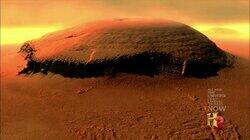
Crash Landing on Mars
What might happen if the first manned mission to Mars crashes hundreds of miles from the rocket that would take them back home? Could they survive the crash, and travel across the brutal Martian surface to their home ship? We'll show what the astronauts would have to do to survive dust storms and space radiation, while extracting vital resources like water from the Martian soil itself. It's a dramatic vision of the very near future, where survival can depend on pre-industrial technology and human ingenuity.
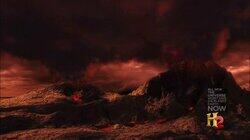
Worst Days on Planet Earth
Earth may seem like the most hospitable planet in the solar system. But look again. Startling new discoveries reveal the blue planet has been plagued by more chaos and destruction than scientists once imagined. Stand on the Earth billions of years ago as a primitive planet slams into it. Shiver as our entire globe is frozen over like a gigantic snowball. Feel the heat as mammoth volcanoes scorch the landscape and darken the sky. From a cosmic gamma ray burst frying away the ozone layer to an Everest-size asteroid slamming into the ocean, we'll reveal new information about how these unparalleled events drove life to the brink of total extinction. Out of this continuous devastation, how has our planet--and life--got to where it is today? Are the worst days behind us--or lurking in the distant future?
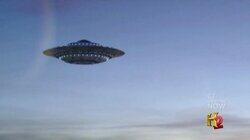
UFO: The Real Deal
Many argue that flying saucers and other extra-terrestrial space ships continuously visit the earth. If that were true, what kinds of technologies would such alien spacecraft require? And do eyewitness reports of UFO sightings jibe with modern theories of how interstellar travel might be possible? Authors, astronomers and theoretical physicists weigh in with the blueprints for inertia-canceling devices, nuclear-powered craft, antimatter propulsion systems and even warp drives. Based on Einstein's theories and countless scientific studies, we'll find out how these visitors might bridge the vast distances between the stars. And if they could survive such hazardous journeys, are they flesh and blood or intelligent machines?
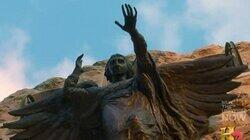
God and the Universe
Since the dawn of civilization, humans have wondered who or what created the universe. Religion offers a spiritual answer, but do the latest discoveries in physics show evidence of a transcendent intelligence, or simply that the laws of physics by themselves could have led to the universe in which we live? This episode embarks on a mind-bending scientific search for God, asking physicists and theologians if the seemingly miraculous way the universe has been calibrated to support life is evidence of a creator...whether string theory will eventually be able to rule out the existence of God...why Stephen Hawking says the universe could have been created spontaneously...and how an advanced civilization in another universe could have conceivably created our own.
Recently Updated Shows

The Witcher
Based on the best-selling fantasy series, The Witcher is an epic tale of fate and family. Geralt of Rivia, a solitary monster hunter, struggles to find his place in a world where people often prove more wicked than beasts. But when destiny hurtles him toward a powerful sorceress, and a young princess with a dangerous secret, the three must learn to navigate the increasingly volatile Continent together.

Silo
In a ruined and toxic future, thousands live in a giant silo deep underground. After its sheriff breaks a cardinal rule and residents die mysteriously, engineer Juliette starts to uncover shocking secrets and the truth about the silo.
The Rookie
The Rookie is inspired by a true story. John Nolan is the oldest rookie in the LAPD. At an age where most are at the peak of their career, Nolan cast aside his comfortable, small town life and moved to L.A. to pursue his dream of being a cop. Now, surrounded by rookies twenty years his junior, Nolan must navigate the dangerous, humorous and unpredictable world of a "young" cop, determined to make his second shot at life count.

For All Mankind
Imagine a world where the global space race never ended. This thrilling "what if" take on history from Ronald D. Moore (Outlander, Battlestar Galactica) spotlights the high-stakes lives of NASA astronauts and their families.