The Victorian Slum - Season 1
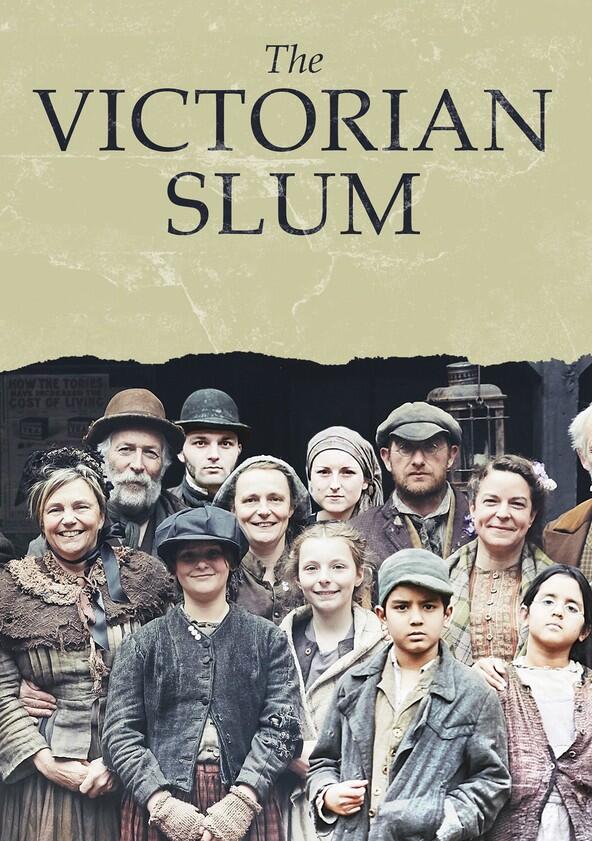
Season 1

Episodes
The 1860s
In this episode, the slum dwellers move into the 1860s, when London was the capital of the world's first industrial superpower and the richest city on earth. Their new home is totally authentic - a forbidding Victorian tenement building made up of sparse rooms, a shared water pump and outdoor privies. There are businesses too - a small shop and a common lodging house known as the doss house. For some of the new residents, it is a chance to live as their East End ancestors once did, while others want to experience the history of their trades.
As it would have been, their priority is to earn money to put food on the table and pay the weekly rent. During the economic boom years of the 1860s, life was tough for the poor, but at least London provided ways to make a living as the slum dwellers find out. Whether it is piecework farmed out by factories like matchbox making and wood turning or repurposing old clothes for the rag trade, they all replicate the work once done by poor Victorians.
Graham Potter finds out first hand the back-breaking labour his forebears would have experienced and the effect on a Victorian family when the main breadwinner was out of action. But it is Shazeda Haque who finds life toughest as she experiences the vicious cycle of poverty and debt that lone Victorian parents endured.
The 1870s
Tailoring family the Howarths have become 'sweated workers', so called because of the rate at which they had to work. They must toil nonstop to make up Victorian factory orders for clothing. It is food for thought when they are forced to employ their neighbours' children to complete the work.
The Potter family can no longer rely on breadwinner Graham as he struggles to find work so they join forces with single parent Shazeda to try and get by making artificial flowers. For Heather Potter, the experience has added poignancy when she finds out the fate that befell her own poverty-stricken East End ancestors.
There are new arrivals in the slum when siblings John and Maria Barker arrive from Ireland. They are horrified by the conditions that would have greeted Irish migrants to Victorian London. But they are young, strong and have no dependents and they do have the ability to work.
As the week progresses, rent collector Andy and the shopkeepers the Birds begin to worry that some in the slum won't be able to settle their debts. A moonlit flit has a knock-on effect for all and the harsh realities of life for the Victorian poor hit home.
The 1880s
The slum dwellers have moved into the 1880s - a turbulent decade for London's East End. Unemployment was sky high, living conditions intolerable - but still people came, desperate for work.
The pressures are immediately felt by the Howarth family, who find themselves employing new workers in their Victorian sweat shop. Their workforce would have been made up of newly arrived immigrants, and the Howarths' workers all have their own story to tell. But Mandy Howarth is moved to tears when she finds out that the sweated trades are part of her own family history.
The Potter family become street sellers, selling sheep's trotters and jellied eels in London's East End. But their newfound living is quickly curtailed, as it was in 1880s Bethnal Green. Fellow slum residents Andy Gardiner and John Barker come face to face with the harsh realities of working life in London's docks during the era when only one of them could have hoped to earn.
The 1890s
The slum dwellers have moved into the 1890s, when Britain was slowly recovering from an economic depression. Cheap foodstuffs and mass-manufactured goods have found their way into the slum's shop, but only some of the residents can afford them.
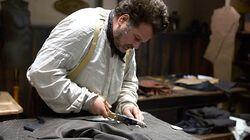
The Howarths are the lucky ones - they now have a bespoke tailor's shop, and tailor Russell can make good money catering to middle-class Londoners who couldn't afford Savile Row suits. Their relative prosperity means Mandy can turn her attention to being a respectable Victorian housewife.
The Potter family's experience reflects the lives of countless Victorian poor who struggled with low wages and irregular work, but they are offered a lifeline by their neighbour Maria who needs help with her laundry business. But a water shortage during the 1890s makes life even harder, and it forces Maria and her brother John to leave the slum.
The 1900s
In the final episode the slum dwellers move into the 20th century and social change is in the air. Community spirit is embodied by the arrival of the cooperative movement and shopkeepers the Birds have members to look after, rather than customers to profit from.
While some continue to prosper, others come face to face with the poverty still endemic in British cities during the era. The effects of this on children hits home when the slum's kids see photographs of their Edwardian counterparts. But they all get a taste of the great wealth enjoyed by the privileged few when Edward VII's cancelled coronation banquet turns up at their door. The wider world continues to impact on life in the slum and some enjoy a day trip out to the countryside. The men exercise their right to vote and the women of the slum learn what East End women did in the quest for suffrage.
At long last there are state-wide measures designed to alleviate the plight of the poor, and it's time for the slum dwellers to return to life in the 21st century. As they prepare to leave, thoughts turn to the effects of slum clearance on British communities and to lessons that can be learned for the future.
Recently Updated Shows

The Pitt
The Pitt is a realistic examination of the challenges facing healthcare workers in today's America as seen through the lens of the frontline heroes working in a modern-day hospital in Pittsburgh, Pennsylvania. Each episode follows an hour of Dr. Robby's 15-hour shift as the chief attendant in Pittsburgh Trauma Medical Hospital's emergency room.

Dark Matter
Hailed as one of the best sci-fi novels of the decade, Dark Matter is a story about the road not taken. The series follows Jason Dessen, a physicist, professor, and family man who – one night while walking home on the streets of Chicago – is abducted into an alternate version of his life. Wonder quickly turns to nightmare when he tries to return to his reality amid the multiverse of lives he could have lived. In this labyrinth of mind-bending realities, he embarks on a harrowing journey to get back to his true family and save them from the most terrifying, unbeatable foe imaginable: himself.


Murdoch Mysteries
Set in Toronto at the dawn of the 20th century, Murdoch Mysteries is a one-hour drama series that explores the intriguing world of William Murdoch, a methodical and dashing detective who pioneers innovative forensic techniques to solve some of the city's most gruesome murders. Murdoch's colleagues include the love of his life, coroner and psychiatrist Dr. Julia Ogden, a staunch ally who shares the detective's fascination for science; Constable George Crabtree, Murdoch's eager but sometimes naïve right-hand man; Inspector Brackenreid, Murdoch's skeptical yet reluctantly supportive boss; and coroner Dr. Emily Grace, Dr. Ogden's protégé.

Bob's Burgers
The series follows Bob who runs Bob's Burgers, with the help of his wife and their three kids. Bob has big ideas about burgers, but the rest of the clan falls short on service. Despite the greasy counters and lousy location, the Belchers are determined to make every "Grand Re-Re-Re-opening" a success. Bob's wife, Linda, stands by her man and often does so by bursting into song. Their eldest daughter, 13-year-old Tina has a slight obsession with boys and zombies. Middle child Gene is an aspiring musician with a thirst for life. Louise is the bunny ears-wearing youngest daughter with an off-kilter sense of humor that makes her somewhat of a liability in the kitchen – and with the public.