The War - Season 1
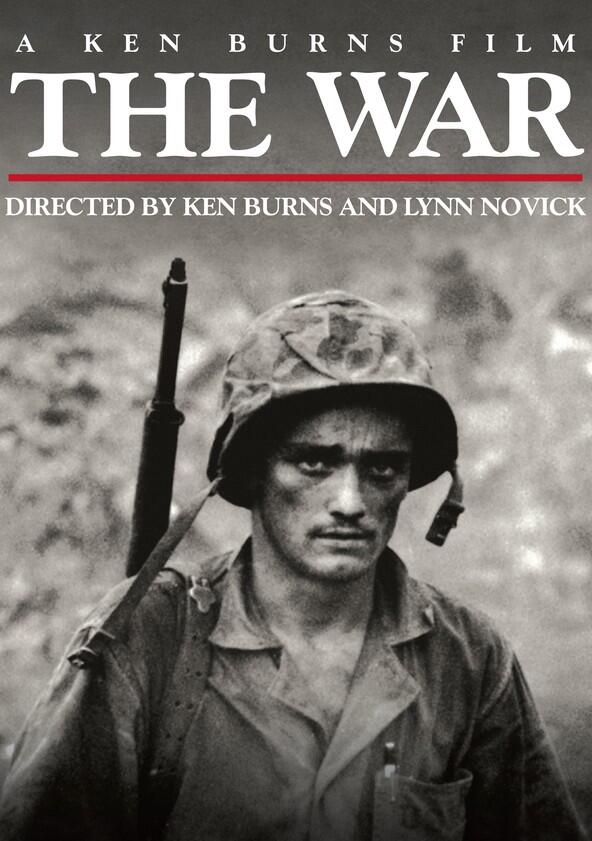
Season 1

Episodes
A Necessary War
(December 1941 - December 1942) Introduction to the American entry into World War II. Tells us about the four towns mentioned that Burns selected for its wartime experiences and of the residents of those places. By this time, they have already known of the early initial conflicts of World War II in Europe through newspapers and newsreels, but it was only through the attack on Pearl Harbor that roused an isolationist, unprepared country into mobilizing for war. But setbacks arose: The Philippines fell and with it the internment of Americans at Santo Tomas in Manila and the Bataan Death March. American shipping became easy prey for German U-boats along the American coast and in the Atlantic. But America succeeds in stopping the Japanese advances at Midway and Guadalcanal.
When Things Get Tough
(January - December 1943) With American industry in full production, the United States entered the European war through the North African Campaign where they, together with Allied forces, eventually defeat the Germans in Tunisia despite the initial disaster in the Battle of Kasserine Pass. The air war over Europe and the bombing of Germany. Allied forces commenced the Italian Campaign through the invasions of Sicily and Salerno, punctuated by the experiences of the soldiers from the towns featured. The internment of Japanese Americans is also further discussed.
A Deadly Calling
(November 1943 - June 1944) The American mobilization transformed cities like Mobile, Waterbury, and Sacramento into boom towns. Mobile thrived on its extensive shipyards that employed many African-Americans, but racial segregation hampers the war production effort in the United States, resulting in ugly riots like in Mobile. African-Americans, as well as Japanese-Americans, were nevertheless recruited by the armed forces into combat units and sent into action, though African-American units were still segregated. The American public finally gets to see the bloody sacrifice of their armed forces through pictures published in LIFE: one of these is the deads on the shore of Buna. The American offensive in the Central Pacific begins with the Battle of Tarawa. The grueling and costly battles of Anzio and Monte Cassino in the Italian campaign. Eventually, the Allies triumph and General Clark's forces take Rome.
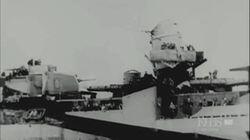
Pride of Our Nation
(June - August 1944) On D-Day, 1.5 million Allied troops embark on the invasion of France, which, after initial setbacks, succeeded. D-Day is followed by the lengthy Battle of Normandy, which ends after three months with the liberation of Paris. The Marines meanwhile fight a costly battle on the island of Saipan in the Western Pacific. These were punctuated by recollections of the participants of the designated towns. The American public, through radio, the press and newsreels, were normally kept informed of the progress of the war. However, as the war progresses, the dreaded War Department casualty telegrams appear at a fast rate.
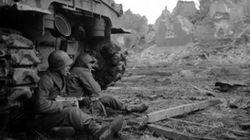
FUBAR
(September–December 1944) This episode starts with the mistaken Allied assumption that the war in Europe would be over before the winter of 1944. It covers the disastrous Operation Market Garden; the bloody invasion and battle of Peleliu; the incompetence of General Dahlquist and the rescue of the Lost Battalion by the 442nd during the horrendous Battle of Hürtgen Forest. But there are achievements: General MacArthur returns to the Philippines following the US invasion, much of the Japanese fleet was destroyed at the Battle of Leyte Gulf, the heroism of the Japanese-American 442nd Regimental Combat Team; the thrill of the internees at the Santo Tomas internment camp in Manila in seeing American planes strafing Japanese ships in Manila Bay and the fall of Aachen, the first German city to be captured by the Allies. There are the experiences of African-American servicemen and those of American Indians. But the reality is that the war will not end in 1944, and more ground will have to be covered and lives lost to achieve the ultimate victory.
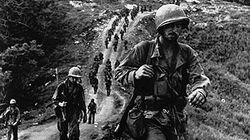
The Ghost Front
(December 1944 – March 1945) The Germans launch a major surprise offensive in the Ardennes which becomes known as the Battle of the Bulge; the battle develops into the bloodiest of the war for the Americans. The siege of Bastogne and combat stress reaction during the war. The Santo Tomas internment camp is liberated following the Battle of Manila. The Marines assault Iwo Jima. The controversial air war against Japanese and German cities towards the end of the war. The final invasion of Germany and General Patton's attempts to rescue his son-in-law from a German prison camp behind the German lines. There are also insights into the role of medics in combat, pinups and American POWs in Japan. But still, there are newspaper reports of new setbacks and losses, and the endless and unendurable telegrams bearing the bad news from the War Department.
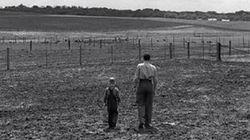
A World Without War
(March–September 1945) The War finally reaches its end: the bloody Battle of Okinawa and the kamikaze attacks. The death of President Roosevelt and the assumption to office of Harry Truman. The Soviets commence their final assault on Berlin. Hitler's suicide and the fall of the Third Reich. The awful reality of Nazi Germany is discovered with the liberation of the Nazi concentration camps and death camps. VE Day following Germany's surrender. The sinking of USS Indianapolis. Plans for the ultimate, long, and bloody conquest of Japan. The atomic bombings of Hiroshima and Nagasaki. The liberation of the American POWs in Japan and VJ Day following the Japanese surrender at the USS Missouri. The episode concludes with the return and reunification of the American fighting men, and the fates of the towns and personalities first featured earlier in this series as they, and the United States, continue with the business of living in a postwar world. Extras: This is followed by David Brancaccio interviewing Ken Burns, Rev. Forbes, and Lynn Novick about what they were attempting to accomplish in this production.
Recently Updated Shows

The Kelly Clarkson Show
The Kelly Clarkson Show is daytime's newest destination for humor, heart, and connection, featuring three-time Grammy® Award winning singer/songwriter, mother and America's original idol, Kelly Clarkson. The Kelly Clarkson Show will present the biggest newsmakers and names in film, television and music; as well as emerging new talent and people who are beacons of hope in their communities. Kelly will also connect with everyday people and everyday relatable issues. Her "weekday hang" will also include live performances, games and Kelly's unfiltered perspective on life, family, kids, relationships, marriage and the things that inspire her...
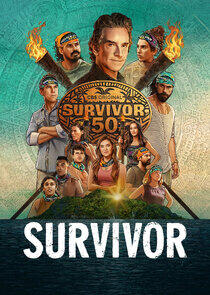
Survivor
Eighteen to twenty castaways will compete against each other on Survivor. All castaways will compete to outwit, outplay, outlast and ultimately be crowned Sole Survivor.

Saturday Night Live
Saturday Night Live is an Emmy Award-winning late-night comedy showcase.
Since its inception in 1975, "SNL" has launched the careers of many of the brightest comedy performers of their generation. As The New York Times noted on the occasion of the show's Emmy-winning 25th Anniversary special in 1999, "in defiance of both time and show business convention, 'SNL' is still the most pervasive influence on the art of comedy in contemporary culture." At the close of the century, "Saturday Night Live" placed seventh on Entertainment Weekly's list of the Top 100 Entertainers of the past fifty years.

Lioness
Lioness, inspired by an actual U.S. Military program, follows the life of Joe while she attempts to balance her personal and professional life as the tip of the CIA's spear in the war on terror. The Lioness Program, overseen by Kaitlyn Meade and Donald Westfield, enlists an aggressive Marine Raider named Cruz to operate undercover alongside Joe among the power brokers of State terrorism in the CIA's efforts to thwart the next 9/11.

Doc
Doc centers on the hard-charging, brilliant Dr. Amy Larsen, Chief of Internal and Family Medicine at Westside Hospital in Minneapolis. After a brain injury erases the last eight years of her life, Amy must navigate an unfamiliar world where she has no recollection of patients she's treated, colleagues she's crossed, the soulmate she divorced, the man she now loves and the tragedy that caused her to push everyone away. She can rely only on her estranged 17-year-old daughter, whom she remembers as a 9-year-old, and a handful of devoted friends, as she struggles to continue practicing medicine, despite having lost nearly a decade of knowledge and experience.