Walking with Cavemen - Season 1
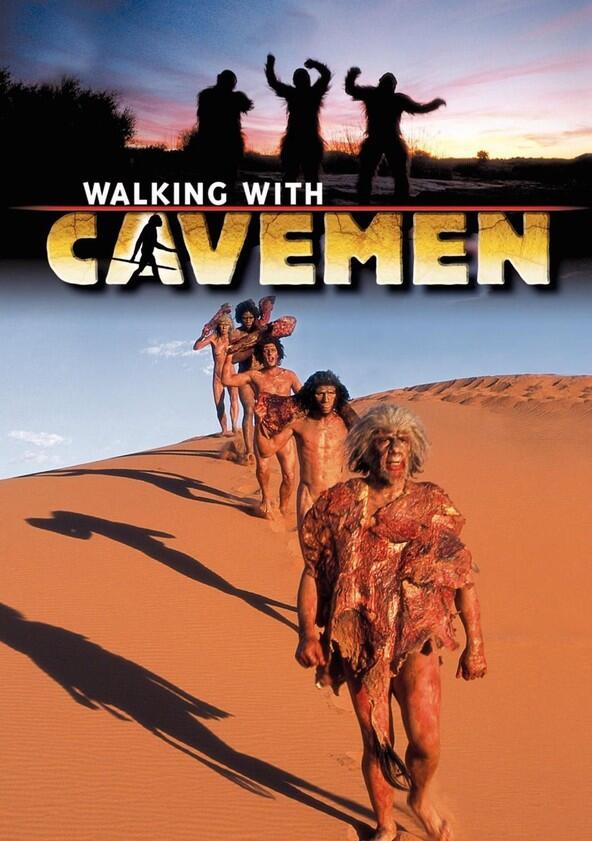
Season 1

Episodes

First Ancestors
In the first episode, we see Australopithecus afarensis, and focus on their evolved bipedality. The story follows the famous Lucy and her relatives, as they first develop a leadership conflict following the death of the alpha male due to a crocodile attack, and then are attacked by a rival troop. The attack ends with the death of Lucy herself, and her eldest daughter caring for Lucy's now-orphaned baby sibling, as a sign of the developing humanity in these "apemen".
Animals: Ancylotherium · Deinotherium · Verreaux's eagle · Crocodylus thorbjarnarsoni · Zebra finch
Blood Brothers
The second episode leaps forward to a time when Paranthropus boisei, Homo habilis and Homo rudolfensis co-exist. H. habilis is depicted as an intelligent omnivore that is more adaptable than the herbivorous P. boisei. The two species are contrasted, with H. habilis being "a jack of all trades", while P. boisei are "a master of one" - i.e. they are specialized herbivores while H. habilis are generalized omnivores. Consequently, though P. boisei are able to eat termites, tall grasses and hard acacia pods in difficult times, they will not be able to survive in the future, when at the beginning of the next Ice Age the climate will change, and these plants will be gone for good. H. habilis, on the contrary, have become smart by eating fresh carrion and bone marrow among other things, and evolving a basic social behavior, which is more firm than that of P. boisei, will continue to survive, until it evolves into Homo ergaster, seen in the next episode, who has developed these traits to a greater extent.
The episode also briefly shows the H. rudolfensis, remarking that although they are taller, they are very similar to the H. habilis.
Animals: Dinofelis · Deinotherium · Ancylotherium · Lion · Eland · Impala · Bees · Vultures
Savage Family
In the third episode, Homo ergaster is depicted as the first creature to master the art of tracking. This was made possible because their diet has grown increasingly more carnivorous, and the nutrients in meat made them even smarter than H. habilis of the previous episode. They also begin to form into tribal societies, with genuine bonds between their men and women, though violence is still occurring.
The episode later shows H. ergaster spreading into Asia, becoming Homo erectus and encountering the enormous herbivorous ape Gigantopithecus, "the original King Kong".
However, for the next million years, H. ergaster is still very much an animal, following its instinct, but then, they are shown harnessing fire and beginning to break-away from their direct dependence on their environment.
Animals: Wildebeest · African bush elephant · Swallow · Tarantula · Ants · Giraffe · Baboon · Gigantopithecus
The Survivors
The fourth episode first shows Homo heidelbergensis in Britain. H. heidelbergensis is depicted as intelligent and sensitive but lacking in the ability to comprehend an afterlife, or anything that isn't in the "here and now".
Next, the episode shows a clan of Homo neanderthalensis, how they lived and hunted, including the mighty mammoth during the last ice age. Finally in Africa then we see Homo sapiens idaltu which are not adapting well in Africa's drought unlike the Neanderthals in the north, along with them we see modern Homo sapiens (represented by bushmen), who had to become imaginative and inventive to survive the long drought unlike their subspecies idaltu, and finally glimpse the cave painters of Europe, who had "evolved" the idea of the afterlife and the supernatural, and now ready to start the human history as it is now known (and drive the Neanderthals to extinction).
Animals: Megaloceros · Mountain hare · Woolly mammoth · Beetle · Snake
Recently Updated Shows

Doc
Doc centers on the hard-charging, brilliant Dr. Amy Larsen, Chief of Internal and Family Medicine at Westside Hospital in Minneapolis. After a brain injury erases the last eight years of her life, Amy must navigate an unfamiliar world where she has no recollection of patients she's treated, colleagues she's crossed, the soulmate she divorced, the man she now loves and the tragedy that caused her to push everyone away. She can rely only on her estranged 17-year-old daughter, whom she remembers as a 9-year-old, and a handful of devoted friends, as she struggles to continue practicing medicine, despite having lost nearly a decade of knowledge and experience.


Dark Matter
Hailed as one of the best sci-fi novels of the decade, Dark Matter is a story about the road not taken. The series follows Jason Dessen, a physicist, professor, and family man who – one night while walking home on the streets of Chicago – is abducted into an alternate version of his life. Wonder quickly turns to nightmare when he tries to return to his reality amid the multiverse of lives he could have lived. In this labyrinth of mind-bending realities, he embarks on a harrowing journey to get back to his true family and save them from the most terrifying, unbeatable foe imaginable: himself.


Murdoch Mysteries
Set in Toronto at the dawn of the 20th century, Murdoch Mysteries is a one-hour drama series that explores the intriguing world of William Murdoch, a methodical and dashing detective who pioneers innovative forensic techniques to solve some of the city's most gruesome murders. Murdoch's colleagues include the love of his life, coroner and psychiatrist Dr. Julia Ogden, a staunch ally who shares the detective's fascination for science; Constable George Crabtree, Murdoch's eager but sometimes naïve right-hand man; Inspector Brackenreid, Murdoch's skeptical yet reluctantly supportive boss; and coroner Dr. Emily Grace, Dr. Ogden's protégé.