British Masters - Season 1

Season 1

Episodes

We Are Making a New World
In a major re-calibration of 20th-century British paintings, art historian James Fox argues that British painting from 1910 to 1975 was an extraordinary flowering of genius. He predicts that art historians of the future will rank the period alongside the Golden Ages of Renaissance Italy and Impressionist France.
Drawing upon the work of Paul Nash, Graham Sutherland, Francis Bacon, Stanley Spencer and David Hockney, among others, Fox explores why, during the 20th century, British painters were often dismissed for being old-fashioned. He reveals how these artists carefully reconciled tradition and modernity, providing a unique creative tension that now makes the period seem so exciting.
Over the course of the three-part series, Fox presents his theory that this period of artistic excellence was closely linked to a dramatic shift in Britain's fortunes. He suggests that the demise of the British Empire, as much as the two world wars, defines Britain's unique take on modern art: a determination to rediscover and cling on to 'Britishness' while the country's territorial assets and global influence fell away.
In the years immediately before and during the First World War, a radical generation of painters determined to eject Victorian sentimentality and nostalgia from their art pioneered a new style of painting that would capture and make sense of the modern experience. Walter Sickert shocked the public by making the low-lives of Camden Town and a brutal murder the subject of his gaze. Wyndham Lewis and David Bomberg broke with centuries of realist tradition, reducing humanity to cold geometric forms. But as the country descended into war, three painters - Christopher Nevinson, Paul Nash and Stanley Spencer - reconciled what was best of the avant-garde with Britain's rich painterly tradition to create powerful images of war that would speak to us all.
In Search of England
The inter-war years were a period of alarming national change. With a generation of youth lost to the trenches and the cracks in the Empire growing fast, the nation's confidence was in tatters. If we were no longer a mighty Imperial power, what were we? John Nash's mesmerising visions of rural arcadia, Stanley Spencer's glimpses of everyday divinity, Alfred Munnings' prelapsarian nostalgia, Paul Nash's timeless mysticism, John Piper's crumbling ruins, even William Coldstream's blunt celebration of working-class life - all, in their own way, were attempts to answer this question. And, as a reprise of war grew ever more likely, they struggled more urgently than ever to create an image of Britain we could fight for.
A New Jerusalem
In the decades after the Second World War, at a time when many had lost their faith in humanity, British artists turned to the great figurative painting tradition to address the biggest questions of all: what does it mean to be human and how do we create a more humane world? Such existential angst is captured in Lucien Freud's harrowing early portraits and Graham Sutherland's Pembrokeshire landscapes. Francis Bacon stared deep into his own soul to explore the human capacity for evil, while Richard Hamilton warned against the false hope of consumerism. As national pessimism gave way to a new optimism, David Hockney dared to suggest Paradise might be available to us all. But in the early 1970s, just as the world finally began to recognise the genius of Britain's painterly tradition, young artists at home turned against it.
Recently Updated Shows

Will Trent
In Will Trent Special Agent Will Trent of the Georgia Bureau of Investigations was abandoned at birth and endured a harsh coming-of-age in Atlanta's overwhelmed foster care system. But now, determined to use his unique point of view to make sure no one is abandoned like he was, Trent has the highest clearance rate in the GBI.
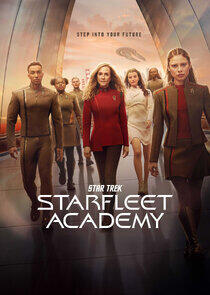
Star Trek: Starfleet Academy
Star Trek: Starfleet Academy is set in the 32nd century, a time period in the far-future of the Star Trek franchise where Starfleet and the United Federation of Planets are recovering from a cataclysmic event, as depicted in Star Trek: Discovery. It introduces viewers to a young group of cadets who come together to pursue a common dream of hope and optimism. Under the watchful and demanding eyes of their instructors, they discover what it takes to become Starfleet officers as they navigate blossoming friendships, explosive rivalries, first loves and a new enemy that threatens both the Academy and the Federation itself.
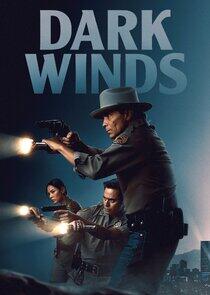
Dark Winds
Based on the iconic Leaphorn & Chee book series by Tony Hillerman, Dark Winds is a psychological thriller that follows two Navajo police officers in the 1970s Southwest, as their search for clues in a grisly double murder case forces them to challenge their own spiritual beliefs and come to terms with the trauma of their pasts.

Shrinking
Shrinking follows a grieving therapist who starts to break the rules and tell his clients exactly what he thinks. Ignoring his training and ethics, he finds himself making huge, tumultuous changes to people's lives... including his own.

Elsbeth
Elsbeth follows Elsbeth Tascioni, an astute but unconventional attorney who utilizes her singular point of view to make unique observations and corner brilliant criminals alongside the NYPD. After leaving her successful legal career in Chicago to tackle a new investigative role in New York City, Elsbeth finds herself jockeying with the toast of the NYPD, Captain C.W. Wagner, a charismatic and revered leader. Working alongside Elsbeth is Officer Kaya Blanke, a stoic and ethical officer who quickly develops an appreciation for Elsbeth's insightful and offbeat ways.